
Underated cables.

Joined
28 Jul 2009
Messages
11,948
Reaction score
1,628
Location
Kent
Country
United Kingdom
Now wanting to spoil another thread:

In different circumstances, the thing which went through your mind could have been "If only I had not got into the car /crossed the road / climbed the ladder / used the power tool / whatever ....".
Kind Regards, John
Indeed I can say all four of those thing, two of them in the last month or so.
Life is absolutely full of extremely small risks. The only rational way in which one can live with that is to make judgements about whether particularly extremely small risks are 'likely to happen'. Such judgements will obviously varying according to personal experiences, and personal views of risk, but it would seem that Your judgements about what is 'likely' (and/or maybe your personal view of what 'likely' means) probably differ from those of many others.

Kind Regards, John
I completely agree and wherever I can I asses those extremely small risks and try to reduce them even further. A simple one like an overloaded cable is so extremely easy to cure, so easy and usually cheap too. So I make the decision to do it. At pennies per metre I wonder why so many others are so averse to doing the same thing. Some on here even say it's easier to use 4mm² T&E than 2.5mm².

I'm assuming from your comments you have never encountered the problem of overheated cables and the damage they cause, along with the resulting time, effort and expense involved in making the repairs. Sadly I have, but in the commercial environment the questions are asked and advice sought to avoid the upheaval of future works. The simple act of using the correctly sized OCPD or the correctly sized cable (AKA as circuit design) mitigates those points. Additionally it improves health and safety problems (not only as a tick box exercise).

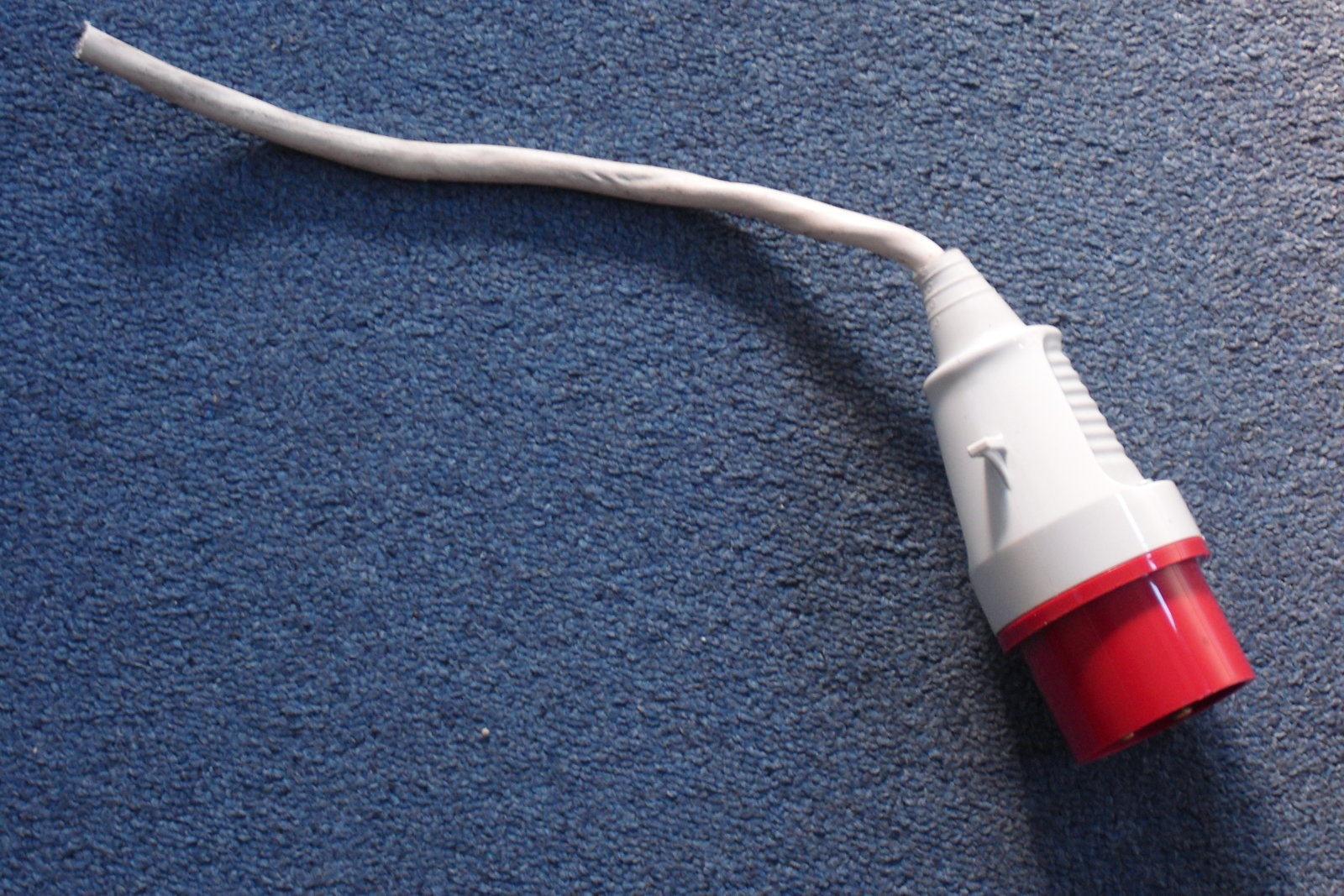
That flex (pictured against a parquet floor) is only one of a number of avoidable overheated cable safety issues I've encountered. This is another:
dsci0492-jpg.149171

Both completely and utterly avoidable.
 
Last edited:
Now wanting to spoil another thread:
As I said in that other thread, we've done this discussion to death in the past, and thereby have ascertained that our views/attitudes differ, and I have better things to do with my time at present than to go over it all again. Just a couple of comments in relation to general things you have said in this message ...
I completely agree and wherever I can I asses those extremely small risks and try to reduce them even further.
There are countless theoretical 'extremely small risks' which we all potentially face every day, and the judgement required is as to whether the level of a risk justifies "trying to reduce it even further".
I'm assuming from your comments you have never encountered the problem of overheated cables and the damage they cause ....
I think you need to learn what 'judgement' means - if "very unlikely" meant "never", then little or no intelligent judgement, or 'risk assessment' would be necessary.

Anyway, you're really asking the wrong person, since I have never, in all the decades of my life to date, been professionally involved with any aspects of electrical installations. Having said that, for what it's worth, you are right - I have never personally encountered (or even heard of within the circles in which I operate) a situation in which an undamaged cable which was part of the fixed wiring of an installation has resulted in any significant damage due to overheating, although I have come across a good few situations in which such cables were (sometimes seriously) under-sized, and had been so for many years, even decades in service.

Kind Regards, John
 
Sunray:

Please can you explain what exactly has happened to cause these cables to become overheated.

You do seem to come across a lot of damaged parts.
 
Sunray:

Please can you explain what exactly has happened to cause these cables to become overheated.

You do seem to come across a lot of damaged parts.
In total or in respect to the 433... exemption?

Simply put they are too small to be protected by the OCPD, despite the oft mentioned
An OPD is only there to protect the cable
Sunray:You do seem to come across a lot of damaged parts.
Something to do with me doing a lot of fault finding... sadly including correcting other peoples mistakes.
 
In total or in respect to the 433... exemption?
You have stated (and shown pictures) that you have found heat damaged cables in support of your thoughts that 433 should not be followed.

I would like to know exactly what caused the overload?


Simply put they are too small to be protected by the OCPD, despite the oft mentioned
Only if an overload occurs.

Something to do with me doing a lot of fault finding... sadly including correcting other peoples mistakes.
Ok.

However, you now say mistakes, so was 433 not followed correctly?
 
You have stated (and shown pictures) that you have found heat damaged cables in support of your thoughts that 433 should not be followed.

I would like to know exactly what caused the overload?
Only if an overload occurs.
The 1.5mm² flex on the parquet floor was, as explained, a lab oven with only a heating element and thermostat rated at ~2.5KW running around 40A.

Several years ago a 'ceramic' topped cooker, the initial symptom: blown the 30A fuse several times. I found one of the rings showed only a small part being illuminated.
Pulling the cooker out I found the 4mm² T&E showed signs of heat damage, opening the cooker I found the rings ceramic former had broken and dropped, shorting out a chunk of the element, the silicon wiring related to that ring and its control was a different colour but still felt sound (presumed overheated ) and where it had passed through plastic wire management clips they had been melted. My intention was to replace the ring and the darkened spade connectors, however the husband decided to replace it so I disconnected the T&E from the switch and helped him take it outside for the scrappies.

In a Wickes store there were a row two element Quartz IR heaters by the checkouts on a 40A radial. one of the heaters flex (IIRC 1mm²) had melted and dripped PVC onto a customer. I've found a number of such elements with a lower resistance than expected.

However the fashion for fitted hob and high level oven with 2 smaller cables from the 45A switch (very frequently a fitted 1mm² HO5 on the 2.5 - 3KW oven) has resulted in an overload damaged cable and total failure. The fashion seems to now be for range style cookers but sadly when installing the sparkling new cooker the delivery driver wires it to the existing cooker outlet plate by the oven which is commonly a 2.5mm² (and I've even known 1.5mm²) T&E link from the switch. I know that's the fault of the new cooker installer but sadly it happens too often and all for the sake of saving 50p when the original oven was installed.

I'll stress that I know and understand we cannot be expected to predict future works etc when designing a circuit and certainly we can't account for following poor workmanship but we are regularly quoting
An OPD is only there to protect the cable
and yet in this case, which is one of if not the highest power circuit in the property, we abandon the safety principle.
 
Last edited:
The 1.5mm² flex on the parquet floor was, as explained, a lab oven with only a heating element and thermostat rated at ~2.5KW running around 40A.
When I asked 'what caused the overload?' I meant how did it happen. How did a 10A appliance draw 40A?

Several years ago a 'ceramic' topped cooker, the initial symptom: blown the 30A fuse several times. I found one of the rings showed only a small part being illuminated.
Pulling the cooker out I found the 4mm² T&E showed signs of heat damage, opening the cooker I found the rings ceramic former had broken and dropped, shorting out a chunk of the element, the silicon wiring related to that ring and its control was a different colour but still felt sound (presumed overheated ) and where it had passed through plastic wire management clips they had been melted. My intention was to replace the ring and the darkened spade connectors, however the husband decided to replace it so I disconnected the T&E from the switch and helped him take it outside for the scrappies.
Is this then NOT an example of the discussion - having a 30A fuse?
4mm² T&E would be slightly underrated (by 4.35A) for a BS3036 30A fuse but not a BS1361 - but would it overheat?

In a Wickes store there were a row two element Quartz IR heaters by the checkouts on a 40A radial. one of the heaters flex (IIRC 1mm²) had melted and dripped PVC onto a customer. I've found a number of such elements with a lower resistance than expected.
No details.

However the fashion for fitted hob and high level oven with 2 smaller cables from the 45A switch (very frequently a fitted 1mm² HO5 on the 2.5 - 3KW oven) has resulted in an overload damaged cable and total failure.
That, surely, is not a correct cable for the load anyway - so not relevant to the subject in question.

The fashion seems to now be for range style cookers but sadly when installing the sparkling new cooker the delivery driver wires it to the existing cooker outlet plate by the oven which is commonly a 2.5mm² (and I've even known 1.5mm²) T&E link from the switch. I know that's the fault of the new cooker installer but sadly it happens too often and all for the sake of saving 50p when the original oven was installed.
Again - not relevant.

I'll stress that I know and understand we cannot be expected to predict future works etc when designing a circuit and certainly we can't account for following poor workmanship but we are regularly quotingand yet in this case, which is one of if not the highest power circuit in the property, we abandon the safety principle.
Yet it appears to be more a case of poor workmanship.
 
When I asked 'what caused the overload?' I meant how did it happen. How did a 10A appliance draw 40A?
Ooo OK let me see... the elderly manufactured heater containing only a heating element and a thermostat starts drawing a lot of current... well I'll make a wild guess it developped a fault... Oh dear me that couldn't possibly be the case could it, because, erm it's extremely unlikely... oh and it's so extremely unlikely an electric heater can develop a fault that we allow it to be a fire hazard by not bothering to protect it with a fuse.
Is this then NOT an example of the discussion - having a 30A fuse?
4mm² T&E would be slightly underrated (by 4.35A) for a BS3036 30A fuse but not a BS1361 - but would it overheat?
it did...
No details.
I've given all the available details... heating elements which are so unlikely to develop a fault that we don't need to protect them with a fuse, develop a fault... Mmmm so unlikely.
That, surely, is not a correct cable for the load anyway - so not relevant to the subject in question.
totally relevant to the subject, a manufacturer has designed and sold an appliance which is deemed to be fit for purpose and worked perfectly for years without any problems, an item which probably had an instruction to fit a 13A fuse was fitted without a fuse and despite our commonly quoted
An OPD is only there to protect the cable
we are told it's perfectly safe to design a circuit without it. Then when the unlikely thing happens and the unlikely fault occurs the unlucky weakest unprotected link does the thing it's not designed to do... it works like a fuse.
Again - not relevant.
I don't see why, as the oven may develop the fault allowing it to draw 45A on a cable capable of 18.5A when plastered in the wall (or possibly 14A)
Yet it appears to be more a case of poor workmanship.
Isn't that what I said? Apart from the fact that the original oven may develop the fault allowing it to draw 45A on a cable capable of 18.5A when plastered in the wall.
 
I do EICRs on social housing and the odd bit of install work. We have it drummed into us about cooker and ring circuits in bungalows, and shower circuits in general, that we have to check the reference method in the loft. If we find a cooker cct in a bungalow, in 6mm on a B32 we have to go in the loft and raise the cable above the insulation (we cant downrate a cooker cct). 6mm can only carry 27A reference 101 (from memory).

If we find a shower cct in 10mm on a B40, again, we have to check the reference method but as long as its a 7.5 shower we can downrate it. However, all too often we come across oversized circuits. 10mm cable on a B32 feeding a downstairs shower. Worst ref method is a bit of YT2. The cable can carry 50A all day long. But 6mm would be sufficient seeing as the biggest shower our stores stock is 8.5kw.

Rings are a funny one. Not many people are aware of the rule that each leg must be capable of carrying 20A. Ref 101, 2.5mm can only carry around 17A. It doesnt comply. We downrate the circuit to 20A. All new rings we put in bungalows and top floor flats are done in 4mm, and I rather like doing them tbf, though faults are fairly tricky because its a bugger getting two 4mm back into a socket when fault finding.

Often it feels like people are incapable of designing circuits and either fit the cheapest option without a design, or over engineer it to cover their backs.

One thing I will say though is that I've never found an overheated cable which has overheated due to being buried under insulation. Only overheated conductors at terminations.
 
Rings are a funny one. Not many people are aware of the rule that each leg must be capable of carrying 20A.
That surprises me a bit. Despite a lot of ignorance and misunderstanding of what the regs say (and don't say) about ring finnals, I thought that most people probably knew that there is a requirement for a minimum CCC of 20A (and minimum CSA of 2.5mm for T+E, unless MICC).
One thing I will say though is that I've never found an overheated cable which has overheated due to being buried under insulation. Only overheated conductors at terminations.
Quite so - and that reminds us that the regs (and particularly the "CCC" figures we work with) are extremely conservative. I suspect that it's incredibly rare for any problems to arise due to overheating of the length of a cable in a domestic installation (rather than, as you say, at terminations), even if the cable is appreciably (or even 'seriously') under-rated (and hence would 'fail' an EICR.

Kind Regards, John
 
The thing is most high current applications in the domestic world are relatively intermittent - 5 minute showers, 30 minute cooking etc. Hence we often see 10kw showers hanging onto a 32A MCB. A 32A MCB will take 50A for 1000 seconds. The real problems will start when we start reintroducing a lot of electric heat into homes. Storage heaters may make a comeback. Electric boilers. heat pumps. car chargers. You get the idea, these are all high current, long duration loads and as such the circuits must be designed correctly.
 
The thing is most high current applications in the domestic world are relatively intermittent - 5 minute showers, 30 minute cooking etc. Hence we often see 10kw showers hanging onto a 32A MCB. A 32A MCB will take 50A for 1000 seconds.
Indeed.
The real problems will start when we start reintroducing a lot of electric heat into homes. Storage heaters may make a comeback. Electric boilers. heat pumps. car chargers. You get the idea, these are all high current, long duration loads and as such the circuits must be designed correctly.
Yes, all agreed. Only time will tell how domestic loads evolve.

Kind Regards, John
 

If you need to find a tradesperson to get your job done, please try our local search below, or if you are doing it yourself you can find suppliers local to you.

Select the supplier or trade you require, enter your location to begin your search.


Are you a trade or supplier? You can create your listing free at DIYnot Local

 
Back
Top