• Looking for a smarter way to manage your heating this winter? We’ve been testing the new Aqara Radiator Thermostat W600 to see how quiet, accurate and easy it is to use around the home. Click here read our review.

Washing Machine Motor Wiring with Speed Control

Joined
23 Feb 2025
Messages
4
Reaction score
0
Country
United Kingdom
Hi all

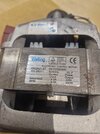
I need to wire a Welling Washing machine motor into a speed controller and I'm having a few issues..

I've followed a few videos to try and identify the wires on my motor and connect them to the controller, but the wires coming out of my motor don't seem to match exactly with any examples online.

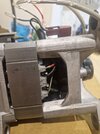
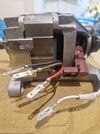
I'm fairly certain that the brown and red wires coming from inside the motor are the coil wires, and as far as I understand it I need the coil wires and brush wires to get it connected to speed control. The brush wires are confusing me as one side of the brush has a wire running into the motor, where the examples online all seem to have wires running outwards from both sides of the brush.

Following a YouTube video, I tried wiring this into a US-52 speed controller but no arrangement of connections has worked. Interestingly, the controller sparked and smoked when plugged into the mains, despite being turned off and supposedly rated for 220v. The indicator light still turns on so I'm hoping it hasn't fully burned out, but without any other motors to test it with I can't be sure!

I've attached images of my motor, if anyone can offer any help here it would be greatly appreciated!
 

Attachments

  • 1000017902.jpg
    1000017902.jpg
    308.8 KB · Views: 73
  • 1000017901.jpg
    1000017901.jpg
    312.6 KB · Views: 64
  • 1000017897.jpg
    1000017897.jpg
    238.7 KB · Views: 72
In series connect one brush wire to one field coil wire
then connect the remaining field coil wire and the remaining brush wire to the controller output.

If you don't know which wire is what, confirm with a multimeter, the two lowest values will be for the brushes and the other two (around 15 ohms off my head) should be for the field winding.

have you got a dc bench power supply?
 
In series connect one brush wire to one field coil wire
then connect the remaining field coil wire and the remaining brush wire to the controller output.

If you don't know which wire is what, confirm with a multimeter, the two lowest values will be for the brushes and the other two (around 15 ohms off my head) should be for the field winding.

have you got a dc bench power supply?

Thanks! I'm fairly certain I've identified which wire is which but I'll go through and double check. As I'm fairly certain the controller I bought was a dud and the wiring diagram was very unclear, I've rethought my plan a bit.. Basically I'm thinking of getting one of these "Plug and Play" speed controllers

If I can wire a standard three pin plug to the motor, I can then just plug that into the controller and avoid wiring the motor directly into it - with my lack of experience, I'm a bit wary of wiring anything directly into the mains as my inital attempts with the first controller resulted in a few sparks and a tripped breaker!

Do you think this is a good idea? If so, any ideas on how to wire a standard mains plug into the motor?
 
Do you think this is a good idea? If so, any ideas on how to wire a standard mains plug into the motor?
Wiring it directly will result the motor running in full speed and can cause damage.

What are you trying to achieve with the motor?
 
Wiring it directly will result the motor running in full speed and can cause damage.

What are you trying to achieve with the motor?
I'm aiming to have the motor speed adjustable and powering a larger mechanism. It needs to be variable but running at fairly low speed, around 30-40 RPM (I think!) . I'm not suggesting plugging it directly into mains, I'm just suggesting using a mains plug as a way to connect it to a multi-purpose speed control unit like the Amazon one linked above. As I understand it, this would reduce the risk of the controller burning out as it is already intended to run similar appliances.
 
I'm aiming to have the motor speed adjustable and powering a larger mechanism. It needs to be variable but running at fairly low speed, around 30-40 RPM (I think!) . I'm not suggesting plugging it directly into mains, I'm just suggesting using a mains plug as a way to connect it to a multi-purpose speed control unit like the Amazon one linked above. As I understand it, this would reduce the risk of the controller burning out as it is already intended to run similar appliances.
Have you got the PCB of the washing machine which has this motor?

A triac will give you speed control. If you're going to design a circuit yoirself you'll need to consider other factors such as reverse emf.

The cheap speed control gizmos on eBay or Amazon can do the job too and the are easier to use.

Haven't clicked on the link yet.
 
Have you got the PCB of the washing machine which has this motor?

A triac will give you speed control. If you're going to design a circuit yoirself you'll need to consider other factors such as reverse emf.

The cheap speed control gizmos on eBay or Amazon can do the job too and the are easier to use.

Haven't clicked on the link yet.
All I have is the motor, I got it on Ebay so dont have access to any of the other washing machine parts. I looked into a triac but it was all ending up far too complicated and went over my head! My knowledge and experience on all of this stuff is fairly low, so I'm definitely looking for an easy method!

Here's a few photos from the Amazon controller I'm looking at, seems fairly straightforward, just need to get a plug connected to the motor and then it can plug into the controller.

1740420982455.png
1740420992947.png
 
You can give it a try but the speed control might not be the best. It will either still spin fast or very slow.

A variac will solve your issues.
 

If you need to find a tradesperson to get your job done, please try our local search below, or if you are doing it yourself you can find suppliers local to you.

Select the supplier or trade you require, enter your location to begin your search.


Are you a trade or supplier? You can create your listing free at DIYnot Local

 
Back
Top