
Weepy connector but not sure how to fix

Joined
22 Sep 2010
Messages
255
Reaction score
3
Location
Glasgow
Country
United Kingdom
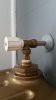
As shown below I have an old radiator which I had to remove for a period and now that it is reconnected there is a very minor weep/drip at the point indicated. it looks like the weep is travelling along the threads. Unfortunately this is a pretty old connector and I need to work with what I have got to an extent:

2017-04-13 18.43.07.jpg


The nut is now tightened up to its max so there isn't much more I can do. If I was to drain the system and disconnect it, would ptfe on the threads fix the issue? I have only ever used ptfe on an old olive.

Or is there some sort of compound that could be used along the edge of the joint that would set? The amount of liquid is very minor, never to the point of a drip that I have seen (unless the heat when it's on is drying this before I notice).

Thanks
 

Attachments

  • 20170413_183422.jpg
    20170413_183422.jpg
    50.7 KB · Views: 114
Probably a combination of camera angle and a trick of the light, but what seems to be a tapering shadow to the right of that nut might indicate the nut is cross-threaded?
 
had a quick double check and it's just the shadow suggesting a cross thread as it appears fine
 
Quite often a weep will seal itself especially if its on the hot system, you could try just leaving it for a while
Although it does look cross threaded
 
As shown below I have an old radiator which I had to remove for a period and now that it is reconnected there is a very minor weep/drip at the point indicated. it looks like the weep is travelling along the threads. Unfortunately this is a pretty old connector and I need to work with what I have got to an extent:


The nut is now tightened up to its max so there isn't much more I can do. If I was to drain the system and disconnect it, would ptfe on the threads fix the issue? I have only ever used ptfe on an old olive.

Or is there some sort of compound that could be used along the edge of the joint that would set? The amount of liquid is very minor, never to the point of a drip that I have seen (unless the heat when it's on is drying this before I notice).

Thanks
Turn both rad valves off and drain just that rad. PTFE on the olive should seal it. It's not X threaded it's the pipe ****ed slightly - not upright;)
 
Turn both rad valves off and drain just that rad. PTFE on the olive should seal it. It's not X threaded it's the pipe ****ed slightly - not upright;)

only issue is that when disconnected the nut doesn't move to the left very far so the olive isn't exposed to get some good turns of tape round it.

it's been several months with no self sealing. maybe see if I can get any more tightening of the nut first - there might be 1/8 of a turn possible yet
 
If you back the nut off the valve and then pull the valve clear, get some gas PTFE fold it over length wise and put 2 wraps around the pipe and the edge of olive that you can see, when you push the valve back on it should run the tape up to the edge of the olive and then nip it up, it should be enough at that. Don't jam the nut up any more, you'll end up over compressing the olive and possibly necking the pipe and then it'll never seal.

If that doesn't work then pull out the old tail out the rad and renew.
 
Is that radiator sitting on the floor?..doesn't appear to have any feet.
 

If you need to find a tradesperson to get your job done, please try our local search below, or if you are doing it yourself you can find suppliers local to you.

Select the supplier or trade you require, enter your location to begin your search.


Are you a trade or supplier? You can create your listing free at DIYnot Local

 
Back
Top