What effect does the boiler temperature setting have?

Joined
27 Jan 2008
Messages
29,470
Reaction score
3,621
Location
Llanfair Caereinion, Nr Welshpool
Country
United Kingdom
OK water too cool, and radiators can't put out enough heat, if set really hot, the DHW also gets too hot. But between the two extremes, what does moving that dial on the boiler do?

I understand how mark/space control works, but we have a boiler turning on/off, and TRV heads slowly opening and closing, and there must be a minium and maximum setting where ever that dial is set, and one would hope minium is higher than room temperature so the TRV can always cause the room to heat up while the boiler is running.

So how does turning the dial down help, why do we need an adjustment?
 
Combi boiler has two dials.
Hot water and radiator temperature.

Don't sound like yours is a combi.

So dial on boiler is radiator temperature.
Hot water temperature is controlled in airing cupboard and if its really hot then thermostat maybe broken.
It's just going full on boiling water
 
OK water too cool, and radiators can't put out enough heat, if set really hot, the DHW also gets too hot.
Unless the controls are fairly primitive, (or faulty), the DHW temperature isn't affected by the boiler flow temperature (provided that's high enough to give the required DHW temperature). When DHW temperature is reached the controls should stop it getting hotter.
 
DHW will in fullness of time, get the same temperature as radiators, there is no way to stop thermo-syphon heating DHW.

The only thermostat on the cylinder controls the immersion heater, nothing else.

The boiler is a simple on/off oil fired boiler, i.e. mark/space control only, as far as I am aware, all combi-boilers can modulate, so they are completely different in the control methods, sorry I should have made that pain.

So yes controls are fairly primitive, C Plan.

When I moved in, I did not really understand how old heating worked at all. My old house was open plan, and it worked, so no reason to play with heating, and two boilers one for DHW other for CH. Parents however had a combi-boiler, with a modulating boiler, and I realised the lock shield valve setting was critical, but the current and target display on the TRV helped set the lock shield valve.

But here, I started again from scratch learning how to set things, with the mirco bore piping the lock shield could be left wide open, the radiators never seem to over shoot, the TRV heads close them down fast enough at times and temperatures set.

The main problem turned out to be the hall cooling too slowly, but until the double glazing was all replaced, I was not sure if the controls would need altering, so this will be first year with all new double-glazed windows. It became apparent I needed a new thermostat in the living room, which kept the boiler on longer, so now three thermostats all in parallel one in hall, one in wife bedroom, and one in living room.

However, the temperature hysteresis needs improving, the TRVs in living room do nothing during the day, they are wide open, only overnight do they close, they are set around 2°C above the wall thermostat.

So I have been looking at the boiler temperature dial, and wonder if adjustment can reduce the hysteresis, but not really sure how it will affect the heating, hence the question.

In summer DHW is solar-powered, using excess solar before exporting in, but winter, I can't stop the boiler heating DHW, the hall thermostat can turn on boiler without the pump to heat DHW only, but that option is never used. There is no option for the reverse, can't turn DHW heating off.

So what will the dial on the boiler do for heating control?

 
You can get a thermostatic valve to put on the Return from the cylinder. Cyltrol is well known but there is (was) a Drayton, looking rather like a rad valve, with a sensor bulb on a small bore pressure pipe.

They might still be available, I sold a spare on Ebay for about a ton.
 
You could get wireless thermostats, but my heating guy says it gives the boiler less stress if it can cool by heating DHW, so I have not bothered with a valve for DHW.
 
OK water too cool, and radiators can't put out enough heat, if set really hot, the DHW also gets too hot. But between the two extremes, what does moving that dial on the boiler do?

I understand how mark/space control works, but we have a boiler turning on/off, and TRV heads slowly opening and closing, and there must be a minium and maximum setting where ever that dial is set, and one would hope minium is higher than room temperature so the TRV can always cause the room to heat up while the boiler is running.

So how does turning the dial down help, why do we need an adjustment?

There are 3 versions of C-plan, as I'm sure you know as the post copied below is by your goodself!

I think the fanciest version gives separate control of CH and HW. Can you upgrade your system?


ericmark


Joined 27 Jan 2008 Messages 29,416 Reaction score 3,615 Location Llanfair Caereinion, Nr Welshpool Country
United Kingdom


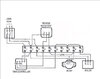
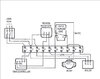
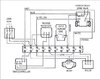
The the first two versions of C Plan C-Plan_old2.jpg C-Plan_old.jpg allow boiler to cool and very common with oil boilers, the last version can cause the boiler to over heat. C-Plan.jpg Since any heat lost from the cistern and pipe work is lost into the house, it does not really matter if always running with central heating.
 
There are 3 versions of C-plan, as I'm sure you know as the post copied below is by your goodself!
Yes, I could modify the boiler, and could as a result reduce the temperature of DHW. The summer simply don't want to use boiler for DHW, as solar is far cheaper, and in winter, having the water very hot, does mean using mixer taps, or filling a bowl with water to wash in, but water needs to be over 60°C to stop legionnaires, which is still too hot to put hands under the tap, so hardly matters if 60°C or 90°C as long as not hot enough to trip the over temperature cut out in the immersion heater.

So I would guess the hotter the water out of the boiler is, the faster a room can come to a new temperature when the TRV program changes temperature.

But to give the option, one would think there is also an advantage to having cooler water?

The obvious one is not burning ones self on a radiator, but once the room is up to temperature the TRV will keep radiator cooler, so there must be some other reason.

But what are the other reasons? Some do come to mind, like cooler flue pipe, but I would have thought having a boiler set at one temperature would have been a better idea, so there must be a reason, but what is that reason?
 

If you need to find a tradesperson to get your job done, please try our local search below, or if you are doing it yourself you can find suppliers local to you.

Select the supplier or trade you require, enter your location to begin your search.


Are you a trade or supplier? You can create your listing free at DIYnot Local

 
Back
Top