• Looking for a smarter way to manage your heating this winter? We’ve been testing the new Aqara Radiator Thermostat W600 to see how quiet, accurate and easy it is to use around the home. Click here read our review.

What sort of damp is this?

Joined
4 Aug 2014
Messages
11
Reaction score
1
Location
London
Country
United Kingdom
We have a house built in the late 1970s. It is an ex-council house with cavity brick walls on the outside that have been filled. Internally most walls are made of concrete blocks and some stud walls. I think there is a concrete floor underneath the under the fake plastic floorboards.

Three or four years ago we found the under stairs area was sodden from an internal tap. The next day we were going on holiday so we just moved everything and left the internal doors open. When we came back we found that there was mould on the walls in the living room. I just washed them down and put a dehumidify on to dry them out which didn't completely remove the mould stains.

Now a few years later we have found that the black mould is back. Last year we had some black mould on a wall underneath a window, so an external wall, where boxes were touching that wall. The boxes were moved but the walls still sometimes gets damp.

A few months ago we found some more mould behind sheets of cardboard that have been touching an internal concrete block wall for years. The wall was also damp to touch. My wife just threw the boxes away and left it. There is a radiator on the other side of this wall in the hall.

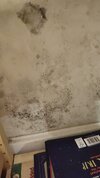
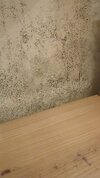
Today my wife found some more black mould on another wall, which I think is a stud wall, where some books and films had been pushed right against the wall. Again the wall was damp to touch and looks wet.

These walls were where there was black mould before, when we had the leak, which was in the hall under the stairs.

There is a radiator in the lounge but it's in the opposite corner to where the black mould is. Also my wife currently sleeps in the lounge as I am bed bound and it's easier. I would guess that because she sleeps there is more humidity in the room at night. On the opposite side of this wall is an internal walk-in cupboard which has no heating, though its door is always open.

In both these cases the black mould goes to about a meter above the floor. We constantly have a dehumidifier on in the hall as we dry our washing there.

Unfortunately I am not able to go downstairs and look and my wife is worried about her and our children's health. Our whole house ia crazy and my wife constantly hectic.

Is this black mould more likely to be due to condensation as no air was circulating between the walls and cardboard/books that were touching them, or is it possibly rising damp?

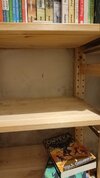
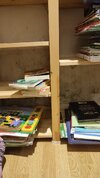
I have attached a few images of the latest spot. Thank you.
 

Attachments

  • IMG-20251206-WA0004.jpg
    IMG-20251206-WA0004.jpg
    223.1 KB · Views: 13
  • IMG-20251206-WA0002.jpg
    IMG-20251206-WA0002.jpg
    199 KB · Views: 13
  • IMG-20251206-WA0001.jpg
    IMG-20251206-WA0001.jpg
    188.4 KB · Views: 14
  • IMG-20251206-WA0000.jpg
    IMG-20251206-WA0000.jpg
    225.6 KB · Views: 14
We constantly have a dehumidifier on in the hall as we dry our washing there.

Never simply dry washing in a habitable space, indoors, is the rule, and never pile things tight against outside, or against divider walls, where the adjacent room in unheated.

Make sure your bathroom has an extract fan, which should always be used. When cooking, ensure lids are used on pans, and always use an extract to outdoors, cooker hood.
 
Never simply dry washing in a habitable space, indoors, is the rule, and never pile things tight against outside, or against divider walls, where the adjacent room in unheated.

Make sure your bathroom has an extract fan, which should always be used. When cooking, ensure lids are used on pans, and always use an extract to outdoors, cooker hood.
I agree, though not drying washing indoors is often not possible. Is it possible this could be anything other than condensation?
 
I agree, though not drying washing indoors is often not possible. Is it possible this could be anything other than condensation?

Certainly it could be, but deal with the cheap, easily solved indoor moisture levels first. Drying clothes indoors, is guaranteed to produce mould, as are the other things I mentioned.
 
Is this black mould more likely to be due to condensation as no air was circulating between the walls and cardboard/books that were touching them, or is it possibly rising damp?

Unfortunately, more likely to be rising damp in my opinion, which is harder to fix. Where it's down near floor level, where this is, it's likely that water is coming up through the concrete walls, making them cold, and that is accelerating condensation on them. The surface of concrete is grainy, and when it's cold, this promotes condensation.

If the wall itself wasn't wet, I don't think you'd be seeing this level of mould from water vapour being generated by clothes drying or cooking etc. However, all measures to counter water vapour will help and are good practice. Also, allowing walls to breathe by moving objects away from them will cut the condensation on them and mean less mould.

If you can hire a thermal camera, you can have a look at the walls to see the extent of the problem.

The expensive fix is working out and addressing the source of water in your walls, and damp proofing them.

In the meantime, clean the walls off with a mould remover solution to keep the mould levels down. That does keep the mould off for a while.
 
Unfortunately, more likely to be rising damp in my opinion, which is harder to fix. Where it's down near floor level, where this is, it's likely that water is coming up through the concrete walls, making them cold, and that is accelerating condensation on them. The surface of concrete is grainy, and when it's cold, this promotes condensation.

If the wall itself wasn't wet, I don't think you'd be seeing this level of mould from water vapour being generated by clothes drying or cooking etc. However, all measures to counter water vapour will help and are good practice. Also, allowing walls to breathe by moving objects away from them will cut the condensation on them and mean less mould.

If you can hire a thermal camera, you can have a look at the walls to see the extent of the problem.

The expensive fix is working out and addressing the source of water in your walls, and damp proofing them.

In the meantime, clean the walls off with a mould remover solution to keep the mould levels down. That does keep the mould off for a while.
My wife said the wall was wet and looks damp. I think it is a papered partition wall and all the mould is only where there has been no circulation months due to books and what not being pushed right up against it.

Also the external wall under the window still gets noticably damp.

There is no sign of damp in the kitchen itself or the walk-in cupboard in the hall which is the other side of the wall pictured. Nowhere where there is air circulation.

But we do have mouldy ceiling in the bathroom upstairs as the extractor fan broke. Though I repainted it a few years ago.
 
My wife said the wall was wet and looks damp. I think it is a papered partition wall and all the mould is only where there has been no circulation months due to books and what not being pushed right up against it.
Yes, from the level of mould you have, I would say something is causing your wall to get wet, either rising damp or a pipe leak. It is not being caused purely by condensation, the wall has to be getting wet and cold first I think.
 
There are no pipes anywhere near due to the concrete floor and nothing in the wall behind.

Also it has appeared in 3 different places in the room but not in between, only where the wall could not breathe.

Our dehumidifier rarely stops with or without washing in the colder months, though it's turned off at night.

Could we get rising damp only where the wall was covered and not in the other side of the wall in the wall in cupboard which should be colder but air could circulate?
 
Last edited:
Could we get rising damp only where the wall was covered and not in the other side of the wall in the wall in cupboard which should be colder but air could circulate?
No, the rising damp would be uniform across the wall. However, where the wall is clear, the water can evaporate out of the wall, where you've covered it, it can't, so that's where you get the mould.
 
As others have suggested, if you dry clothes in the house, don't have a working extractor in the bathroom, and pile things up against walls, then it's likely that you'll have mould.

It really is worth addressing these three things first.

- if you keep pouring water into the house with wet clothes and bath/shower water evaporation, then your house will be wet.
 
Pretty sure the wall will be getting wet from a water source, so you should try and identify that.

What happened to the internal tap that was leaking?

Have you tried switching off all the taps in the house and then checking whether your water meter dial is still turning? That will show if you have a leak somewhere.
 
Pretty sure the wall will be getting wet from a water source, so you should try and identify that.

What happened to the internal tap that was leaking?

Have you tried switching off all the taps in the house and then checking whether your water meter dial is still turning? That will show if you have a leak somewhere.
It was just a tap under the stairs in an extra pipe installed to have water available in the garden. It got knocked and dripped slowly for a while.

The mould from that event was just because there were lots of damp items left in a sealed house for 2 weeks.

There is no water source near that wall in the photos. Water would have to be traveling from a few metres away underneath the flooring.
 

If you need to find a tradesperson to get your job done, please try our local search below, or if you are doing it yourself you can find suppliers local to you.

Select the supplier or trade you require, enter your location to begin your search.


Are you a trade or supplier? You can create your listing free at DIYnot Local

 
Back
Top