
Why does orange algae grow on masonary paint?

Joined
11 Sep 2013
Messages
5
Reaction score
0
Location
Ayrshire
Country
United Kingdom
This orange staining (probably trentepohlia algae) started to appear on my house around 6 months after painting with Macphersons Powerkote. My decorator uses this paint a lot and has no idea why this has happened. The paint manufacturer puts the problem down to our rural environment/global warming. They refuse to answer the point that there was none of this on the walls before it was decorated and there is none of it on neighbouring properties which have been painted with a different product.

I can't get any decorating company to take this on as they can't be sure they can solve the problem. Trading standards say my only option is to take the decorator to the small claims court, but I believe he used the paint in good faith even though it was apparently not, in fact, fit for purpose (shouldn't the specification for the paint say if it isn't suitable for use in a rural environment?).

At my wits end - suggestions welcome.
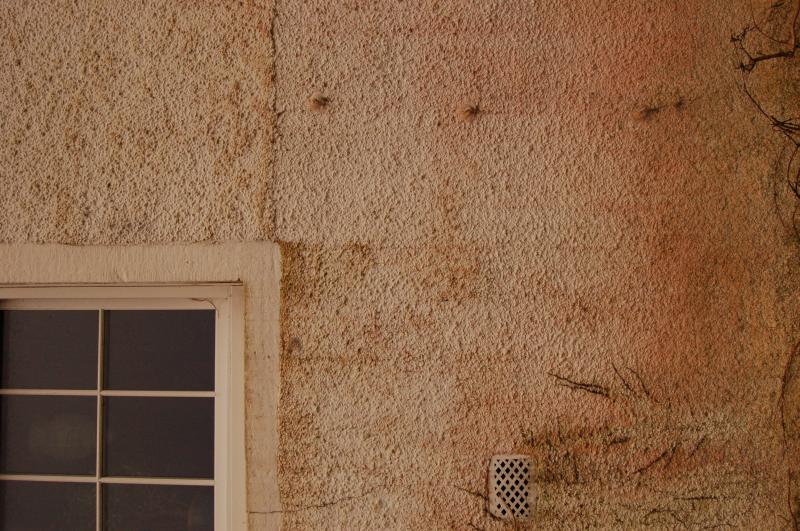
 
What are the black bits, was there some sort of plant or ivy growing on the wall that has not been cleaned off properly.
 
Ivy grew up there in one area after the paint was applied - what you can see is a bit of root I hadn't pulled off. This is not related to the orange growth though, which is all over the wall. It's not to do with damp in the wall, either, because where the paint was applied on a plastic pipe the algae is thriving.
 
I dont think you would be able to argue any case against faulty workmanship by the decorator/or the paint used

You now admit you allowed Ivy to grow on the wall after it was painted.
 
Sorry, not clear why you would think a small patch of ivy (less than a square meter) would cause algal growth over more than 20 square meters of wall. Not looking for someone to blame here, but trying to understand why the growth is thriving on this particular paint so that I can find a solution. As I said, no decorator wants to touch it because they think if they don't know why its happened they can't be sure it won't happen again.
 
When the Decorator came to paint the wall originally, was he aware that there had been Ivy growing on the wall, was the Ivy there when he viewed it for the Quote/Estimate ?

It hasnt helped that you have allowed the Ivy to regrow since its been painted.
 
Yes, it was there when he first came. I can't remember if it was me or one of his guys who pulled most of it off, but they cleaned up the rooty bits which were still attached when they prepared the wall before painting.
 
Something went wrong. Who can I sue?

I'll bet you didn't learn that from your old Da'.

Wash it down with an anti fungicide and stop whining.
 
As joe says, pressure jet it, then a fungicidal solution, apply stabiliser and then masonry paint,
then Make sure the Ivy dosent grow back
 
Joe-90 - guess you didn't actually read what I wrote. Anyway, the house is really tall and the algae grows back in 6 months. Should I just hire a cherry picker twice a year?

Bosswhite - thanks for your input. The difficulty with your solution is that I haven't been able to find a decorator prepared to tackle this, guess I'll have to keep looking.
 
I just asked a US house painter about this and was told that they used to use a mixture of trisodium phosphate and chlorine bleach to kill various algal growth. Scrub the wall with the mixture (not sure of quantities but you may be able to find some more info) and keep it wet until you rinse off with a pressure washer. Safety clothing and goggles are a must.

Apparently it's use was restricted a number of years ago but if you can get hold of it then it may be worth a try.
 

If you need to find a tradesperson to get your job done, please try our local search below, or if you are doing it yourself you can find suppliers local to you.

Select the supplier or trade you require, enter your location to begin your search.


Are you a trade or supplier? You can create your listing free at DIYnot Local

 
Back
Top