wireless showers

Joined
15 Apr 2005
Messages
16,517
Reaction score
268
Location
Yorkshire
Country
United Kingdom
http://www.tlc-direct.co.uk/Main_Index/Showers_Index/Showers/Triton_T300SI_Wireless/index.html
TTT300WISLASH9C.JPG


Would these be non-notifiable under part p??? :o

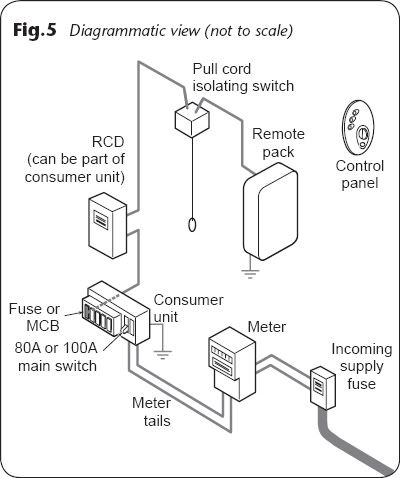
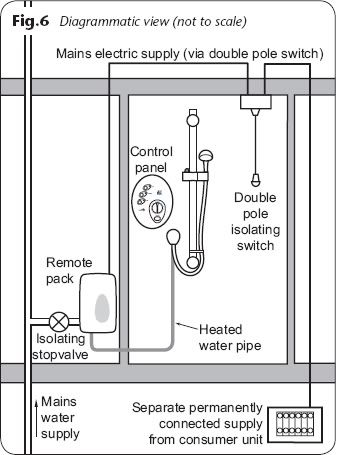
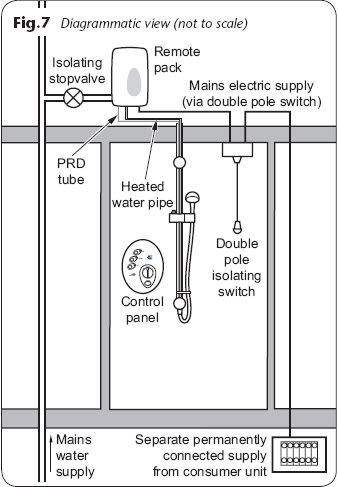
Where would means of isolation go?
 
It doesn't show any bonding to the metal of the shower head or the support for it.

Maybe I am being over cautious but if the water pipe to the heater unit is plastic and a fault , element to water ocurs is it ok to rely on the CPC in the twin and earth to ensure the water is not electrically HOT as well as temperature hot.

( Note I do NOT like electric showers, specially where there is no way to bond the exit pipe to ground )
 
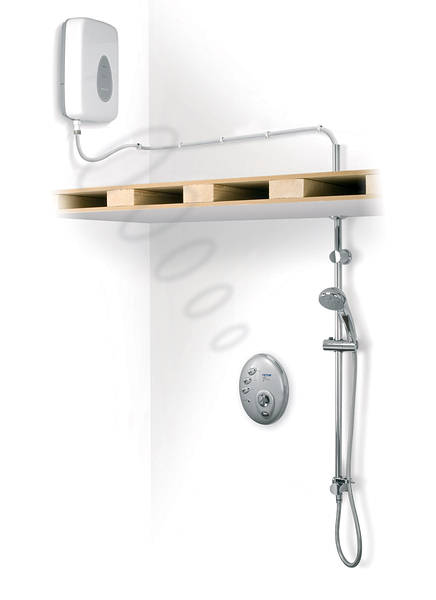
In one of the photographs, it shows the metal tube coming down from the ceiling. The tube forms the riser for the shower head to attach to, and contains the plastic water hose. I would guess that due to the metal going out of the bathroom, it is an ECP, and should be bonded.

Bernard, Im guessing here, but aren't the heaters inside a shower enclosed in a metal can in which the water circulates? Thus any fault heater to water, would conduct to the metal can, and to earth, tripping the RCD straight away.
 
Providing there is adequate plastic pipe work to provide isolation, I don't think I would class the metal drop it as an extraneous conductive part, even if it is metallic. Similar concept to having a radiator on a plastic pipe installation with short metal drops for aesthetics. I was going to say consult the manufacturers instructions, then I looked at them! Appalling:
http://www.tlc-direct.co.uk/Technical/DataSheets/Triton/TTT300WI.pdf
 
Crafty said:
I would guess that due to the metal going out of the bathroom, it is an ECP, and should be bonded.

No. That is not the definition of an extraneous conductive part. (Page 22 BS 7671)

The overall concept is a sparky's dream... and the sooner copper pipework is replace entirely by plastic, the better!
 
Crafty said:
Bernard, Im guessing here, but aren't the heaters inside a shower enclosed in a metal can in which the water circulates? Thus any fault heater to water, would conduct to the metal can, and to earth, tripping the RCD straight away.

The type of shower I replaced for ny neighbour had all plastic water pipework inside. The heating chamber was plastic. True the elements coiled inside the chamber were metal cased but the earth connection as I recall relied on just one screw in a thermally cycled ( it got hot with hot water and then cooled down ) piece of metal.

I like belt and braces and a bit of string.
 
Either way, those showers are sh!te.

We had one in our old house and I hated it. The main unit was in the loft where, during the winter, the ambient temperature was obviously a lot lower than in the house. Obviously, during winter, you need to turn the temp control (well flow control really) up to compensate for the lower water temperature so you've already got a weaker shower. However, with my old shower, because the heated water had to travel so far through the loft and to the showerhead, it had cooled by the time it exited.

The result, having to have the shower set to 10 to get a lukewarm shower in the winter.

Even in summer it was a pain in the ass.

They may look good but you're sacrificing practicality in my opinion.
 
Out of interest, why are hot showers fed from a cold water pipe, would it not be better to feed it from the hot, then the heating element doesn't have to work as hard, if at all. This sounds like a dumb question, but I'm not sure why. Someone please set me straight :oops:
 
Because it's convenient to be able to have a hot shower at any time and not every house has stored hot water to feed the shower - therefore the only option is to heat it from cold.

Davy
 
if you want a shower that is part of your hot water system use a mixer shower, there really isn't any need for electric heat in that situation.

but the main reason we use electric instant heat showers is independance from the hot water system. Its nice to be able to have a quick shower at any time regardless of how many baths have been run or whether the boiler has broken down.
 
Deluks said:
Out of interest, why are hot showers fed from a cold water pipe, would it not be better to feed it from the hot, then the heating element doesn't have to work as hard, if at all. This sounds like a dumb question, but I'm not sure why. Someone please set me straight :oops:

You get the pressure from the incoming mains, no need for a pump.
 
You get the pressure from the incoming mains, no need for a pump.

Shower downstairs and tank in loft. Large hot water tank right next to shower room with good plumbing. Result luxury showers not matter who does what with water else where in the house.

( Yes, I know in many modern houses build quality doesn't permit that, that's why we self built. )
 
FredFlintstone said:
The main unit was in the loft where, during the winter, the ambient temperature was obviously a lot lower than in the house... with my old shower, because the heated water had to travel so far through the loft and to the showerhead, it had cooled by the time it exited.

They may look good but you're sacrificing practicality in my opinion.

Er, as with all items of equipment, the installation method can influence performance.

Ever heard of insulation? A long run of uninsulated pipework after the shower is plain idiocy on the part of the installer.

They are entirely practical if installed correctly. :wink:
 

If you need to find a tradesperson to get your job done, please try our local search below, or if you are doing it yourself you can find suppliers local to you.

Select the supplier or trade you require, enter your location to begin your search.


Are you a trade or supplier? You can create your listing free at DIYnot Local

 
Back
Top