Wiring a Dimmer Switch and bulb

Joined
5 Dec 2022
Messages
3
Reaction score
1
Country
United Kingdom
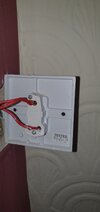
Hi. I have opened the wall Switch cover and I have only 3 red wires and 1 earth. 2 of them in L1 and 1 in L2 none in L3
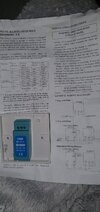
My Dimmer has 1 x L1 1 x L2 and the curly X terminal.
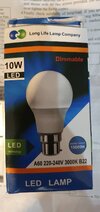
Which Red wires do I put in where.? Just the same as the normal Switch cos I thought that I'd need to have at least one in the Curly X terminal. My Dimmer says min 60w and my dimmerble Bulb say 10w equivalent to 60w ?? I dosnt say whether its for a Led or Normal bulb but says no de-rating required. I don't know what that means so I'm in the need of a little guidance please. Thanks Edinburgh UK oh its a council property !!!!
 

Attachments

  • 167026817976059340217249513983.jpg
    167026817976059340217249513983.jpg
    212.8 KB · Views: 80
  • 16702682495265766146342158786624.jpg
    16702682495265766146342158786624.jpg
    95 KB · Views: 74
  • 16702683233742964925909860952131.jpg
    16702683233742964925909860952131.jpg
    137.8 KB · Views: 77
I can always get another bulb. What would you recommend..? And any help with the wiring..? Thanks
 
Put the 2 wires that are in L1 0f the old switch into the squiggly line terminal.
And the single wire into L1
 
The wiring recommendation above is good and correct.

And the 10W LED bulb does say dimmable, so that is likely to work.

But your dimmer says it is for bulbs greater than 60W. So it is unlikely to work for your 10W bulb. The dimmer is also likely to be designed for old fashioned 'hot' incandescent bulbs and unlikely to work for LED bulbs.

Try your current dimmer and see if it works - it is safe to try it out - but that dimmer is very likely to cause the LED bulb to flash or flicker.

Then you need to buy a dimmer that says it is for LED bulbs, and I always recommend the (more expensive) 'Varilight V Pro dimmer". (Put that in a search to find a seller).

SFK
 
Last edited:
Back in the 90's I installed dimmer switches, but they would not work with compact fluorescent lamps (CFL) and not recommended for quartz bulbs they shorten the life of a quartz bulb. So they were all removed.

As LED arrived it became possible to dim the lights again, but they stay the same colour temperature, so lack the ambulance of the old system, so better unless using many bulbs where costs get silly to use smart bulbs, so the colour temperature can also be changed some even allow colour changing.

So with a chandelier with 8 bulbs so 8 x 6 watt = 48 watt so a 40 - 100 watt dimmer will still work, and 8 smart bulbs are expensive, but for a single or pair of bulbs, just not worth fitting a dimmer switch, the smart bulb is better option.

The problem is it needs a real 60 watt load to work, and also many dimmers react with the bulbs causing either the bulb not to switch off, or the have a shimmer, so it can take a lot of attempts with different bulbs to find a bulb that will work, and smart bulbs have come down in price.

Add to that with a smart bulb you can control it from remote controls, phones, tablets, and things like Nest Mini with voice commands, so more convenient than using wall mounted controls.

Also I know my son when working on council properties had to remove any chandeliers or switches fitted by tenants and the tenants would be charged for new ceiling roses and switches etc, plus their old ones ended up in the skip, so it would seem prudent not to fit them to start with.
 
Back in the 90's I installed dimmer switches, but they [snip] not recommended for quartz bulbs they shorten the life of a quartz bulb.
(n)
In the 80s I was involved in the spec and testing of TV Lighting installs including Luminaires, Lamps and Dimmers. The majority of lamps were quartz halogen (Thorn) although GEC did some hard glass versions.

It wasn't the life of the lamp that was affected. All lamps last longer with lower volts (dimmed). It was, possibly, the loss of a perceived light output constancy advantage. The quartz halogen scoured tungsten off the inside of the glass when hot enough. That scouring effect would be lessened at lower operating temperatures (very dim)? But by the same token tungsten evaporation from the filament would also be much less, so less deposition on the glass?

There was never a proven advantage for Thorn Quartz over the GEC equivalent in my time in TV Lighting. I did once have to replace every Thorn 10 kW lamp in a Studio with GEC as their filaments were 'singing' when dimmed. Just a bad batch, but they were effectively a made to order item.
 
their filaments were 'singing' when dimmed. Just a bad batch,
That's not a rare thing in stage lighting, and so do the dimmers- one of the usual reasons for being tucked away in a basement away from the audience
 
That's not a rare thing in stage lighting, and so do the dimmers- one of the usual reasons for being tucked away in a basement away from the audience
And not surprising with old trailing edge phase controlled dimmers, when you look at the waveforms. They were quiet at full brightness because there was no cut off, so very low harmonics. Then as the cut-off move towards the peak of the sine wave the singing got louder as the harmonics increased. With modern pure sine wave dimmers you don't get that problem.
 
Thank you so much for the advice about how to wire up the Dimmer terryplumb, it worked perfectly. All correct about the led bulb not working properly and there was a horrible flicker on low light. So I got a Halogen bulb and it's great. I can't thank everyone enough for the help. Many many thanks. Enjoy the Xmas holidays ‍
 
Thank you so much for the advice about how to wire up the Dimmer terryplumb, it worked perfectly. All correct about the led bulb not working properly and there was a horrible flicker on low light. So I got a Halogen bulb and it's great. I can't thank everyone enough for the help. Many many thanks. Enjoy the Xmas holidays ‍
So, you "got a Halogen bulb" to use the greater amount of current that the old dimmer "needed" to operate acceptably!

You will pay for the use of the extra current involved, over the years.
The current you are now using is (probably) about 5 times that of a LED generating about the same number of Lumens.

You need to assess if
the cost of the extra current (and the likely cost of replacing Halogen lamps - over the years) is likely to be less than or outweigh
the cost of replacing the Dimmer with one that is suitable for the (more efficient) Dimmable LEDs now available,
one of which you have already purchased !
 
You need to assess if
the cost of the extra current (and the likely cost of replacing Halogen lamps - over the years) is likely to be less than or outweigh
the cost of replacing the Dimmer with one that is suitable for the (more efficient) Dimmable LEDs now available,
one of which you have already purchased !
I've been forced to have this discussion with my local village hall where I help with lighting for AmDram.

The power available for such is 3x 16A radial so restricted to 12KW, based on that figure a typical show of 2 hours and 4 hours for rehearsals and set design/focussing = 72KWh, @50p(?) =£36.
In reality this is way, way over the top as the chances of having 12KW of lights rigged, let alone running, at any one time is highly unlikely, for a start there are only 8 incandescent lights and their 8 channels of dimming permanently installed (5.2KW at 650W/lamp).

To replace with LED is at least £2000 (£250 per light fitting) or 50 years of shows.
 
I know you should not dim quartz bulbs, but it must in real terms depend on how much dimmed. The idea is the quartz is that hot tungsten will not adhear to it. Likely it can dim to some extent, if it faiis due to being too cool, the quartz goes black.

I don't have any dimming switches left, but I do use dimming smart bulbs. Most rooms I have no need to reduce the lighting, in the main reverse is true. So maybe 4 rooms where dimming is an advantage, 3 bedrooms, and the landing.

Lower bedroom used a smart bulb and a remote control, mainly so lights can be turned on/off from the bed, dimming and colour changing was not really required, but bulb cost about £8 complete with remote, it was simply a cheap easy fix when no two way lighting.

Main lights in other bedrooms use Energenie Mihome switches, no dimming, but does work with a remote, and phones and voice commands using Google Nest Mini's.

The landing lights split into outer and inner, so 1, 4, or 5 bulbs, the centre bulb will dim, but not really used main reason for bulb was the colour changing.

We have some wall lights which can dim, and table lights, plus some strip lighting used in display cabinets and kitchen counters. But in the main I switch on more or less lights rather than dim them.

Likely gone a bit OTT on smart devices, specially since Google Nest Mini's can behave like mischievous little boys, but when "Hey Google" fails, I can always try "Hey Linda" although she also uses "Hey Eric" so maybe not best option.
 

If you need to find a tradesperson to get your job done, please try our local search below, or if you are doing it yourself you can find suppliers local to you.

Select the supplier or trade you require, enter your location to begin your search.


Are you a trade or supplier? You can create your listing free at DIYnot Local

 
Back
Top