WUFH, Cracks in the screed

Joined
15 Jan 2017
Messages
4
Reaction score
0
Country
United Kingdom
Hi, I have a new extension built, made wind and water tight end of November. The Plumbers installed pipes on the insulation using plastic 'egg box forms to hold the pipes. 100mm screed was laid on top and I was told it would be 4-5 weeks before the heating could be turned on, which meant the 30th December earliest. Well the plumber returned last week and connected up the 2 port manifold to my combi boiler flushed and filled the system and leaving said just leave it running, most of my rads are fitted with thermo valves! Well I lasted until 2.00AM before having to get up and switch off... far too hot even for Scotland! The following morning my builder said the plumber had phoned him the previous eveing to say he had left the flow valves and mixing valves on maximum.
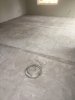
My understanding is WUFH should be run up in stages gradually, well my floor is now showing cracks, my builder just says he'll get the brickie back to fill the cracks. Are these cracks something to be worried about? I intend tiling the floor will the possible movement of teh floor be an issue. The crack goes the full distance form wall to bifold doors!
I've tried to show in pictures
Many thanks

 

Attachments

  • IMG_0356.JPG
    IMG_0356.JPG
    42.9 KB · Views: 252
  • IMG_0357.JPG
    IMG_0357.JPG
    54.2 KB · Views: 229
  • IMG_0358.JPG
    IMG_0358.JPG
    44.1 KB · Views: 235
  • IMG_0359.JPG
    IMG_0359.JPG
    50.1 KB · Views: 241
A lot depends on the type of screed.

Thermal expansion joints?

But yes, as a rule, we always bring the temperature up very slowly; and never straight to maximum. Christ, even with wooden floors mine maxes our at 45 depending on the weather.
 
Would a decoupling membrane be any use on the floor Dan?
 
Almost definitely. But only if the screed is stable.

Builder we recently worked with got kicked off site for making a right pigs ear of the screeding.

Customer paid for an independent specialist to come and advise. It was salvaged by another contractor who managed to work some wizardry.

Tragic really as it was a disabled conversion and the builder has probably either lost his business, or will get an eye watering insurance claim.
 
  • Thanks
Reactions: DP
Hi thanks for replies.
Newboy, the channels are where wooden screed boards were removed, he back filled them, his screed tool was only 3m wide!

Dan, I should add there are no controls ie. Thermostats, valves wired up thats down to someone else. when I came downstairs at 2.00 the flippin floor was hot! the condensation in the roof light has now dispersed

DP I used a CSM 90 mat in the US it was mandatory in the apartments for noise control and crack prevention seemed secondary..however I am having doubts over this floor, not too happy!!
 
Controls are usually added at the end. The case I referred to above is only the second I've not been responsible for personally (even the first I had a backup to override the muppet who couldn't be trusted to wire a dvd player let alone 19 zones of heating. However, there should be something keeping the floor temperature down.

I don't want to freak the OP out as there is every chance that the screed is fine, but the plumber's comments are worrying. Bssic "cover your a7se" mentality should dictate a certain amount of caution.

Massive condensation is normal though especially if the plasterers have been up to their tricks.

Every builder worth his salt they I've worked with has used Ditra Mat to separate ufh.

Biggest single area we've worked with was 2500 square feet..
 
Last edited:
I roasted a guys screed once. About 4000sq/ft of it in a new build. Hooked up an old oil boiler and let it run constant for a week without controls.
The guy fitting the controls was livid.:D

Never cracked the screeds though. Full of fibers.
The tiler used a flexible tile adhesive. That was 12 years ago and I've been back to his home several times and there was never any issues.
 
Last edited:
David, are you saying that the boiler output was directly connected to the UFH without any temperature controls so the boiler could have been providing a flow temperature of 75 C ?

When fully dried and cured, the heating water temperature is usually at a maximum of about 45 C. Otherwise the floor becomes too hot to walk on with bare feet.

How were the UFH pipes arranged in relation to the screed boards? Were the UFH pipes separated into 3 m wide areas according to the positioning of the screed boards? Or were the screed boards the full 100 mm thickness above the plastic UFH floor panel?

Is the room not being ventilated to allow moisture to exit?

It is normal to cure/dry UFH screed at about 1 C increase per day commencing a few days after laying starting from ambient temperature.

Tony
 
Last edited:
Hi Tony,
No the boiler output was connected to a 2port Reliance Manifold with Reliance mixing valve, the mixing valve was left at MAX which is over 55degC, the flow valves were left fully open too.
Not sure how the pipes were arranged, we have 2 zones.
The screed boards were probably 50mil if I recall from seeing one lifted
Yes the room window top lights were open and the unfloored bathroom above window was left open too
plenty of condensation on all glass until the following night.
To be fair the floor screed had a full 5 weeks to dry before the heating was applied
 
But concrete cures very slowly at near freezing temperatures. The excess water can take months to dry in cold temperatures with no air movement.

In my view its totally the wrong way to deal with it.

Probably no serious damage has been done. That cracking looks pretty minor to me so you may be lucky.

Your "plumber" seems to have very little appreciation of dealing with UFH.

Tony
 
Last edited:
Tony,
I agree the plumber seems to be that way.
There is only the one crack, and it's where the second floor screed was poured, so that and the minor back filling over the screed board filling that have lifted seems to be the only real issues,
but I've the architect coming out tomorrow so its now in his hands
 
It would be good to be adding heat to the screed to assist in drying it as you seem to have lost five weeks by not curing and drying it since November.

Running with the blending valve set at about 35 C should be helpful but not risk any ( further ) damage.

Many architects seem to have little detailed understanding of UFH installation as they usually rely on other experts.

It appears to be a lack of understanding/communication/management between the "plumber" and the builder in your case.

Tony
 

If you need to find a tradesperson to get your job done, please try our local search below, or if you are doing it yourself you can find suppliers local to you.

Select the supplier or trade you require, enter your location to begin your search.


Are you a trade or supplier? You can create your listing free at DIYnot Local

 
Back
Top