
Stuck Valve Closed?

Joined
24 Nov 2019
Messages
39
Reaction score
2
Country
United Kingdom
Hi all,

I've recently had a glowworm 30r energy system boiler installed along with a Nest thermostat. All was good for approx 3 weeks up until last night. We noticed that the heating wasn't coming on despite the thermostat calling for heat. I've tried resetting the thermostat and the boiler but to no avail. Both look to be working fine. No error codes.

I've found that the hot water works correctly. So I've set the valve for the CH to manually open so the hot water being on allows for the radiators to now heat up.

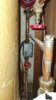
This valve appears to be stiff so my thoughts are that it has failed and remains constantly closed.

My question is, how should this valve behave? Ie when heat is requested by the nest thermostat to its heat link I hear it click as if acknowledging a request for heat. Should the valve then open and then at this point should that turn the boiler on?

At present nothing is happening but it appears that the above process is what happened for the hot water using a different valve.
 

Attachments

  • 20191124_203540.jpg
    20191124_203540.jpg
    184.3 KB · Views: 568
The valve should behave as when there’s a call for heat, the valve is motored open and operates a microswitch, which then operates the boiler, once satisfied it then removes the power to the valve and the valve springs shut.
 
Thanks for the reply. Does it sound to you like this valve could be my problem?

It's a little difficult to get to as it's at the back of the cupboard partially behind the water tank.
 
It does sound like that, but is that for hot water or heating? Looks like you have a Drayton valve towards the front?
 
It's for heating.

From what I gather the Drayton valve is for hot water only and the Honeywell is for Central heating only.

Is that normal?

I moved in to the property in September and this is the first time I've had any experience of this type of system so I'm still trying to get to grips with it.
 

Attachments

  • 20191124_203531.jpg
    20191124_203531.jpg
    160 KB · Views: 426
Last edited:
It's for heating.

From what I gather the Drayton valve is for hot water only and the Honeywell is for Central heating only.

Is that normal?

Either valve and actuator make could have been used for either application. They are just basically 2-port motorised valves.

Actuators heads, the electrical part of the valve, are a common point of failure - so the chances are good that it has failed in some way. Their motors fail, their microswitches fail, they can jam, or simply break. Its worth seeing if you can remove the head from the valve, to see if the actual valve is free to turn manually - but ensure the power is off.

The it should work, is that your stat should signal the valve that there is a demand for heat, your actuator / valve should then move to the open position, where upon a microswitch is closed and that signals the boiler and pump to run.

What did this mean -
'This valve appears to be stiff so my thoughts are that it has failed and remains constantly closed.'
 
Last edited:
What did this mean -
'This valve appears to be stiff so my thoughts are that it has failed and remains constantly closed.'
They used to have a lever that you could slide to operate them manually but the stiffness is probably the physical resistance of the motor turning. Long while since I've seen a motorised valve so not sure if this is the case or not.
 
Either valve and actuator make could have been used for either application. They are just basically 2-port motorised valves.

Actuators heads, the electrical part of the valve, are a common point of failure - so the chances are good that it has failed in some way. Their motors fail, their microswitches fail, they can jam, or simply break. Its worth seeing if you can remove the head from the valve, to see if the actual valve is free to turn manually - but ensure the power is off.

The it should work, is that your stat should signal the valve that there is a demand for heat, your actuator / valve should then move to the open position, where upon a microswitch is closed and that signals the boiler and pump to run.

What did this mean -
'This valve appears to be stiff so my thoughts are that it has failed and remains constantly closed.'

Thanks again for the help. I was referring to the manual lever being stiff to move to open it manually (which I've done so it is now always open, but only to let the water travel around the system when requesting hot water).

It sounds like maybe the motor is ok but the microswitch has failed. Or something along those lines. Difficult to narrow it down. Unsure if to try replacing the motor first or just get my heating engineer to replace the whole valve.
 
Just replace the actuator (head of the valve) if it turns easily when removed.
 
With the actuator taken off, it should be just about possible to operate the valve with you bare fingers, or quite easily with pliers. You can get just the actuators much cheaper than that, take a look on Ebay..

I'll check that out. Are they easy to remove? I take it the system shouldn't need draining while I replace just the actuator?

If I then find the valve won't turn, then that's a different story? In fact I know I can open it using the manual lever so the valve should be good. Just hopefully the actuator causing the problem.

Something like this should be good?

https://rover.ebay.com/rover/0/0/0?mpre=https://www.ebay.co.uk/ulk/itm/262810892635
 
Last edited:
CV
No other way round if the motor is OK and power is going to the motor , then the lever will offer no resistance , if motored open and no resistance on the lever then it is the micro switch

There is resistance to the lever. It just doesn't seem to do anything when there is a request for heat. Is there something I could be missing?

It worked previously all fine. Nothing has changed. Wiring looks good. No slipped wires.

I may remove the old one tonight to have a closer inspection and order a new one. My heating engineer isn't getting back to me in any rush.
 
If you have a multi meter, first thing to check is with a demand for heat is there 240vAC going to the motor of the valve
 

If you need to find a tradesperson to get your job done, please try our local search below, or if you are doing it yourself you can find suppliers local to you.

Select the supplier or trade you require, enter your location to begin your search.


Are you a trade or supplier? You can create your listing free at DIYnot Local

 
Back
Top