Crack diagnosis - subsidence?

Joined
11 Apr 2023
Messages
46
Reaction score
0
Country
United Kingdom
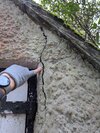
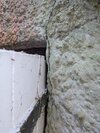
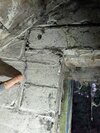
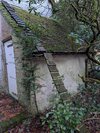
I have a 1907 property with pebbledash exterior. You can see from the photos that there are cracks by the door to our coal shed. I am concerned it might be subsidence. But also, it might be mechanical stress where the raised door hinges come into contact with the pebbledash, leading to cracks that way.

The cracks near the top are 5mm, but on the internal walls the cracks are hairline.

Anyone got advice or an idea?

 

Attachments

  • PXL_20250107_150752470-min.jpg
    PXL_20250107_150752470-min.jpg
    508.9 KB · Views: 138
  • PXL_20250107_150919114-min.jpg
    PXL_20250107_150919114-min.jpg
    562.9 KB · Views: 141
  • PXL_20250107_150957434-min.jpg
    PXL_20250107_150957434-min.jpg
    434.4 KB · Views: 133
  • PXL_20250107_151050346-min.jpg
    PXL_20250107_151050346-min.jpg
    571.1 KB · Views: 136
Just fill it.
Any movement in ground would cause that. Nothing to worry about
 
When you sell a property you have to disclose cracks in walls and any repairs to those cracks. If it is subsidence, then there will be a problem when it comes to the sale as mortgage lenders are reluctant to loan money on a property with subsidence.
 
It is part of the house.
 

Attachments

  • PXL_20250107_150742227.MP-min.jpg
    PXL_20250107_150742227.MP-min.jpg
    639.9 KB · Views: 74
  • PXL_20250107_150815371.MP-min.jpg
    PXL_20250107_150815371.MP-min.jpg
    708.6 KB · Views: 81
It was, it looks like it's detached itself. It's a lean-to, therefore not an integral part of the main building. I'd be much more worried if it was within the main rectangle of the house itself.

It's an obvious weak point, it's obviously a very old building.

It's possible that the hinges have contributed, squirty grease may help. But it's much more likely that the section of wall beyond the door has moved away from the rest of the building.

Has it got foundations? It would be worth a dig alongside it, see what's holding it up.
 
It was, it looks like it's detached itself. It's a lean-to, therefore not an integral part of the main building. I'd be much more worried if it was within the main rectangle of the house itself.

It's an obvious weak point, it's obviously a very old building.

It's possible that the hinges have contributed, squirty grease may help. But it's much more likely that the section of wall beyond the door has moved away from the rest of the building.

Has it got foundations? It would be worth a dig alongside it, see what's holding it up.
sorry for coming into this thread but how will one assess a house has foundations or not? so if it doesnt have foundations will that mean the house bricks from the bottom are straight sitting on the ground without no footings?

i need this advice for the future thank you.
 
sorry for coming into this thread but how will one assess a house has foundations or not? so if it doesnt have foundations will that mean the house bricks from the bottom are straight sitting on the ground without no footings?

i need this advice for the future thank you.
To check on foundations a trial hole is required, and there are foundations and foundations. My 2016 extension to my 1950 house has foundations at 1m depth whilst the existing concrete ones are at 600mm deep, my sons 1900 house had foundations at about 500 and consisted of corbelled out brickwork , my 9" garden wall which is about 1m high has foundations just below GL consisting of 2 layers of brick laid on top of each other to give 440mm foundation width
 
sorry for coming into this thread but how will one assess a house has foundations or not? so if it doesnt have foundations will that mean the house bricks from the bottom are straight sitting on the ground without no footings?

i need this advice for the future thank you.
Often a brick "footing" was built on top of the ground, which widens out to spread the load over a wider area...

1737120154980.jpeg


But often for outbuildings, garden walls and botches the "No foundation" approach is used! I bought a house that had a 6 foot block garden wall that I pushed over with one hand.
 
Thank you ivor now its making sense. Your a gem and a legend!

so technically saying if the house is built directly on the ground that mean it has no foundations?

but if the house bricks go below the ground that will mean it has foundation?

so to check if the bricks stop before entering ground it has no foundation?

Untitled.png

the green part is the earth and if the house is like that does that mean the house is just sitting on the ground?
 
There shouldn't be anything black under it. The depth depends on the ground conditions. We have topsoil that's over 1m deep, most places don't.
 
There shouldn't be anything black under it. The depth depends on the ground conditions. We have topsoil that's over 1m deep, most places don't.
so which one out of the picture you sent you think my 1930 house has? under the floorboards i see brick footings in the middle of the room thank you.
 
Fix what's left of the gutter, which has allowed rainwater to wash away the subsoil under whatever foundation it has.
 
I am concerned it might be subsidence
The cause is because there’s a very narrow bit of masonry from the corner of the door and that makes it weak. Anything like very strong wind, or thermal expansion would lead to stress at that point.

I dare say there’s a bit of movement in the foundation, but that crack doesn’t indicate anything to worry about

It’s a design fault rather than
 

If you need to find a tradesperson to get your job done, please try our local search below, or if you are doing it yourself you can find suppliers local to you.

Select the supplier or trade you require, enter your location to begin your search.


Are you a trade or supplier? You can create your listing free at DIYnot Local

 
Back
Top