Is it perhaps to do with the magnitude of envisaged (import) consumption? - i.e. might they perhaps be equally happy to offer the tariff to anyone prepared to pay for some specified minimum (import) consumption ?There are fewer homes have Solar + Batteries than have EVs and the size of solar batteries will be much smaller compared to EV batteries.
800,000 EVs ... 175,000 who have Solar + Batteries
so why would they just not offer that tarff to who ever asked? I would assume there is a plausible reason, why would you have to have an EV ?

You are using an out of date browser. It may not display this or other websites correctly.
You should upgrade or use an alternative browser.
You should upgrade or use an alternative browser.
Sig Energy Solar Installation
- Thread starter Doug99
- Start date

- Joined
- 17 Aug 2010
- Messages
- 5,148
- Reaction score
- 2,155
- Country

That makes a bit of sense, an EV owner would be a better customer - but as far as I know buying more electricity does not attract any discount other than the daily standing charge becomes less of a factorIs it perhaps to do with the magnitude of envisaged (import) consumption? - i.e. might they perhaps be equally happy to offer the tariff to anyone prepared to pay for some specified minimum (import) consumption ?
From a bit of googling it suugest someone doing 8000 mile per year could be using on average another 8kwh per day - that would put my consumption up by 66%

- Joined
- 27 Jan 2008
- Messages
- 29,470
- Reaction score
- 3,621
- Location
- Llanfair Caereinion, Nr Welshpool
- Country
 This makes me think, no EV and you can't have it. But there are three called Octopus Go.

I was starting to think I was going daft, as each time I looked for Octopus Go I was getting different results. They say:-
Octopus Go 12M Fixed April 2015
Day unit rate 29.04 p/kWh
Night unit rate 8.50 p/kWh
Standing charge 67.83 p/day
The smart EV tariff with super cheap electricity between 00:30 – 05:30 every night. This tariff has a £25 exit fee.
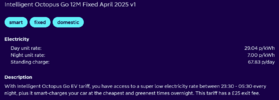
Intelligent Octopus Go 12M Fixed 2025
Day unit rate 29.04 p/kWh
Night unit rate 7.00 p/kWh
Standing charge 67.83 p/day
With Intelligent Go EV tariff, you have access to a super low electricity rate between 23:30-05:30 every night, plus it smart-charges your car at the cheapest and greenest times overnight. This tariff has a £25 exit fee.
Intelligent Octopus Go – EV Saver
Day unit rate 30.17 p/kWh
Night unit rate 6.00 p/kWh
Standing charge 67.83 p/day
With our OEV exclusive Intelligent Octopus Go EV Saver tariff, you have access to a super low electricity rate between 23:30-05:30 every night, plus it smart-charges your car at the cheapest and greenest times overnight.
The second two want to connect to the car, so Octopus can control when the car is charged, so can't see how that can be used without an EV? The top one is nearly the same as the British Gas tariff I have just come off, I found when I stopped using it, my bill dropped. It was down to the charging of the batteries every night, and getting nothing for export.
I was promised payment with British Gas for export, but did not get it. I have seen a few rates with Octopus for export, it seems to be linked to import tariff, so the aim for me is:-
1) Not to run out of battery in winter too soon.
2) Not to lose too much importing when later in the day exporting.
So importing 5.58 kWh (90% of the 6.4 kWh battery as reserves 10% for UPS) at 15.45p per kWh then export at 13.9p per kWh means I will lose a maximum of 8.65p per day to ensure I don't pay 144p as the battery has run out before I get solar production.
The 36.06p per kWh should the battery not last until 7 pm an extra 10.3p per kWh is clearly not what I want, however the number of times a year it is likely to happen are few.
I worked out the BG EV rate v Octopus Flux rate and a rough calculation likely to be £150 a year better off with the Flux tariff, but I have over a year's data to use to help work it all out. But until one has done a year, the guess work is a lot higher. The adding of the second battery has changed my data, the installer offered to get the tariff sorted, and wife was sure she could get better, so we have been 18 months with no export payment, because we tried to get an extra few pence.
Lucky, the installer is now doing it for us. I hope.
True, within a certain tariff. However, if they so wished, they could presumably offer tariffs with lower usage prices to those they had reason to believe would be 'better customers' (i.e. likely to 'buy more electricity from them') ?That makes a bit of sense, an EV owner would be a better customer - but as far as I know buying more electricity does not attract any discount other than the daily standing charge becomes less of a factor
- Joined
- 17 Aug 2010
- Messages
- 5,148
- Reaction score
- 2,155
- Country
Another thought on when considering costs - these batteries are dam expensive, I'm about to pay £3,000 for 10kwh.
a 10kwh battery has a usable storage of 9kwh and has a lifepan of 5,000 recharges - so over its lifetime can store and deliver 45,000 kwh
so for £3,000 that's working out at 6.7p per KWH - do we take that into account ?
If standard tariff is 24p, are we just breaking even if importing at 17p
I can't see it worth importing anything unless it is under 10p
a 10kwh battery has a usable storage of 9kwh and has a lifepan of 5,000 recharges - so over its lifetime can store and deliver 45,000 kwh
so for £3,000 that's working out at 6.7p per KWH - do we take that into account ?
If standard tariff is 24p, are we just breaking even if importing at 17p
I can't see it worth importing anything unless it is under 10p
Absolutely no expert on solarAnother thought on when considering costs - these batteries are dam expensive, I'm about to pay £3,000 for 10kwh.
a 10kwh battery has a usable storage of 9kwh and has a lifepan of 5,000 recharges - so over its lifetime can store and deliver 45,000 kwh
so for £3,000 that's working out at 6.7p per KWH - do we take that into account ?
If standard tariff is 24p, are we just breaking even if importing at 17p
I can't see it worth importing anything unless it is under 10p
but in general lithium traction batteries seem to go on for many years with perhaps 75-85% capacity after maybe 8-10 years
in other words its not 5000 then no return its just diminishing returns so reduce the overall to perhaps 65% but over mayby 15years so the next 5 years between the the say 5000/10 years will be perhaps 15-20% less savings but still savings
now actual levels and costs may be very different, its just illustrative as an example without actual hard information
- Joined
- 17 Aug 2010
- Messages
- 5,148
- Reaction score
- 2,155
- Country
what were you expecting me to provide a year by year break down of potential capacity ?Absolutely no expert on solar
but in general lithium traction batteries seem to go on for many years with perhaps 75-85% capacity after maybe 8-10 years
in other words its not 5000 then no return its just diminishing returns so reduce the overall to perhaps 65% but over mayby 15years so the next 5 years between the the say 5000/10 years will be perhaps 15-20% less savings but still savings
now actual levels and costs may be very different, its just illustrative as an example without actual hard information
Of course they gradually take less charge as time goes bye, but they do have a life and if they are treated reasonably well they may be able to deliver 45,000kwh before they need replaced, hence my ball park figure of 6.7p per kwh to cover its depreciation
just looking at your guestimate and assuming 1 charge per day
4 years at 100 % = 13,110 kwh
3 years at 90% = 8,870 kwh
2 years at 80% = 5,256 kwh
2 years at 70% = 4,599
2 years at 60% = 3942
2 years at 50% = 3285
2 years at 40% = 2628
2 years at 30% = 1971
total = 43,660 kwh
- Joined
- 27 Jan 2008
- Messages
- 29,470
- Reaction score
- 3,621
- Location
- Llanfair Caereinion, Nr Welshpool
- Country
I feel the battery is so we can use an appliance without worrying that we will get heavy cloud cover before we have finished using it. And also so when the solar is only producing 1 kW we can use a 3 kW appliance and the solar for three hours can supply an appliance for one hour.
I started with 3.2 kW, and two problems, output limited to 3 kW and input limited to 2 kW, so was exporting when battery not fully charged and importing when two appliances took us over 3 kW. Yes, the battery did not last that long in the evening, around 9 pm was around the limit, but also being charged overnight, it would bridge the gap very well between 5 am and when the sun came out.
The second battery did help with 4 kW charge limit and 5 kW discharge limit (size of inverter) however it resulted in 2.88 kWh (90%) being used every night which was not needed, my rate was 8.95p per kWh so cost me 25p per day in the morning to have the extra capacity, but saved 90p each evening, so 64p a day saved at start/finish rates, but most the extra saving was during the day when not exceeding the 4-5 kW limit but was exceeding the 2-3 kW limit.
However, as summer came, and I went to a single rate tariff, I realised the pair of batteries were taking me nearly until the sun came out, this resulted is off-peak tariff costing me more than a single tariff. So starting on 5th this month I hit 10% with batteries and broke even with solar 3:30–8:30, 4:00–8:00, 5:45–9:30, 5:30–8:00, 6:30–8:30, 6:45–9:00, 8:30–9:30, 7:30–8:00, 6:15–8:30. These times very little used, so total import for whole day, 0.1 kWh to 2.3 kWh. And in that time, looking at recorded battery charged and discharged figures, around 1 kWh to 1.5 kWh more than the battery capacity, showing how much used to smooth out peaks and troughs.
If I go back before the 5th, then I have the charging off-peak, so warps the results. But taking whole of January this year
 31 days, so daily average battery discharged 7.34 kWh and battery charged 8.2 kWh and 6.4 - 10% means batteries can only hold an useable 5.76 kWh. I see this
 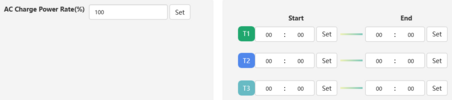 in my software, I know T1 is time it charges from off-peak, not sure of the rest, and this
 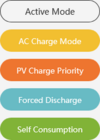 which allows me to set things, but not really sure what they do, there has been a software update, and not sure how it now all works.
But the start/finish times of off-peak, with Flux, is a bit too late, (2 am) is winter will have run out far before then, I like most people use more power in the evening to the morning, so the Intelligent Octopus Go – EV Saver would be ideal for me, and I would get most solar panel and battery owners. But the "Intelligent" bit I read as giving Octopus control of when the battery in the EV is charged, and when I looked at export rates, they were well down on what is offered with Flux.
So it is a gamble even if you did have an EV. And locked in for a year, so need to consider winter as well. Same as how much to keep in reserve for power cuts, my batteries on a power cut stop discharging at 3% and with power 10% so 450 Wh held in reserve, so it would depend on the time of day we got a power cut, how long would my central heating and freezers run for? If power cut now, likely weeks, lighting and other electric use is not on backed up power, but at midnight, in winter, unlikely to last the night.
But the move to UPS for freezers also means two RCD's for freezer supplies, so less likely to trip due to RCD tripping as well. I hope I never need it, but seemed prudent to set it up anyway.
I started with 3.2 kW, and two problems, output limited to 3 kW and input limited to 2 kW, so was exporting when battery not fully charged and importing when two appliances took us over 3 kW. Yes, the battery did not last that long in the evening, around 9 pm was around the limit, but also being charged overnight, it would bridge the gap very well between 5 am and when the sun came out.
The second battery did help with 4 kW charge limit and 5 kW discharge limit (size of inverter) however it resulted in 2.88 kWh (90%) being used every night which was not needed, my rate was 8.95p per kWh so cost me 25p per day in the morning to have the extra capacity, but saved 90p each evening, so 64p a day saved at start/finish rates, but most the extra saving was during the day when not exceeding the 4-5 kW limit but was exceeding the 2-3 kW limit.
However, as summer came, and I went to a single rate tariff, I realised the pair of batteries were taking me nearly until the sun came out, this resulted is off-peak tariff costing me more than a single tariff. So starting on 5th this month I hit 10% with batteries and broke even with solar 3:30–8:30, 4:00–8:00, 5:45–9:30, 5:30–8:00, 6:30–8:30, 6:45–9:00, 8:30–9:30, 7:30–8:00, 6:15–8:30. These times very little used, so total import for whole day, 0.1 kWh to 2.3 kWh. And in that time, looking at recorded battery charged and discharged figures, around 1 kWh to 1.5 kWh more than the battery capacity, showing how much used to smooth out peaks and troughs.
If I go back before the 5th, then I have the charging off-peak, so warps the results. But taking whole of January this year
in my software, I know T1 is time it charges from off-peak, not sure of the rest, and this which allows me to set things, but not really sure what they do, there has been a software update, and not sure how it now all works.But the start/finish times of off-peak, with Flux, is a bit too late, (2 am) is winter will have run out far before then, I like most people use more power in the evening to the morning, so the Intelligent Octopus Go – EV Saver would be ideal for me, and I would get most solar panel and battery owners. But the "Intelligent" bit I read as giving Octopus control of when the battery in the EV is charged, and when I looked at export rates, they were well down on what is offered with Flux.
So it is a gamble even if you did have an EV. And locked in for a year, so need to consider winter as well. Same as how much to keep in reserve for power cuts, my batteries on a power cut stop discharging at 3% and with power 10% so 450 Wh held in reserve, so it would depend on the time of day we got a power cut, how long would my central heating and freezers run for? If power cut now, likely weeks, lighting and other electric use is not on backed up power, but at midnight, in winter, unlikely to last the night.
But the move to UPS for freezers also means two RCD's for freezer supplies, so less likely to trip due to RCD tripping as well. I hope I never need it, but seemed prudent to set it up anyway.
That's part of the story. However, your 6.7p per kWh appears to be based on a period of 19 years and, even if the battery 'lasts' that long, I rather doubt that the solar panels themselves and/or ancillary equipment will last that long without needing replacement..... Of course they gradually take less charge as time goes bye, but they do have a life and if they are treated reasonably well they may be able to deliver 45,000kwh before they need replaced, hence my ball park figure of 6.7p per kwh to cover its depreciation
... so what would you estimate to be the notional cost per kWh consumed due to the 'depreciation' [ eventual need for replacement(s) ] of the capital costs over a 19 year period?
- Joined
- 17 Aug 2010
- Messages
- 5,148
- Reaction score
- 2,155
- Country
No it is not based upon any time period, but on how much it gets used. The more you use battery the quicker it will wear out - they estimate for a 10kwh battery that you should be able to charge and discharge somewhere between 35,000 and 50,000 kwhThat's part of the story. However, your 6.7p per kWh appears to be based on a period of 19 years and, even if the battery 'lasts' that long, I rather doubt that the solar panels themselves and/or ancillary equipment will last that long without needing replacement.
... so what would you estimate to be the notional cost per kWh consumed due to the 'depreciation' [ eventual need for replacement(s) ] of the capital costs over a 19 year period?
So if you charged them fully and discharged them fully 3 times a day then you will get about 4 years, the more you use it the quicker it will wear out, like tyres on a car, they have a cost for every mile you drive
My guesstimate of 6.7p per kwh is based on use.
Use the power straight from the solar panels the the electric is free
charge the battery from the solar panels then use it and it has cost you 6.7p per unit
Charge the battery from the grid at 20p per kwh , then when you use it from the battery it will have cost you 26.7p per unit
I would consider the other stuff like the Solar panels to be a fixed cost, they will wear out, but you have no control over that.
OK, but I'm a bit confused, given that you presented 19 years worth of figures, moving from 100% for the first 4 years to 30% for the last 2 years which added up to 43,660 kWh - remarkably close to the 45,000 usage estimate which led to your estimate of 6.7p per kWh to cover depreciation of the battery.No it is not based upon any time period, but on how much it gets used. The more you use battery the quicker it will wear out - they estimate for a 10kwh battery that you should be able to charge and discharge somewhere between 35,000 and 50,000 kwh
However, that's not really relevant to my question. However it was derived, you estimated 6.7p per kWh to cover battery depreciation. I thin moved on from that to ....
Whether you consider it a 'fixed cost' or anything else, I'd still be interested to know what would be your estimate of the cost per kWh of the depreciation/replacement of the solar panels etc. I would then add that figure to the 6.7p/kWh for battery depreciation in order to determine what it was actually costing you per kWh to have the solar panels etc. and batteries as a whole.I would consider the other stuff like the Solar panels to be a fixed cost, they will wear out, but you have no control over that.
As you will probably appreciate, my suspicion is that those total costs would probably go a long way (if not totally!) to cancelling the financial benefits of having the system. As I always say, even if one does eventually reach a 'break even' point after which there is a period of 'true financial benefit', one will spend many years of "being worse off than one would have been without PV" before reaching that point - which, to my mind, makes it very questionable as to whether it is sensible for people as old as eric and myself to contemplate such a ('speculative'!) investment'!
- Joined
- 27 Jan 2008
- Messages
- 29,470
- Reaction score
- 3,621
- Location
- Llanfair Caereinion, Nr Welshpool
- Country
What would you have instead? My solar inverter gives me back up power for freezers and central heating, so if not using the solar inverter and batteries I would use something else, be it an open fire, a calor gas fire, a generator, or another UPS.
I at the moment use a tumble drier, cost basic nothing to run during the day, without solar would want a washing line undercover from bird lime.
I have cut the electric bill by 60% to 70% some due to panels, some due to battery, hard to say which saves the most. And as yet no export money. I will admit not so far done as well as expected, but that is due to no export money.
I at the moment use a tumble drier, cost basic nothing to run during the day, without solar would want a washing line undercover from bird lime.
I have cut the electric bill by 60% to 70% some due to panels, some due to battery, hard to say which saves the most. And as yet no export money. I will admit not so far done as well as expected, but that is due to no export money.
Something much cheaper than a solar+batteries instrallationWhat would you have instead?

I have a (£150 from Lidl) genny which powers the CH and freezers (and some lights etc.) quite happily. In any event,my primary freezers are chest ones, which will remain fine for a day or two without power if not opened.My solar inverter gives me back up power for freezers and central heating, so if not using the solar inverter and batteries I would use something else, be it an open fire, a calor gas fire, a generator, or another UPS.
What is that 60%-70% in £s - and how much did the solar installation plus batteries cost?I have cut the electric bill by 60% to 70% some due to panels, some due to battery, hard to say which saves the most.
- Joined
- 27 Jan 2008
- Messages
- 29,470
- Reaction score
- 3,621
- Location
- Llanfair Caereinion, Nr Welshpool
- Country
On another thread, I was directed to Which export tariff can I combine with my import tariff I see 4.1p per kWh and 15p per kWh and I know the Flux has a variable rate according to time.
Been watching Youtube
seems we have missed the boat.
Been watching Youtube
Last edited:
- Joined
- 17 Aug 2010
- Messages
- 5,148
- Reaction score
- 2,155
- Country
Octopus pricing is just a total confusing mess, it all sounds good until you dig a bit deeper
Solar + Battery, (no EV or heat pump) seem to be very limited to whats available
Flux Intelligence you need a special type of battery - but even then the tariffs are a bit vague (and they take control of your batteries)
Flux - terrible rates
15p Export + Agile - would be good during the summer, but very complex to set it to charge batteries when the rate is low, and then Agile would be very expensive during the winter (or at least it was last winter)
15p Export + standard tariff - but then there is no value in charging batteries from the grid
best deal seems to be "Go" combine it with 15p Export - fill the batteries at 9p per unit through the night, then export at 15p from your panels during the day, but only available if you can prove you own an EV
Octopus is an utter mess, apparently have an award for great customer service - they do seem to be very nice and friendly (overuse that horrible americanism "Reaching out" far too much. but I struggle to get any real sense out of them - may be they just appear nice - thankyou for reaching out to us!
Solar + Battery, (no EV or heat pump) seem to be very limited to whats available
Flux Intelligence you need a special type of battery - but even then the tariffs are a bit vague (and they take control of your batteries)
Flux - terrible rates
15p Export + Agile - would be good during the summer, but very complex to set it to charge batteries when the rate is low, and then Agile would be very expensive during the winter (or at least it was last winter)
15p Export + standard tariff - but then there is no value in charging batteries from the grid
best deal seems to be "Go" combine it with 15p Export - fill the batteries at 9p per unit through the night, then export at 15p from your panels during the day, but only available if you can prove you own an EV
Octopus is an utter mess, apparently have an award for great customer service - they do seem to be very nice and friendly (overuse that horrible americanism "Reaching out" far too much. but I struggle to get any real sense out of them - may be they just appear nice - thankyou for reaching out to us!
Last edited:

DIYnot Local
Staff member
If you need to find a tradesperson to get your job done, please try our local search below, or if you are doing it yourself you can find suppliers local to you.
Select the supplier or trade you require, enter your location to begin your search.
Please select a service and enter a location to continue...
Are you a trade or supplier? You can create your listing free at DIYnot Local
Similar threads

- Replies
- 71
- Views
- 7K

- Replies
- 0
- Views
- 217