

- Joined
- 27 Jan 2008
- Messages
- 29,237
- Reaction score
- 3,586
- Location
- Llanfair Caereinion, Nr Welshpool
- Country

There was a thread 15 years ago about down lights which has been added to from China today.
But the loss of the fluorescent fitting does seem to be causing a problem, be it a 2D or a long tube, we could, with nearly no skill required, swap a failed unit for a new one. No wiring required, unplug one unit, and plug in new.
So I like I am sure many others, want to continue with this method. But my house was designed in the tungsten age, and my living room had a single 150 watt bulb, I would have thought, and in real terms there is little that can simply replace it, OK these
 at 60 watt may work, I have one in an up lighter, but can't fit the shade. So we need in the main some sort of chandelier able to take multi-bulbs,
 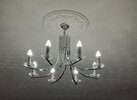 but this hangs down a bit too much, so tall people hit their head on it, but it is over a chair, so I can get away with it, and it does unplug,
  so I can swap it with the 6 bulb version in dining room which does not drop so much, but we are left with very few methods to light our rooms unless we use LED units to fit the old fluorescent lamps, so there has been a move to GU10 lamps. Fitting a light bar
 we can direct light into dark areas, but the down light
 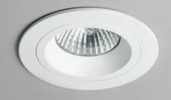 also seems to be gaining popularity, my comment to son, why didn't you arrange to show the great bear did not go down well, but the ceiling is high
  as can be seen with the full size bike as decoration. In most houses, the ceilings are too low to get a reasonable spread, and he fitted 14 lamps at 3.5 watt, so 49 watt to replace what had first a 65 watt fluorescent which was changed to 58 watt, and then a 22 watt LED tube, so may look better, but room no better lit than before, and actually using a lot more power.
The GX53 seems to be the largest down light which will simply plug in, unless using fluorescent 2D fittings, it just seems every lamp I look at needs hard-wiring.
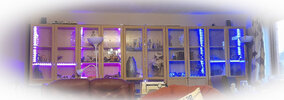 with 60 watt if turned up full, of cabinet lighting, and we use Google Nest Mini's to control the lighting, so we can turn multiple lights off when leaving the room, be they be from lighting or socket supplies. You can also see two up-lighters (Ikea) in the picture, as to put it simple, our house was not designed with LED lighting in mind.
I suppose wall lights were originally used in many homes
 before we had electric, as easier to reach a wall lamp to light it, don't want to return to these
 but even they did not require hard-wiring to change the wick.
So what ways are there to light the home, where if the LED fails, no hard-wiring is required?
But the loss of the fluorescent fitting does seem to be causing a problem, be it a 2D or a long tube, we could, with nearly no skill required, swap a failed unit for a new one. No wiring required, unplug one unit, and plug in new.
So I like I am sure many others, want to continue with this method. But my house was designed in the tungsten age, and my living room had a single 150 watt bulb, I would have thought, and in real terms there is little that can simply replace it, OK these
but this hangs down a bit too much, so tall people hit their head on it, but it is over a chair, so I can get away with it, and it does unplug, so I can swap it with the 6 bulb version in dining room which does not drop so much, but we are left with very few methods to light our rooms unless we use LED units to fit the old fluorescent lamps, so there has been a move to GU10 lamps. Fitting a light bar also seems to be gaining popularity, my comment to son, why didn't you arrange to show the great bear did not go down well, but the ceiling is high as can be seen with the full size bike as decoration. In most houses, the ceilings are too low to get a reasonable spread, and he fitted 14 lamps at 3.5 watt, so 49 watt to replace what had first a 65 watt fluorescent which was changed to 58 watt, and then a 22 watt LED tube, so may look better, but room no better lit than before, and actually using a lot more power.The GX53 seems to be the largest down light which will simply plug in, unless using fluorescent 2D fittings, it just seems every lamp I look at needs hard-wiring.
he has a point, in my living room we supplement the lighting,CR400BF-5033 said:Mood light is certainly more essential but downlights do add a nice touch to the overall lighting effect.
with 60 watt if turned up full, of cabinet lighting, and we use Google Nest Mini's to control the lighting, so we can turn multiple lights off when leaving the room, be they be from lighting or socket supplies. You can also see two up-lighters (Ikea) in the picture, as to put it simple, our house was not designed with LED lighting in mind.I suppose wall lights were originally used in many homes
So what ways are there to light the home, where if the LED fails, no hard-wiring is required?


 ) and get rid of them, in favour of a more sensible form of lighting.


