• Looking for a smarter way to manage your heating this winter? We’ve been testing the new Aqara Radiator Thermostat W600 to see how quiet, accurate and easy it is to use around the home. Click here read our review.

Lighting a room in the LED age?

There are so many types of LED bulbs available nowadays that I'm not sure what the problem is. I've got glass quarter-sphere wall lights, two designs of outside lights, and a couple of flush (not recessed) ceiling lights where I've standardised on bulbs like these:

1749828397813.png


("Standardised" because I'd rather not have to keep loads of different spares).

Any of the lights would accommodate GLS bulbs, but with some I wouldn't be able to get my hand inside the fitting with bulbs that size, and with the glass wall lights the light source is offset to one side too much.

You can get switch-operated CCT ones, if you want.

I've also got some pendant lights to install, very similar to this

1749830244173.png


where again I'll probably use those LED ones (I think the lights were designed to use tungsten candle bulbs).

I don't recognise this "problem":

... even worse, a fitting designed for tungsten lamps, which have a compromise LED fitted.
 
A fitting, complete with the lighting element, can be designed as a unit for best performance, better than a fitting with mismatched lamps, even worse, a fitting designed for tungsten lamps, which have a compromise LED fitted.


KISS works best for me/us. The more lights sources, the higher the likelihood of one failing. We have a large kitchen/dinner, which used to need a 6 foot florescent to light it up. When I modernised, I installed down lighters, which looked great, but they were hopeless as effective, usable lighting. I reverted that, several years ago, to just two 8w LED's, ceiling mounted, like a flying saucer shape. They just slip into a socket, provided with the lights, and I bought two spares. They light the room well, except for an slightly enclosed preparation area, tucked between oven, microwave, and fridge, so I added a 10w florescent, under the microwave. The cooker, has a hood with LED's too.

The room was so dim with the downlighters, that as a temporary fix for it, I added a 6 foot tube on top of one of the cupboard units, invisible, but bouncing light down from the ceiling. That fitting is still up there, and would simply need to be plugged in, in an emergency.
What is KISS ?
 
I don't understand the current trend for downlights everywhere. Perhaps I am just old fashioned!
I wouldn't call it all that 'current'. It seemed to become fashionable two or three decades ago but, in more recent times, I think increasing numbers of people have been starting to 'see the light' ( :) ) and get rid of them, in favour of a more sensible form of lighting.

One disincentive to 'getting rid of them' is, of course, all those holes in the ceiling that need to be 'remedied' !.
I remember fitting them last century, so yes, been out some time, the main problem was exceeding the 6 amp for many lighting circuits, so we started to see up and down stairs on separate circuits. As ceiling roses only rated to 6 amp, so could not change MCB to 10 amp.

However, the heat from the lamps helped, so rooms felt warmer with the inferred heat from the lamps, without need for a programmable thermostat, not sure if that was good or bad? But in the kitchen, the whole idea was to try and keep it cool, so why anyone fitted them in kitchens, I have never worked out? Also in the main quartz halogen, so could not dim the output without reducing bulb life.

I used pods, but never had them sunk into the ceiling.

The main problem today, is some capacitive and inductive linking is always there, so every bulb needs some way to leak away that energy, so they do not flash when switched off, the amount leaked does not change with size of bulb, so the more bulbs used, the more energy leaked away.

Could go to DC lighting, and if you look at bulbs for boats and caravans the lumen per watt is far better to the AC bulb. But I also like automation, which is harder with DC, so 230 VAC is what I want to use for lighting.

So I have ended up with a draw full of bulbs, IMGP0859-60.jpg many I will likely never use, we actually got a stock of Asda pearl BA22d light bulbs while we could, which I am unlikely to use now. Did not get a bulb for my projector, that would have been useful.

But it is also the direction the light goes out of the bulb. Light shining up onto a white ceiling is spread through the room, down onto a dark carpet it is absorbed.
 
Agreed - and, indeed, having a large number of light sources spread around is obviously a good way of getting 'even spread of light'. I think the main problem has been that people tend (or, at least, tended) to put very narrow-beam-angle ('spotlight') lamps/bulbs into them, resulting in multiple 'small circles of light' at useful heights (often compounded for the tendency for modern ceilings to be lower than they used to be). However, one can now get very wide beam-angle lamps/bulbs, which should largely avoid that problem.
Yep agree with that little and often with a 110 beam gives a very even light.
Or you can get GU10 fittings in a square with 6 bulbs that you can point at walls or across the ceiling to bounce off. And like this the bulbs are exposed so dissipate heat

light.JPG
 
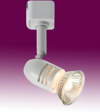
In our lounge I have gone opposite to downlights but I have used these
fixed to a socket blank plate inside these
pointing UP!
The culina lights came from a car boot seller who had got boxes and boxes of them from a clearance sale ( he was charging £3 for a box of three)!!!
ok not conventional but it works for us.
 
The idea of an external socket and plug is something I have done. And have shown them at start, but they are no longer sold, so to continue would need to select another make. I have used these
1749897008225.png
which allow both a switched and non switched output, but you have a cord of some sort to the lamp. And you need an independent hook
1749897319179.png
and it seems we are going backwards.

There is no reason why a 5-foot LED tube can't be fitted in a fitting like this, ⁣but
1749897533734.png
once you leave the fluorescent fitting, you lose the standard connection method for long lights. I don't have access into the ceiling space to wire in multi-lamps, so at the moment lighting track
1749898216328.png
seems to be the way forward. But £11.76 a length, not cheap, I did get some in the 70s from Habitat, similar to what Ikea is today, but getting replacement bits now near impossible. New stuff can get wire connection, but these 1749898640812.png seem the way forward, so why not T2 trunking and lamps?
 
There was a thread 15 years ago about down lights which has been added to from China today.

But the loss of the fluorescent fitting does seem to be causing a problem, be it a 2D or a long tube, we could, with nearly no skill required, swap a failed unit for a new one. No wiring required, unplug one unit, and plug in new.


So what ways are there to light the home, where if the LED fails, no hard-wiring is required?
After checking on several UK Electrical/Lighting sites,
it seems that "Downlight" in the UK largely refers to those with small replaceable Halogen/LED "globes",

However, I did find one site with that which they refer to as Recessed Downlights,
which utilize a larger cutout and the light from which is more "even" across their larger area
and more "spread out".

Such "downlights" are now virtually the "norm" in this country
and our largest "Big Box Store" does not sell the smaller Halogen/LED type anymore - although they still sell the replacement "globes".

With most of these lamps, the Colour Temperature" can be adjusted on installation and many are also dimmable.

In addition (being Australia) most come with a short lead terminated in a standard Australian 10 A plug, (usually, just the two-pin version)
to be plugged into a "Plug Base" socket-outlet in the ceiling space
(https://www.google.com/search?rlz=1...HXKvNKsQtKgLegQIEhAB&biw=1745&bih=828&dpr=1.1 )
Thus, if/when a lamp unit fails, it can easily be pulled out of the ceiling, unplugged and a new unit inserted - without the need for any "rewiring".

A 3m * 4m room might require only four of these,
although more might be used - if switched in groups and dimmable.

 
Last edited:
In our lounge I have gone opposite to downlights but I have used these ...
As I've reported in the ;past, I've done the same in my lounge, but a little more literally than you...

... I have installed brass 'downlights' upside down fairly high up the walls, using the 'slide-in plug/sockets' that eric often described. The pic below shows two of them, but there are eight in total, four along each of two opposite walls.

In the days of incandescents, that was pretty extravagant in terms of energy usage (8 x 40W golfball bulbs = 320W), but now is a much more modest 8 x 5W (or 7W) LEDs. Just as you say ....
ok not conventional but it works for us.
... and has worked for us for nearly 40 years!

1749991400222.png
 
has worked for us for nearly 40 years!

How many insects have died in them over that period?

And on a much more serious note, are you noticing a year-on-year decline in numbers?
 
How many insects have died in them over that period?
A good few! Regular 'emptying' is required, but that is very easily given the 'slide off' nature of the 'plug/socket'.
And on a much more serious note, are you noticing a year-on-year decline in numbers?
I really haven't been paying enough attention to know the answer to that - I just slide the lights off, invert them over a wastepaper bin and 'tip them out'!
 

If you need to find a tradesperson to get your job done, please try our local search below, or if you are doing it yourself you can find suppliers local to you.

Select the supplier or trade you require, enter your location to begin your search.


Are you a trade or supplier? You can create your listing free at DIYnot Local

 
Back
Top