It's the brass tap connector. I'm (clearly) not great with soldering. It was cleaned and fluxed etc but weeping. Is it possible to "repair"? I think better to just redo it - can I just clean up the copper and brass with wire wool (do I have to get all the old solder off?) or just start again with new?


You are using an out of date browser. It may not display this or other websites correctly.
You should upgrade or use an alternative browser.
You should upgrade or use an alternative browser.
Solder fail
- Thread starter cdbe
- Start date

I would suggest the section that has the weep is replaced and make sure you use an active flux and even add a small amount of extra solder to each joint just to be sure of full coverage. I prefer the bare type of capillary fittings and then add my own solder after using an active flux.

 www.plumbersderby.org.uk
what is an active flux plumbing - Plumbers Derby
What Is an Active Flux Plumbing? If you’re interested in plumbing, you’ve probably wondered: what is an active flux? If you’re not sure, we’ve outlined the benefits of active flux plumbing below. Ultimately, active fluxes are the most effective plumbing solutions for your home or business. If...
www.plumbersderby.org.uk
The post mortem result is in - clearly the OP is crap at soldering. The other 2 joints on the tee were fine when dismantled, nicely tinned throughout. The failed one was cleaned and fluxed but as you can see is crap - no Idea whether it needed more or less heat because it's brass or whatever. Need to watch some YouTube videos or travel back in time and swap my sociology A level for a plumbing apprenticeship!


Yup, not a normal way to connect those flexi tails TBH. They are usually mounted into a compression fitting being either an ISO or brass coupler.
Given it's thicker brass it probably didn't get hot enough before the yorkie's solder ran and the brass then wasn't hot enough to take it. If it had been end feed then it could have been heated that little bit more, brass will always take more heat than copper before the solder will take to it.
it needed more or less heat because it's brass
Given it's thicker brass it probably didn't get hot enough before the yorkie's solder ran and the brass then wasn't hot enough to take it. If it had been end feed then it could have been heated that little bit more, brass will always take more heat than copper before the solder will take to it.
- Joined
- 25 Apr 2016
- Messages
- 2,949
- Reaction score
- 750
- Country

Getting the right amount of heat can be difficult especially when not doing plumbing soldering regularly. May suggest you try the following :-
take all the copper pipework away from the plastic, (should be obvious but we all make mistakes especially when in a Hurry),
Clean up the brass element, (meth's, wire wool and or abrasive paper) you want it all to be clean and shiny,
If the existing copper to copper joints are still pressure water tight leave them alone,
Clean up the inside of the 'T' fitting where the brass element will go,
Flux all the joint faces,
Hold the brass element with something that doesn't conduct heat,
Apply heat to the brass element - when it gets hot apply a little more flux - when that bubbles than offer it up to the copper still applying heat,
When the brass fitting slides fully into the 'T' then apply plumbers solder to the joint edge and check it runs all the way around the fitting.
When cold re-assemble and then check for water (air) tightness.
take all the copper pipework away from the plastic, (should be obvious but we all make mistakes especially when in a Hurry),
Clean up the brass element, (meth's, wire wool and or abrasive paper) you want it all to be clean and shiny,
If the existing copper to copper joints are still pressure water tight leave them alone,
Clean up the inside of the 'T' fitting where the brass element will go,
Flux all the joint faces,
Hold the brass element with something that doesn't conduct heat,
Apply heat to the brass element - when it gets hot apply a little more flux - when that bubbles than offer it up to the copper still applying heat,
When the brass fitting slides fully into the 'T' then apply plumbers solder to the joint edge and check it runs all the way around the fitting.
When cold re-assemble and then check for water (air) tightness.
Have to disagree - we were always taught that the flux should only be placed onto the pipe, not into the fitting. If there is flux in the fitting then that will be pushed into the fitting internals when the pipe is inserted, That excess flux will then pull solder into the fitting, rather than just soldering the pipe section, not ideal, especially if the solder snots, as it could then cause a restriction/noise.Flux all the joint faces
I also have to say too, once a yorkie has been used it shouldn't really be re-soldered. Was always our best practice to heat & demount and use a new fitting, as you never know what effect that extra heat may have on the other joints.
Again though, those tails adapters aren't usually used for soldering, they're more designed for compression fittings unless soldering into another brass fitting.

- Joined
- 5 Nov 2024
- Messages
- 5,337
- Reaction score
- 2,517
- Country
That’s how I’ve been taught too, yet there’s several others I work with whom do both. The problem is, it seems a slight bone of contention as it’s in plumbing documents to do either method!we were always taught that the flux should only be placed onto the pipe, not into the fitting.

As madrab has said not the right way to do it and the other thing is that solder on piece can cut the rubber washer in the flexi - you can get flat top ones or some people file the end flat
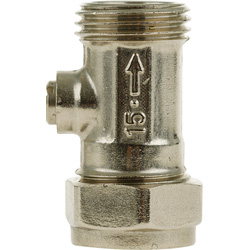
Flat Faced Male Straight Isolating Valve
This flat-face valve provides a flat face for flexible hoses with swivel nuts. This protects the hose washer from damage and prevents leaks. Also available in 1/2" (code 95064) and 3/8" (code 38483) sizes.Angled valves are also available (code 31424) and (code 53270).
 www.toolstation.com
or some people file the end flat
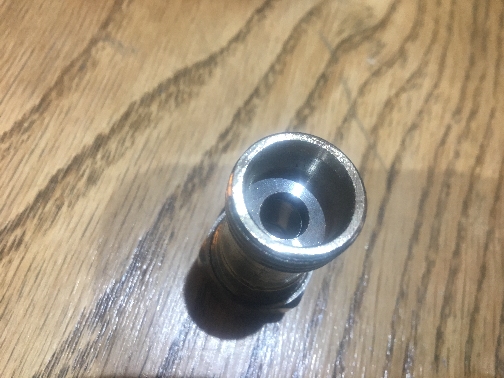
That's what I do, being brass it's dead soft, seconds with a flat file.
TBH we never did get a lot of paperwork for all of that. Don't even remember any docs describing how to solder properly though that certainly doesn't suggest there aren't lots of them. Even when I did my Tech Cert in college it never came up, it was all about what you were taught in the classroom by the lecturers whilst creating the pipe boards and that matched up with what we were taught out in the field. I don't believe they teach lead work any more either. Made quite a few lead slates for roof flues.it’s in plumbing documents to do either method!
It just never made sense to do that with flux, same with SW, only the pipe would get the cement and that gets a twist on the way in.
- Joined
- 5 Nov 2024
- Messages
- 5,337
- Reaction score
- 2,517
- Country
No, I believe they don't. We were the last ones to learn leadwork some 20 years agoI don't believe they teach lead work any more either. Made quite a few lead slates for roof flues.
This IMO is a problem for today's 'plumbers' and therefore excludes them from a higher income gained from lead working. My first early work was 4" lead soil + thimbles and roof work on government buildings (maintenance contracts) which served me well for climbing the ladder into management civil service and then higher management. Today plumbing is basically assembling fittings and tube bending with the occasional job that requires thinking through to a satisfactory completion. I retired at 60 (principal grade) and 2yrs later an old contact asked me to help out with some lead burning and making/bossing up ornate hopper heads because he could not find anyone capable of lead burning with oxyacetylene flame. The old skills were taught for a good reason and for some higher end work are still needed.No, I believe they don't. We were the last ones to learn leadwork some 20 years ago
- Joined
- 5 Nov 2024
- Messages
- 5,337
- Reaction score
- 2,517
- Country
I concur. I didn’t mind lead working but wasn’t very good at it. I blame health and safety for part of it. I believe they substituted it for renewable energy.This IMO is a problem for today's 'plumbers' and therefore excludes them from a higher income gained from lead working.
Lead work now typically seems to have transferred over to roof work, same with gutter work. That and fabrication is rarely needed these days, unless it is something bespoke or specialist, everything can usually be bought purpose made over the counter these days, from dormer window trays, aprons, flashing, pipe slates etc. Or there are now non lead composite alternatives that use adhesives and seals.
'Tis a dying art for sure.
'Tis a dying art for sure.

I learned to work with lead on lead armoured cables, back in the day. I quite enjoyed the skill then needed to get the lead, just to the point of being plastic, and wiping it into place. I used the art, the skill a number of times since, in repairing old lead water pipes, where modern plumbers just hadn't a clue 

DIYnot Local
Staff member
If you need to find a tradesperson to get your job done, please try our local search below, or if you are doing it yourself you can find suppliers local to you.
Select the supplier or trade you require, enter your location to begin your search.
Please select a service and enter a location to continue...
Are you a trade or supplier? You can create your listing free at DIYnot Local
Similar threads

- Replies
- 4
- Views
- 433
- Replies
- 29
- Views
- 7K
- Replies
- 43
- Views
- 7K
