

You are using an out of date browser. It may not display this or other websites correctly.
You should upgrade or use an alternative browser.
You should upgrade or use an alternative browser.
Electricity over the years
- Thread starter bernardgreen
- Start date

I came across that, a few weeks ago - good, but a bit jokey for my taste.

- Joined
- 27 Jan 2008
- Messages
- 29,355
- Reaction score
- 3,608
- Location
- Llanfair Caereinion, Nr Welshpool
- Country

Think the dates may be out a bit, but yes things have changed, as to if progressed, not so sure. I remember DC little place called Llwyngwril, a small generator supplied the village and surrounding farms with 110 volt DC. I think this went onto the national grid around 1958, but it was December 2008 before the last place Abergeirw, a hamlet in Gwynedd went on the national grid, so depends on where one lived.
Earth/bonding/and automatic disconnection when something went wrong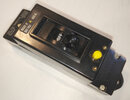 I have found, but not sure when they came out? The ELCB-v had some problems, but the move to ELCB-c was in the main to 100 mA in some cases 300 mA devices, and although it would trip out the whole house, it did not do it that often. It was only after the move to 30 mA units, that the problems really became apparent.
The fuses were a problem with wrong sizes being used, and the cartridge fuse cause a huge jump in price, so the MCB was very welcome, however it came with a massive problem, it was split into two parts, the thermal and the magnetic, and the latter part needed a loop impedance low enough to work. We needed a low enough loop impedance with the fuse, but going slightly over did not matter too much, with the MCB go slightly over and tripping time could go from a part of a second to a few minutes, so we need a way to measure it.
The old electric ring was a coil of wire stretched around a porcelain former, and when it failed, a bit could make contact with the pan, so having an earthed grid between the pan and element was important. And it would blow the fuse, but the lights went without earth wires until 1966, if they followed so simple rules. However, back then the water supply was metal, so even in a TT installation we had an earth good enough to rupture a 13 amp fuse.
The old Wylex fuse box,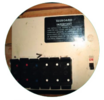 was fitted to my dad's first house (1954) and my house (1978) with very little change, but there were a few problems, one main switch only rated 60 amps, and two no way to add RCD protection for selected circuits, so the consumer unit was born, which is a type tested distribution box designed for use by the ordinary person, but early versions used MCB's where it was easy to fit them without them clamping the buss bar, with clamp on wrong side of buss bar, and often only allowed some MCB's to be RCD protected, and often many MCB's were fed from the same 30 mA RCD, and at 30 mA the RCD tripped too easy to be shared by many MCB's. So we needed a box which could take RCBO's and reassure the public that the consumer unit was safe again, which was done by using metal, although this did introduce other problems at the same time.
I can remember in the Falklands (1995 approx) wiring a farm house lights, a battery charger kept two Nickel Iron batteries charged when the generator was running, they came from an old bus. 20 cells centre tapped so both 12 volt and 24 volt lights could be used, and since DC, simple diodes allowed the hall light to switch on when any bedroom light used, to light the way to the toilet, but also alerted owner if a bedroom light was left on.
We look at this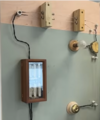 as being awful, but we don't know what voltage was used, and I have seen the battery rooms in old Welsh houses, with the shed which had housed the generator now turned into a garage. Not a clue what voltage it used, but the lower the voltage, the less batteries are required.
The idea of the ring final was to allow the use of electric heating, and with single glazed windows of the 1950s, a 3-bedroom house would need around 2 kW per room to maintain the temperature, 18 kW = 75 amps, and most Wylex fuse boxes were 60 amps, and likely a 60 amp DNO fuse. So to heat rooms in use would have been the only way, in practice we still had coal and coke fires in main rooms, so electric heating only used in one or two rooms in the house.
I don't know how much my parents spend on electric, but my dad work in No 4 power station in local steel works, which he told me at the time produced more than the local CEGB power station, and I was surprised to find it produced 12 MW, oddly the same amount each of the 12 diesel generators at Sizewell 'B' produce to keep it safe should it become disconnected from the grid. The two main turbines are 750 MW each, which shows how much our use of electricity has increased over the years.
We see reports of new wind turbines, or solar panels, can run so many 100's of homes, but have these homes got EV charging and heat pumps? I asked google the question "average power usage UK home" answer "In the UK, an average household uses around 2,700 kWh of electricity annually, which equates to roughly 225 kWh per month. This translates to about 8 kWh daily. However, this is just an average, and individual usage can vary based on factors like household size, appliances, and heating system." Well, I know my home average use is around 12 kWh per day, and I don't have an EV or electric heating.
So do you trust the maths? We are seeing homes with 3 phase supplies, what a tangled web we weave.
Earth/bonding/and automatic disconnection when something went wrong
I have found, but not sure when they came out? The ELCB-v had some problems, but the move to ELCB-c was in the main to 100 mA in some cases 300 mA devices, and although it would trip out the whole house, it did not do it that often. It was only after the move to 30 mA units, that the problems really became apparent.The fuses were a problem with wrong sizes being used, and the cartridge fuse cause a huge jump in price, so the MCB was very welcome, however it came with a massive problem, it was split into two parts, the thermal and the magnetic, and the latter part needed a loop impedance low enough to work. We needed a low enough loop impedance with the fuse, but going slightly over did not matter too much, with the MCB go slightly over and tripping time could go from a part of a second to a few minutes, so we need a way to measure it.
The old electric ring was a coil of wire stretched around a porcelain former, and when it failed, a bit could make contact with the pan, so having an earthed grid between the pan and element was important. And it would blow the fuse, but the lights went without earth wires until 1966, if they followed so simple rules. However, back then the water supply was metal, so even in a TT installation we had an earth good enough to rupture a 13 amp fuse.
The old Wylex fuse box,
was fitted to my dad's first house (1954) and my house (1978) with very little change, but there were a few problems, one main switch only rated 60 amps, and two no way to add RCD protection for selected circuits, so the consumer unit was born, which is a type tested distribution box designed for use by the ordinary person, but early versions used MCB's where it was easy to fit them without them clamping the buss bar, with clamp on wrong side of buss bar, and often only allowed some MCB's to be RCD protected, and often many MCB's were fed from the same 30 mA RCD, and at 30 mA the RCD tripped too easy to be shared by many MCB's. So we needed a box which could take RCBO's and reassure the public that the consumer unit was safe again, which was done by using metal, although this did introduce other problems at the same time.I can remember in the Falklands (1995 approx) wiring a farm house lights, a battery charger kept two Nickel Iron batteries charged when the generator was running, they came from an old bus. 20 cells centre tapped so both 12 volt and 24 volt lights could be used, and since DC, simple diodes allowed the hall light to switch on when any bedroom light used, to light the way to the toilet, but also alerted owner if a bedroom light was left on.
We look at this
as being awful, but we don't know what voltage was used, and I have seen the battery rooms in old Welsh houses, with the shed which had housed the generator now turned into a garage. Not a clue what voltage it used, but the lower the voltage, the less batteries are required.The idea of the ring final was to allow the use of electric heating, and with single glazed windows of the 1950s, a 3-bedroom house would need around 2 kW per room to maintain the temperature, 18 kW = 75 amps, and most Wylex fuse boxes were 60 amps, and likely a 60 amp DNO fuse. So to heat rooms in use would have been the only way, in practice we still had coal and coke fires in main rooms, so electric heating only used in one or two rooms in the house.
I don't know how much my parents spend on electric, but my dad work in No 4 power station in local steel works, which he told me at the time produced more than the local CEGB power station, and I was surprised to find it produced 12 MW, oddly the same amount each of the 12 diesel generators at Sizewell 'B' produce to keep it safe should it become disconnected from the grid. The two main turbines are 750 MW each, which shows how much our use of electricity has increased over the years.
We see reports of new wind turbines, or solar panels, can run so many 100's of homes, but have these homes got EV charging and heat pumps? I asked google the question "average power usage UK home" answer "In the UK, an average household uses around 2,700 kWh of electricity annually, which equates to roughly 225 kWh per month. This translates to about 8 kWh daily. However, this is just an average, and individual usage can vary based on factors like household size, appliances, and heating system." Well, I know my home average use is around 12 kWh per day, and I don't have an EV or electric heating.
So do you trust the maths? We are seeing homes with 3 phase supplies, what a tangled web we weave.

- Joined
- 18 Apr 2022
- Messages
- 7,243
- Reaction score
- 1,096
- Country
Yeah - stick to electroboom.I came across that, a few weeks ago - good, but a bit jokey for my taste.
Saw this - quite a few inaccuracies.
- Joined
- 27 Jan 2008
- Messages
- 29,355
- Reaction score
- 3,608
- Location
- Llanfair Caereinion, Nr Welshpool
- Country
I tried to look at dates, we know when the 13 amp plug came in, but the ELCB-v, not sure, and earliest home I remember was my granddads, with 2 x 15 amp sockets, and rest from the lights.
I looked at earths with lights, we tend to say earthed required after 1966, but before then, there were rules as to when earths not required
Not sure what 12th edition said? But when I look at parent's house, since the lights in the hall were wall mounted, above a radiator which was earthed, even pre-1966 it did not comply. OK radiator was not there when house built, not sure when the party line phone went in, these used an earth stake, and a bare copper conductor to the phone, so theory the post office should not have installed it in the hall under the lamp.
I looked at earths with lights, we tend to say earthed required after 1966, but before then, there were rules as to when earths not required
So fluorescent lamps needed an earth.13th edition said:Lighting fittings using filament lamps installed in a room having a non-conducting floor, mounted at such a height that they cannot readily be touched and are out of reach of earthed metal.
Not sure what 12th edition said? But when I look at parent's house, since the lights in the hall were wall mounted, above a radiator which was earthed, even pre-1966 it did not comply. OK radiator was not there when house built, not sure when the party line phone went in, these used an earth stake, and a bare copper conductor to the phone, so theory the post office should not have installed it in the hall under the lamp.
This translates to about 8 kWh daily. However, this is just an average, and individual usage can vary based on factors like household size, appliances, and heating system." Well, I know my home average use is around 12 kWh per day, and I don't have an EV or electric heating.
I keep a close eye on my consumption, and we use between 5.5Kwh and 7.5kwh per day. We don't use electric heating/HW, no EV, all LED lamps, all modern TV's, but only usually one on at a time.
The problem I find with dates, is it's easy to find documentation on when a standard was written, but much harder to find documentation on when the items covered by that standard became common.I tried to look at dates, we know when the 13 amp plug came in,
BS1363 was introduced in 1947 but I've always got the impression it didn't become "the norm" until much later.
BS1363 was introduced in 1947 but I've always got the impression it didn't become "the norm" until much later.
That is always the case. RCD/RCBO's came out decades ago, they are only becoming a common to find in an installation now.
The home I was brought up in, only had one 5amp two pin socket, and a ceiling light in every room, except the loft, and one cast iron switch-fuse. To that was added, a 'modern' switch-fuse, for an electric geyser (immersion heater). BS1363 only really started to become common, in the 1960.

- Joined
- 11 Jan 2004
- Messages
- 46,943
- Reaction score
- 4,021
- Country
I have done a bit of research and it seems that Crabtree introduced the E60 voELCB in 1956, the same year that Wylex introduced the Standard range consumer unit.
(Maybe a bit of a joint enterprise between George and Jack, as Wylex and Crabtree were not to be part of the same group until 38 years later).
(Maybe a bit of a joint enterprise between George and Jack, as Wylex and Crabtree were not to be part of the same group until 38 years later).
- Joined
- 27 Jan 2008
- Messages
- 29,355
- Reaction score
- 3,608
- Location
- Llanfair Caereinion, Nr Welshpool
- Country
How did I miss the ELCB-v? I did not see any until I returned to UK to work on Sizewell 'B', and I got it all wrong, a council owned caravan site had been passed to Laing to house workers, it seems someone had a shock, so I was sent to earth bond all the caravans, however what I was in fact doing was rendering the ELCB-v inoperative. So the next job was to fit RCD's to every supply.
I came across them after this, but returned from the Falklands around 1990 and this was the first ELCB-v I had come across, I went to Algeria in 1980, so had been out of UK for around 10 years. I know all I would hear from the foreman was 16th says this or that, and I would have loved to have choked him with the 16th edition. Knowing how a three-phase motor worked would have been far better, and it made me hate the whole idea of house bashers.
OK, latter I also between proper jobs, became a house basher, until Part P came out.
But thinking back, when working in Hong Kong, remember the foreman talking about PLC control, I was dead against this idea, but fast-forward a few years, and I was designing PLC programs to run batching plants. And the laptop became a tool the same as the screwdriver.
SCADA came latter, it was ASii first, forget star/delta starters, I was using motors with inbuilt inverters control directly by ASii and the PLC.
As yes, I considered an electrician who could not program a PLC as not a proper electrician, however the programming directly onto the chip, was something I never mastered, enough to get my degree, but being honest, it was beyond my ken.
Not sure if I could hack it today, I hear my son talking about drives, and I just nod my head, I would need to retrain before I could return to the trade. Gone are the days of the dash pot, and using heavier oil, so the motor had a change to start. As to auto-transformer starters, and resistive starters, the 6 stage resistive starter is something for the history books.
I came across them after this, but returned from the Falklands around 1990 and this was the first ELCB-v I had come across, I went to Algeria in 1980, so had been out of UK for around 10 years. I know all I would hear from the foreman was 16th says this or that, and I would have loved to have choked him with the 16th edition. Knowing how a three-phase motor worked would have been far better, and it made me hate the whole idea of house bashers.
OK, latter I also between proper jobs, became a house basher, until Part P came out.
But thinking back, when working in Hong Kong, remember the foreman talking about PLC control, I was dead against this idea, but fast-forward a few years, and I was designing PLC programs to run batching plants. And the laptop became a tool the same as the screwdriver.
SCADA came latter, it was ASii first, forget star/delta starters, I was using motors with inbuilt inverters control directly by ASii and the PLC.
As yes, I considered an electrician who could not program a PLC as not a proper electrician, however the programming directly onto the chip, was something I never mastered, enough to get my degree, but being honest, it was beyond my ken.
Not sure if I could hack it today, I hear my son talking about drives, and I just nod my head, I would need to retrain before I could return to the trade. Gone are the days of the dash pot, and using heavier oil, so the motor had a change to start. As to auto-transformer starters, and resistive starters, the 6 stage resistive starter is something for the history books.
Not sure if I could hack it today, I hear my son talking about drives, and I just nod my head, I would need to retrain before I could return to the trade. Gone are the days of the dash pot, and using heavier oil, so the motor had a change to start. As to auto-transformer starters, and resistive starters, the 6 stage resistive starter is something for the history books.
I installed my first, big (3x massive beasts), variable speed DC drive motors in around 1980. Massive motors, with a tiny generator mounted on top, to provide the speed feedback. One of the three drives misbehaved, obviously a fault on the panel. Kept applying full power intermittently, and it managed to snap it's 3" output shaft, leading down to the pump.

DIYnot Local
Staff member
If you need to find a tradesperson to get your job done, please try our local search below, or if you are doing it yourself you can find suppliers local to you.
Select the supplier or trade you require, enter your location to begin your search.
Please select a service and enter a location to continue...
Are you a trade or supplier? You can create your listing free at DIYnot Local
Similar threads


- Replies
- 45
- Views
- 5K
- Replies
- 13
- Views
- 2K

- Replies
- 1
- Views
- 1K