Ok, first things first;
I’m a natural worrier and might be panicking about nothing due to having over thought things, which is probably good reason enough not to be meddling with advanced DIY...
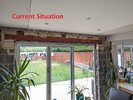
I had some 1.8M sliding patio doors. Made the decision to go wider and change to 2.4M bi-folds.
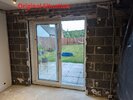
Structural engineer did my beam calcs and I had a beam made up to his spec; (150x100x6.3 box section with 8mm bottom plate fillet welded).
This might have been my first mistake, not challenging his choice of spec, which various people have commented is wildly over engineered. Possibly, I should have pushed for an extra heavy duty catnic or similar rather than accepting this monster.
It didn’t occur to me until now, as I’m thinking about making good, that I’ve created the mother of all cold bridges. The original lintel was an insulated catnic, with the majority of the surface area inside the cavity. Now I’ve got this monster spanning my cavity and the box section acting as a giant heat exchanger. I’d previously thought thought I’d just dot n dab over the top as per the original situation, but I now think that’s probably not a good idea…
Warm moist air from the house will be permeate the plasterboard and condense on the beam, will it not? Worse, it’ll then start making the plasterboard damp and encourage the steel corrode?
My beam isn’t galvanised, but it is red oxide primed with several coats of Rust-Oleum anti corrosion paint on top (except the inside face which I’ll do shortly).
It’s stressing me out a bit because I’m unsure what to do.
Ideally, I don’t want to make final thickness of the wall greater than the original, as it needs to line up with the original plasterboard finish to the right of the removed section (ideally).
Any advice greatly appreciated…
I’m a natural worrier and might be panicking about nothing due to having over thought things, which is probably good reason enough not to be meddling with advanced DIY...
I had some 1.8M sliding patio doors. Made the decision to go wider and change to 2.4M bi-folds.
Structural engineer did my beam calcs and I had a beam made up to his spec; (150x100x6.3 box section with 8mm bottom plate fillet welded).
This might have been my first mistake, not challenging his choice of spec, which various people have commented is wildly over engineered. Possibly, I should have pushed for an extra heavy duty catnic or similar rather than accepting this monster.
It didn’t occur to me until now, as I’m thinking about making good, that I’ve created the mother of all cold bridges. The original lintel was an insulated catnic, with the majority of the surface area inside the cavity. Now I’ve got this monster spanning my cavity and the box section acting as a giant heat exchanger. I’d previously thought thought I’d just dot n dab over the top as per the original situation, but I now think that’s probably not a good idea…
Warm moist air from the house will be permeate the plasterboard and condense on the beam, will it not? Worse, it’ll then start making the plasterboard damp and encourage the steel corrode?
My beam isn’t galvanised, but it is red oxide primed with several coats of Rust-Oleum anti corrosion paint on top (except the inside face which I’ll do shortly).
It’s stressing me out a bit because I’m unsure what to do.
Ideally, I don’t want to make final thickness of the wall greater than the original, as it needs to line up with the original plasterboard finish to the right of the removed section (ideally).
Any advice greatly appreciated…