

- Joined
- 27 Jan 2008
- Messages
- 29,355
- Reaction score
- 3,608
- Location
- Llanfair Caereinion, Nr Welshpool
- Country

I looked at this report on use of TRVs and it showed
 so why not simply write it in degree's C to start with? I will guess I know the answer, in that 3 for example does not mean 20ºC but a range of 17ºC to 23ºC between fully open and fully closed. Mine
 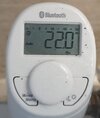 do show degrees C, and can also be programmed with varying temperatures through the week.
However, I have seen the settings on TRV heads set at max, where a wall thermostat has turned off the boiler, and someone thinks turning up the TRV will get room warmer even when the boiler is not running.
Yes, read the books, and the instructions with a boiler, and so much conflicting information may as well through in the bin. Now in my 70s, and still finding I was wrong in the way I thought central heating works. The pictures seem to make it so easy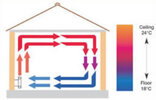
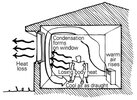 all seems to make sense, then one finds the errors. The first is what turns on the central heating to start with.
So we put a sensor (thermostat) somewhere in the house to tell the heating to come on. For the moment forget which room, just consider where in the room. So the book says on the wall opposite to the radiator, and I can confirm 90º to radiator does not work, it needs to be in the air flow. So picture number 2 shows the problem, sticking a thermostat on the window will not work. So we look at picture number 1, at the radiator seems A1, it may need setting low, as the return air has already cooled, but that is only once the heating is running.
So the start point has to be when heating is not running. There is no circulation, as yet not running. Against an outside wall will turn on the heating too soon, so needs to be on an internal wall, and this is where the problem starts.
So with a radiator on the outside wall, we need a wall thermostat on the interior wall, but with the radiator on an interior wall we likely can't use a wall thermostat and have to use a TRV because the building regulations will not allow us to fit a wall thermostat low enough to read the return temperature of the air once the heating is running. Unless we use one with a remote sensor.
So we are talking about linked and unlinked TRV heads. Depending on if radiator on internal or external wall. This house, 7 radiators on outside walls, and 7 (including one towel rail) on internal walls. But most hubs will not allow 14 thermostats, so we need to reduce the number, so which rooms will be selected which can't turn the boiler on?
Also, a cost consideration, but unless, like my last house, the home is an open plan, then it will need more than one thermostat able to fire the boiler, so which rooms should they be fitted into?
Heat raises, so the first thought is lower rooms only. Upper rooms the non-linked TRV will be enough. But returning to my house, dinning room seldom used, so the bedroom above the dinning room is the coldest in the house. But that would not be the case if the dinning room was used. So OK I have fitted a linked TRV head in the cold bedroom, hindsight should have been wall thermostat, as radiator against outside wall.
But the TRV head is easy, main house 10 TRV heads, and all interchangeable, so say with two linked, the home user can decide which rooms have the linked ones. The wall thermostats are harder, you can have freestanding thermostats, tried that while making up my mind where to mount it, darn cat slept on it. Also, mother's house, mother put it in a draw out of the way. And it failed, likely due to being knocked off the table.
So on the wall, but where? I put one in the hall, around as central to the whole house as one could get, but the hall cooled too slowly. So a second one in the living room.
Now with a system like Wiser, one can fit multi-thermostats, but Nest only the USA version, and Nest is not what one would consider as cheap. But even with Wiser
 why have three channels? The TRV will be programmed, so rooms will only heat up when required, with two channels, if working a mains powered motorised valve, (TRVs are motorised valves when fitted with electronic heads) I can see need for more than one, the EPH I think system can work with up to 9, one thermostat set as master, the other as slaves, but with a few exceptions, like my house it is either TRV or mains powered control, not both. My house has a main house and flat, so yes, two independent controls. This must be rare, we, and I would guess many others, assign our rooms to different use, so office and craft room used in the day, and two bedrooms used overnight, so splitting up/downstairs would not work, same applies with children doing homework.
So central heating install must be flexible, easy to move TRV head between rooms, but to change which rooms a mains powered motorised valve serves is much harder.
So who designs the central heating fitted to homes? Why *12345 on a TRV head, and why mains powered motorised valves for other than controlling domestic hot water independent of central heating, and even then, in summer using a central heating boiler to heat DHW can work out rather expensive.
do show degrees C, and can also be programmed with varying temperatures through the week.However, I have seen the settings on TRV heads set at max, where a wall thermostat has turned off the boiler, and someone thinks turning up the TRV will get room warmer even when the boiler is not running.
Yes, read the books, and the instructions with a boiler, and so much conflicting information may as well through in the bin. Now in my 70s, and still finding I was wrong in the way I thought central heating works. The pictures seem to make it so easy
all seems to make sense, then one finds the errors. The first is what turns on the central heating to start with.So we put a sensor (thermostat) somewhere in the house to tell the heating to come on. For the moment forget which room, just consider where in the room. So the book says on the wall opposite to the radiator, and I can confirm 90º to radiator does not work, it needs to be in the air flow. So picture number 2 shows the problem, sticking a thermostat on the window will not work. So we look at picture number 1, at the radiator seems A1, it may need setting low, as the return air has already cooled, but that is only once the heating is running.
So the start point has to be when heating is not running. There is no circulation, as yet not running. Against an outside wall will turn on the heating too soon, so needs to be on an internal wall, and this is where the problem starts.
So with a radiator on the outside wall, we need a wall thermostat on the interior wall, but with the radiator on an interior wall we likely can't use a wall thermostat and have to use a TRV because the building regulations will not allow us to fit a wall thermostat low enough to read the return temperature of the air once the heating is running. Unless we use one with a remote sensor.
So we are talking about linked and unlinked TRV heads. Depending on if radiator on internal or external wall. This house, 7 radiators on outside walls, and 7 (including one towel rail) on internal walls. But most hubs will not allow 14 thermostats, so we need to reduce the number, so which rooms will be selected which can't turn the boiler on?
Also, a cost consideration, but unless, like my last house, the home is an open plan, then it will need more than one thermostat able to fire the boiler, so which rooms should they be fitted into?
Heat raises, so the first thought is lower rooms only. Upper rooms the non-linked TRV will be enough. But returning to my house, dinning room seldom used, so the bedroom above the dinning room is the coldest in the house. But that would not be the case if the dinning room was used. So OK I have fitted a linked TRV head in the cold bedroom, hindsight should have been wall thermostat, as radiator against outside wall.
But the TRV head is easy, main house 10 TRV heads, and all interchangeable, so say with two linked, the home user can decide which rooms have the linked ones. The wall thermostats are harder, you can have freestanding thermostats, tried that while making up my mind where to mount it, darn cat slept on it. Also, mother's house, mother put it in a draw out of the way. And it failed, likely due to being knocked off the table.
So on the wall, but where? I put one in the hall, around as central to the whole house as one could get, but the hall cooled too slowly. So a second one in the living room.
Now with a system like Wiser, one can fit multi-thermostats, but Nest only the USA version, and Nest is not what one would consider as cheap. But even with Wiser
So central heating install must be flexible, easy to move TRV head between rooms, but to change which rooms a mains powered motorised valve serves is much harder.
So who designs the central heating fitted to homes? Why *12345 on a TRV head, and why mains powered motorised valves for other than controlling domestic hot water independent of central heating, and even then, in summer using a central heating boiler to heat DHW can work out rather expensive.


