• Looking for a smarter way to manage your heating this winter? We’ve been testing the new Aqara Radiator Thermostat W600 to see how quiet, accurate and easy it is to use around the home. Click here read our review.

Sand/Cement plaster on 1930's brick

Joined
7 Feb 2024
Messages
68
Reaction score
5
Location
Cumbria
Country
United Kingdom
Hi,
Just after a bit of advice regarding using Sand/Cement plaster on old brickwork.

I'm currently back to brick in my 1930's kitchen. It's a solid wall and i've been looking to have it plastered again. Most of the plastering companies I spoke to only offered dot and dabbing, which I didn't want. I've now found a plasterer ( recommended ) who says he will wet plaster with sand/cement. I've done a bit of reading on the net and I'm worried about this lime plaster issue, and it not being compatible with sand cement....cracking bricks, damp etc

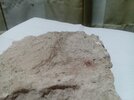
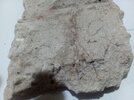
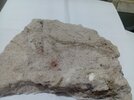
Definitely looks like my original plaster is lime ( pics ) even though my house mortar is dark grey, cement looking. Am I worrying for nothing or is this a major thing ?
 

Attachments

  • IMG_20251117_212216.jpg
    IMG_20251117_212216.jpg
    301.2 KB · Views: 25
  • IMG_20251117_212242.jpg
    IMG_20251117_212242.jpg
    254.2 KB · Views: 21
  • IMG_20251117_212312.jpg
    IMG_20251117_212312.jpg
    238 KB · Views: 24
S&C render altho a solid choice, can result in a cold wall to the touch, increasing condensation. Have you got room to insulate/insulated plasterboard?
If wet plastering I’d probably hardwall it. Gypsum based backing plaster.
I don’t personally think a typical 30s house has some crucial need for lime plaster, no.
 
Hi,
Just after a bit of advice regarding using Sand/Cement plaster on old brickwork.

I'm currently back to brick in my 1930's kitchen. It's a solid wall and i've been looking to have it plastered again. Most of the plastering companies I spoke to only offered dot and dabbing, which I didn't want. I've now found a plasterer ( recommended ) who says he will wet plaster with sand/cement. I've done a bit of reading on the net and I'm worried about this lime plaster issue, and it not being compatible with sand cement....cracking bricks, damp etc

Definitely looks like my original plaster is lime ( pics ) even though my house mortar is dark grey, cement looking. Am I worrying for nothing or is this a major thing ?
Like it or not, removing internal plaster (thermal element) can mean your job is B'regs relevant.

I do not understand your reluctance of plasterboard dabbed to the walls. It often stabilises poor walls due to the sheathing effect and in the right hands is a superior plaster finishing product. The only downside is longer screws for fixing.

As said, you'd be bonkers not to insulate unless you have EWI?

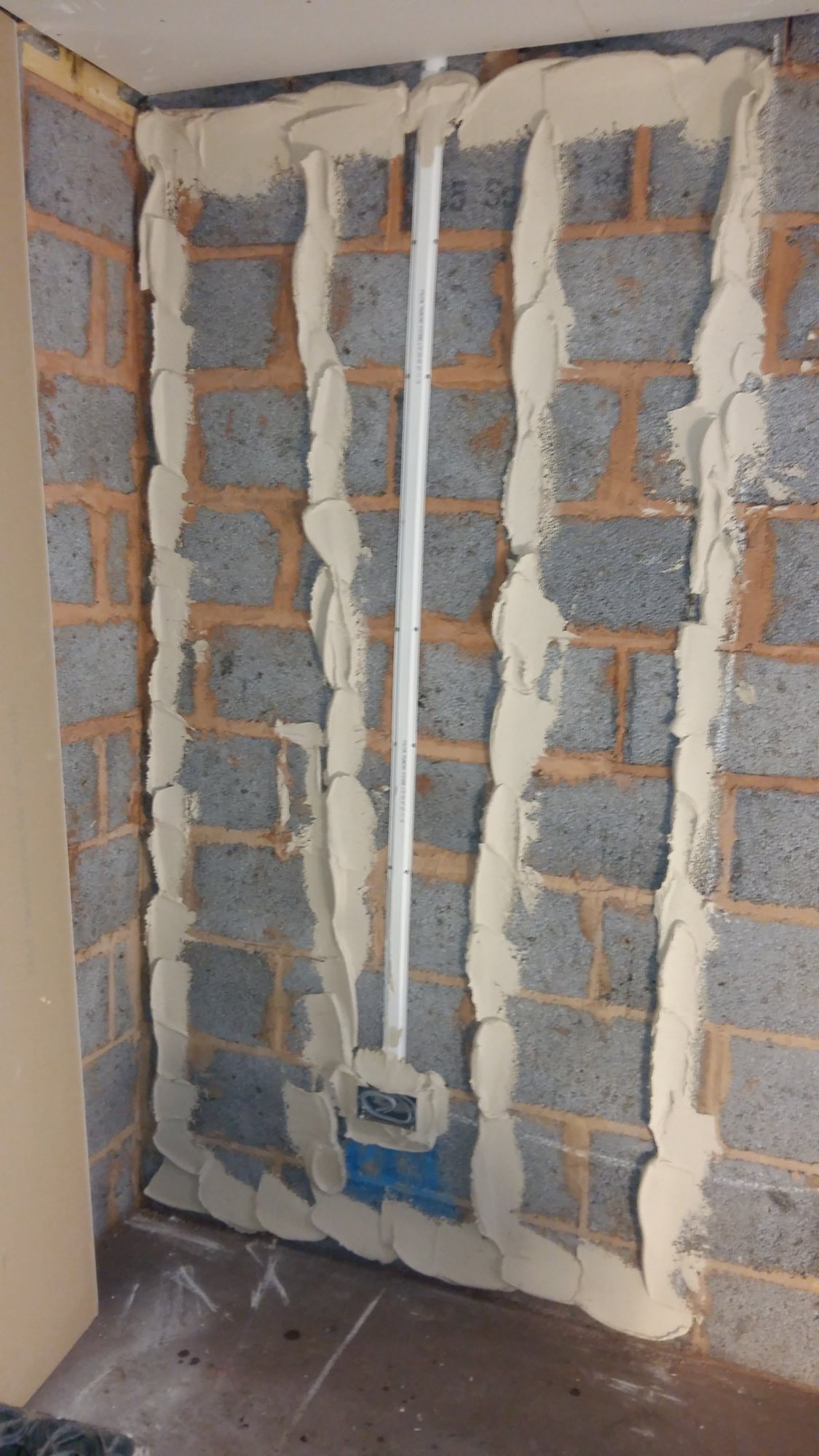
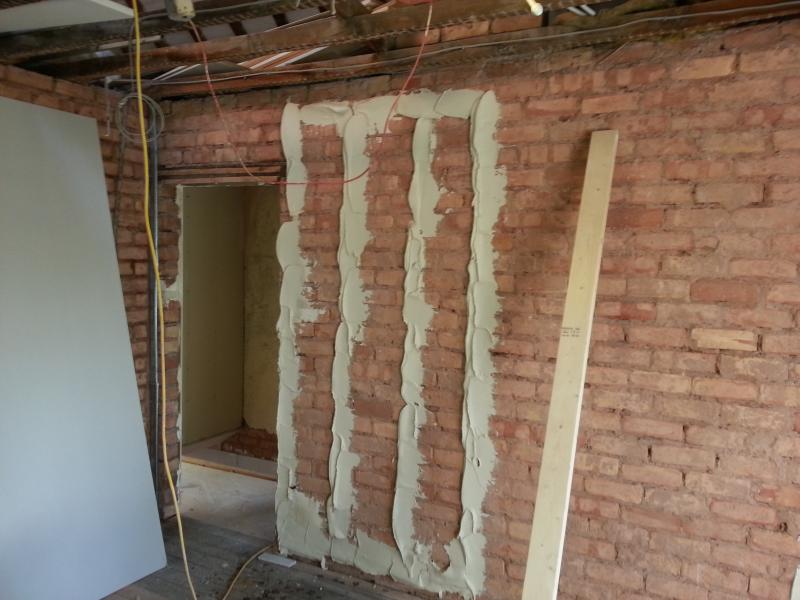
Correct dabbing format....


The kitchen is really small, can't really afford to lose any space. It surprises me that ppl are recommending plasterboard over wet plaster,i thought plasterboard was the cheep and cheerful method.
I initially thought about insulated plasterboard but apparently it's a technical minefield internally insulating solid walls, condensation in voids etc
 
Didn't a load of government schemes for internal wall insulation, have to be ripped out after damaging the properties....
 
Corksol I believe its called ( insulating plaster skim ) The problem is getting ppl to do it and then, what goes underneath it, as a base coat.
Insulating plasterboard dot and dabbbed to the wall would be dead easy and done in a day, I could live with the 40mm lost from room space but, I've read horror stories about damage to walls behind the boards. A guy in YouTube fitted it and checked back a year later...it was dripping wet behind !
 
While I’m not disputing that it’s a potentially grey area, and it’s your house so you want to do the best possible thing, my take on it is there are tens of thousands of 30s places which will have insulated/non insulated dabbed solid walls and are absolutely fine. There will be loads being done as we speak, which will never have issues. I’ve done it on several, and know they’re all good 15 years later. I’m not discrediting the YouTube thing, but there is always someone one YouTube with a particular view. For me, if the tech docs from celotex/British gypsum or whoever give the green light to the product being used in a given way, then I’d crack on. Just my take.
 
23, just to confirm,. You would simply dot and dab the insulated plasterboard straight to the brick wall and skim as normal ?

I'm thinking of just going with that and I can remove a skirting board a year down the line and see if it's wet.
 
You can also use foam to fix the boards on, with a few screws as well. Or screw timber battens on, which allow you to get everything level and plumb upfront.

If you are referring to the Charlie DIYte video, I think he was referring to standard uninsulated plasterboard dabbed onto his wall.

Insulated board that's got the foil built in, won't allow moisture to pass through if constructed with due diligence. What on the outside of the wall?
 
There's nothing on the outside, just bare brick. Yeah, the Charlie DIY is the one I was thinking of, I'm sure he used insulated plasterboard, he ended up ripping it all out.

I read the Bristolian document that was produced by Bristol Council, in conjunction with a university, it came about after a series of solid wall, internal insulation failures from the government green scheme. It talks about specialist testing and potential decoupling joists from walls..... who's going to start doing all that on a 100 year old house ?

I just wanted a nice plastered wall to paint and anything extra in terms of insulation would be a bonus, maybe the problem lies in trying replicate modern standards if insulation in 100 year old homes. It's all very well BC ticking boxes but are they really bothered about any damage down the line after they've waltzed off ?
 
I seem to remember reading somewhere, it might have been a SPAB document, that says too much insulation on an older building can be a negative thing, if not enough heat can escape to stop the outside of the building from freezing, leading to exacerbated spalling on brickwork and render.

If you are bare brick, then I think you'll be alright putting some insulation in. Frankly, it would be mad not to. Celotex PL4040 (40mm PIR+12.5mm PB board) insulated plasterboard will be a sweet spot, enough to retain heat, some will eventually pass through to keep the outside from being excessively damp, and thin enough not intrude on the room.

A solid brick and plastered wall is a massive heatsink and is worse than an uninsulated cavity.
 
Surely if it were simple, there wouldn't be so many failings and contradictory reports.
Anyways, I'm going to go for 35mm ( overall ) board,with the idea being that it's better than nothing and shouldn't introduce a large internal/external temp difference, which like deluks said, seems to be where the issue lies.
 

If you need to find a tradesperson to get your job done, please try our local search below, or if you are doing it yourself you can find suppliers local to you.

Select the supplier or trade you require, enter your location to begin your search.


Are you a trade or supplier? You can create your listing free at DIYnot Local

 
Back
Top