Anyone up for a(nother) discussion) on ABVs?
1. ABVs open in response to the increased upstream pressure that results from closure of MVs (or TRVs).
2. This mechanism will only operate effectively if the performance characteristics of the pump concerned include a pressure increase large enough to open the valve, for whatever change of flow is involved.
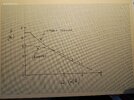
3. Inspection of performance curves for different pumps, on constant speed settings, shows a wide variation in the extent to which reduced flow is accompanied by increased pressure. Grundfos pumps for example have relatively flat curves i.e. reduced flow is accompanied by only small pressure increases. Stuart Turner pumps have curves with a greater gradient at low flow rates. Attached is a sketch where I have transcribed the published performance curves for setting II on the Grundfos Alpha2 15-60 on the same axes as the Stuart Turner ST 15-60.
4. Pumps like the Stuart Turner should therefore be inherently better at operating ABVs. With pumps like the Grundfos (i) it will be hard to set the ABV correctly and (ii) in order to allow adequate flow during over-run, the ABV will also be open to some extent during normal operation (bearing in mind that the valve characteristics involve progressively greater opening as pressure rises, rather than a cliff-edge effect).
I have a system boiler with S plan, two MVs, hot water cylinder, Honeywell autobypass valve (ABV)and a mix of standard and TRV rads. The pump is a Grundfos, and my experience confirms these predictions: if the ABV is set to give an adequate flow under over-run conditions (say 300 L/h) it will inevitably also be open to some extent under normal running conditions. My estimate (based on the power consumption of the pump, which is shown in real time on the Grundfos) is that under normal CH running conditions, with the HW MV closed and CH MV open, a little under half the boiler flow is passing through the ABV. Because of this I am considering changing it for another pump with a steeper performance curve, in order to improve the overall performance of the system.
Does this make sense and, if so, why have I been unable to find any coverage of it on the web? It seems a significant issue!
1. ABVs open in response to the increased upstream pressure that results from closure of MVs (or TRVs).
2. This mechanism will only operate effectively if the performance characteristics of the pump concerned include a pressure increase large enough to open the valve, for whatever change of flow is involved.
3. Inspection of performance curves for different pumps, on constant speed settings, shows a wide variation in the extent to which reduced flow is accompanied by increased pressure. Grundfos pumps for example have relatively flat curves i.e. reduced flow is accompanied by only small pressure increases. Stuart Turner pumps have curves with a greater gradient at low flow rates. Attached is a sketch where I have transcribed the published performance curves for setting II on the Grundfos Alpha2 15-60 on the same axes as the Stuart Turner ST 15-60.
4. Pumps like the Stuart Turner should therefore be inherently better at operating ABVs. With pumps like the Grundfos (i) it will be hard to set the ABV correctly and (ii) in order to allow adequate flow during over-run, the ABV will also be open to some extent during normal operation (bearing in mind that the valve characteristics involve progressively greater opening as pressure rises, rather than a cliff-edge effect).
I have a system boiler with S plan, two MVs, hot water cylinder, Honeywell autobypass valve (ABV)and a mix of standard and TRV rads. The pump is a Grundfos, and my experience confirms these predictions: if the ABV is set to give an adequate flow under over-run conditions (say 300 L/h) it will inevitably also be open to some extent under normal running conditions. My estimate (based on the power consumption of the pump, which is shown in real time on the Grundfos) is that under normal CH running conditions, with the HW MV closed and CH MV open, a little under half the boiler flow is passing through the ABV. Because of this I am considering changing it for another pump with a steeper performance curve, in order to improve the overall performance of the system.
Does this make sense and, if so, why have I been unable to find any coverage of it on the web? It seems a significant issue!