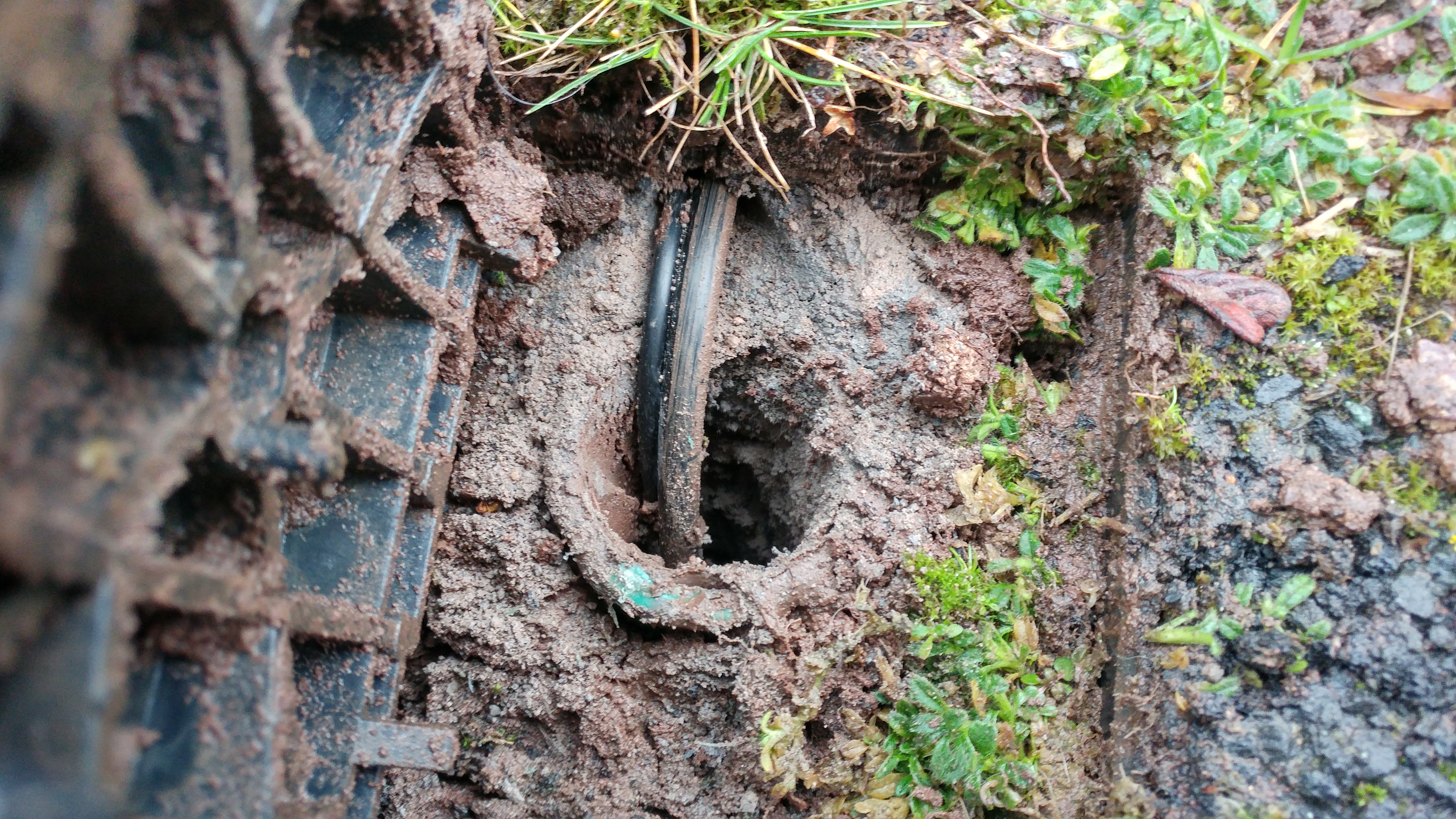
Nope. There was one coax cable originally for analogue TV - clear TV aerial style channels for free-to-air, plus scrambled channels you needed to pay for. There was also a separate phone line, identical to a BT phone line. They laid a figure-8 cable, with the phone line attached to the coax, which splits out inside the outside wall box...
Later, digital TV was added to the coax cable, in a similar way that freeview was added to analogue TV - in both cases, analogue and digital ran alongside each other for a long time while people transitioned. Different services on different frequencies, basically the cable is the provider's own private spectrum on which they can broadcast anything that could be broadcast over the air, in isolation from anything else.
Then broadband was added into the coax too. Your download data arrived by the same cable as the TV channels you were watching, and your uploads went back out of the same cable too.
The separate phone line was always just for analogue phone only.
So at one time, the one single cable contained analogue TV, digital TV and two-way internet data. Amazingly it all works.
Presumably the internet data gets separated from the TV at some point and connects to fibre, probably in the street cabinet.
I don't know whether all this is still the case, they may have moved on from this messy setup.