Is FTTP (Fiber to the premises) really the future?

Well that's not true as Virgin Media still use copper (coax). From what I can tell, the Virgin Media tech (DOCSIS) can currently reach approx. 2Gb, but potentially reach 10Gb in future. It also depends what you mean by a 'normal' phone line, as you can't have a 'normal' phone line on fiber either.

I meant, of course, a traditional copper pair.
 
Well that's not true as Virgin Media still use copper (coax). From what I can tell, the Virgin Media tech (DOCSIS) can currently reach approx. 2Gb, but potentially reach 10Gb in future. It also depends what you mean by a 'normal' phone line, as you can't have a 'normal' phone line on fiber either.

It sounds like power consumption may be the reason for switching and interference may also be a reason. My Virgin Media connection was always a consistent speed though.

I think Virgin use FTTC.
 
When I had Virgin (Fnnaah!) 10 years ago, it was FTTC, coax from the cabinet for data/TV and twisted pair for telephone. Each connection needed two separate cables. I don't know whether the telephone combined with the rest at the cabinet or carried on separately, it was all a bit of a mess really, all dating from pre-digital days when it was basically an underground TV aerial cable plus a phone line. DOCSIS inserted digital data in place of the analogue TV channels, a lot like Freeview replaced analogue TV channels, except that on cable some data flowed back up the cable.

I used to subscribe for broadband only, but plugged the cable into a splitter and used the branch as a TV aerial in a rented house that had a rubbish TV aerial. It had a really clear broadcast of all the free analogue channels, plus a load more that were really fuzzy, presumably these used some kind of analogue scrambling that the subscription box would reverse. They removed all the analogue channels lots of years ago.

I don't know how it works now, I'd guess at some point they have or will replace the whole lot with fibre.

Thanks for the photos of underground stuff HM, really interesting stuff. I've read headlines about them making billions from scrap copper, knew they had a load of the stuff underground and assumed they'd be ripping it all out. Perhaps not all of it then.

But without doubt they'll be getting lots of scrap value from all the overhead cables, no problem recovering them and they have to be removed for safety reasons,.
 
When I had Virgin (Fnnaah!) 10 years ago, it was FTTC, coax from the cabinet for data/TV and twisted pair for telephone. Each connection needed two separate cables. I don't know whether the telephone combined with the rest at the cabinet or carried on separately, it was all a bit of a mess really, all dating from pre-digital days when it was basically an underground TV aerial cable plus a phone line. DOCSIS inserted digital data in place of the analogue TV channels, a lot like Freeview replaced analogue TV channels, except that on cable some data flowed back up the cable.

I don't know how it works now, I'd guess at some point they have or will replace the whole lot with fibre.

Thanks for the photos of underground stuff HM, really interesting stuff. I've read headlines about them making billions from scrap copper, knew they had a load of the stuff underground and assumed they'd be ripping it all out. Perhaps not all of it then.

But without doubt they'll be getting lots of scrap value from all the overhead cables, no problem recovering them and they have to be removed for safety reasons,.
I thought it would be best to show you some examples rather than try to explain, Some will indeed come out of the ground but mainly the overhead cables will be the ones that will make up the money spinners.
 
I took a reel of Cat 5 networking cable (similar to a phone line) to the local scrap place. They've paid for it by weight before a few years ago, but this time around they said they won't, as there's too little copper in relation to the plastic. They'll only pay for power cables, where the copper is a much bigger proportion of the weight. They took it off me for free though, so it obviously has at least some value to them.

So BT must have a special deal, I guess they're not going to the local scrappie like I am. They may even shred and separate it in-house. Probably not, but I would if I was them, but I'm mean!
 
When I had Virgin (Fnnaah!) 10 years ago, it was FTTC, coax from the cabinet for data/TV and twisted pair for telephone. Each connection needed two separate cables. I don't know whether the telephone combined with the rest at the cabinet or carried on separately, it was all a bit of a mess really, all dating from pre-digital days when it was basically an underground TV aerial cable plus a phone line. DOCSIS inserted digital data in place of the analogue TV channels, a lot like Freeview replaced analogue TV channels, except that on cable some data flowed back up the cable.

I used to subscribe for broadband only, but plugged the cable into a splitter and used the branch as a TV aerial in a rented house that had a rubbish TV aerial. It had a really clear broadcast of all the free analogue channels, plus a load more that were really fuzzy, presumably these used some kind of analogue scrambling that the subscription box would reverse. They removed all the analogue channels lots of years ago.

I don't know how it works now, I'd guess at some point they have or will replace the whole lot with fibre.

Thanks for the photos of underground stuff HM, really interesting stuff. I've read headlines about them making billions from scrap copper, knew they had a load of the stuff underground and assumed they'd be ripping it all out. Perhaps not all of it then.

But without doubt they'll be getting lots of scrap value from all the overhead cables, no problem recovering them and they have to be removed for safety reasons,.

I don't think there ever was widespread analogue cable TV in the UK. Except perhaps in Hull. AFAIK, the first widespread networks were fibre and were laid for the internet in the mid to late1990s by regional firms. In our region it was Yorkshire Cable. Then NTL and Telewest bought up all the regional firms. They merged. And finally Virgin bought NTL Telewest.
 
I bought some garage floor tiles a few years ago - solid plastic things, about 10mm thick with dimpled surface that slot together like jigsaw pieces. They were just plain grey on the outside, but when I cut them I found they were full of short bits of cable insulation, all semi-melted together. Presumably the leftovers from the copper recovery process. There were also a fair few strands of copper left in, very good reinforcement but I needed a new Stanley knife blade every couple of tiles.
 
I don't think there ever was widespread analogue cable TV in the UK. Except perhaps in Hull. AFAIK, the first widespread networks were fibre and were laid for the internet in the mid to late1990s by regional firms. In our region it was Yorkshire Cable. Then NTL and Telewest bought up all the regional firms. They merged. And finally Virgin bought NTL Telewest.
Mine was around Southampton, NTL. This was early 2000s. All the digital TV and internet was running, but the analogue channels were still there too. A heck of a lot of stuff in one cable.
 
Mine was around Southampton, NTL. This was early 2000s. All the digital TV and internet was running, but the analogue channels were still there too. A heck of a lot of stuff in one cable.

I think I get it now. So, when the original backbone for most of the Virgin cables was laid, starting in the mid 1990s, there was fibre optic for the internet, a copper line for the phone and a separate copper line for the analogue TV? And were all three strands within the same cable? (I mean the main cable to the cabinet, not the run to each property.)
 
I took a reel of Cat 5 networking cable (similar to a phone line) to the local scrap place. They've paid for it by weight before a few years ago, but this time around they said they won't, as there's too little copper in relation to the plastic. They'll only pay for power cables, where the copper is a much bigger proportion of the weight. They took it off me for free though, so it obviously has at least some value to them.

So BT must have a special deal, I guess they're not going to the local scrappie like I am. They may even shred and separate it in-house. Probably not, but I would if I was them, but I'm mean!
One minuit a bag of scrap cable is worthless and a week later it can be like gold dust. The copper market is priced daily so god knows how BT have pulled this deal off tbh.
 
I think I get it now. So, when the original backbone for most of the Virgin cables was laid, starting in the mid 1990s, there was fibre optic for the internet, a copper line for the phone and a separate copper line for the analogue TV? And were all three strands within the same cable? (I mean the main cable to the cabinet, not the run to each property.)
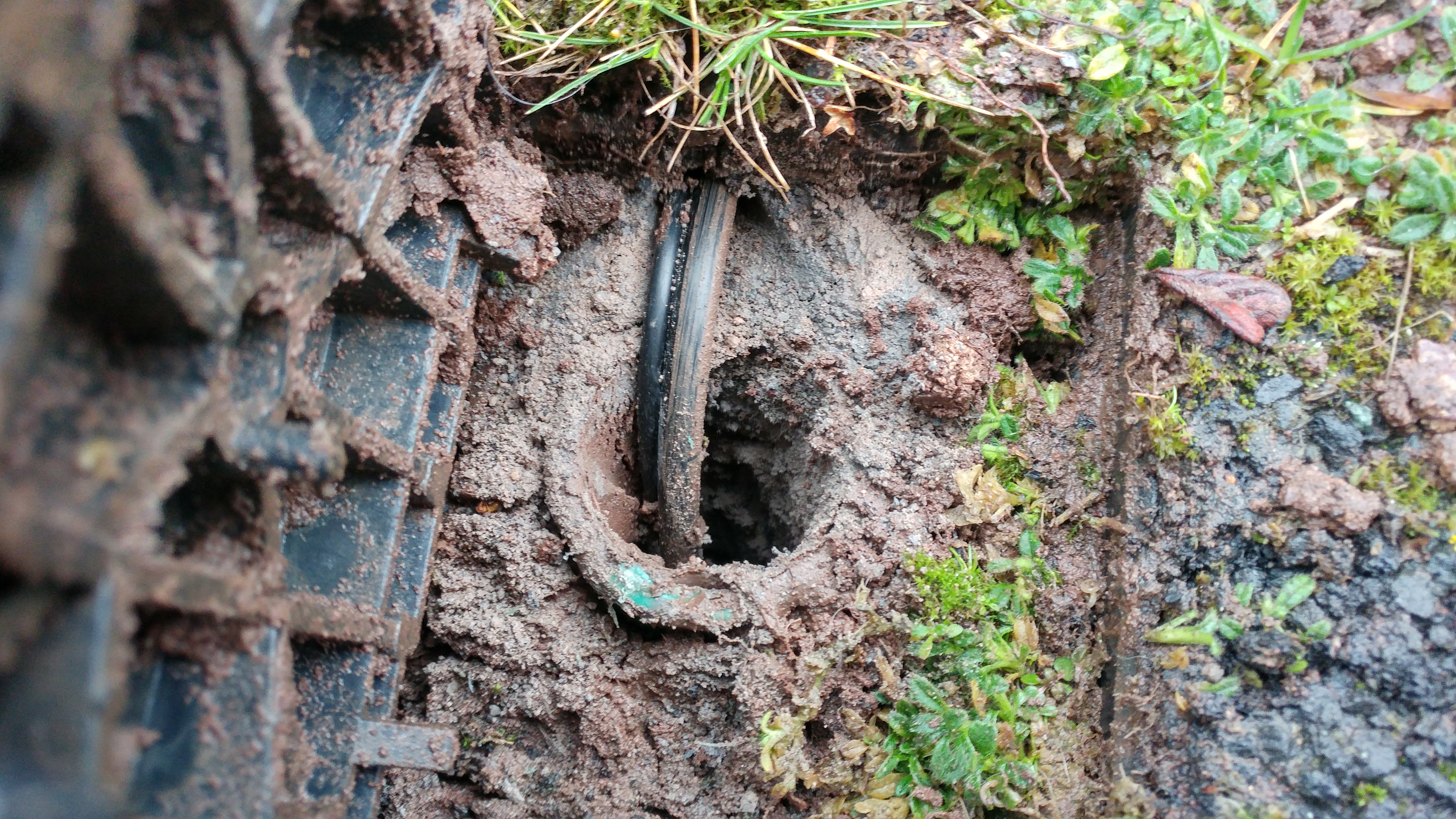
Nope. There was one coax cable originally for analogue TV - clear TV aerial style channels for free-to-air, plus scrambled channels you needed to pay for. There was also a separate phone line, identical to a BT phone line. They laid a figure-8 cable, with the phone line attached to the coax, which splits out inside the outside wall box...

20170211_133548_HDR-1.jpg


20170307_173654_HDR.jpg


Later, digital TV was added to the coax cable, in a similar way that freeview was added to analogue TV - in both cases, analogue and digital ran alongside each other for a long time while people transitioned. Different services on different frequencies, basically the cable is the provider's own private spectrum on which they can broadcast anything that could be broadcast over the air, in isolation from anything else.

I had the same cable split out to my cable modem for broadband and also plugged into the aerial socket of my TV for watching the free analogue channels (naughty me, this wasn't allowed by NTL).

Then broadband was added into the coax too. Your download data arrived by the same cable as the TV channels you were watching, and your uploads went back out of the same cable too.

The separate phone line was always just for analogue phone only.

So at one time, the one single cable contained analogue TV, digital TV and two-way internet data. Amazingly it all works.

Presumably the internet data gets separated from the TV at some point and connects to fibre, probably in the street cabinet.

I don't know whether all this is still the case, they may have moved on from this messy setup.

 
Nope. There was one coax cable originally for analogue TV - clear TV aerial style channels for free-to-air, plus scrambled channels you needed to pay for. There was also a separate phone line, identical to a BT phone line. They laid a figure-8 cable, with the phone line attached to the coax, which splits out inside the outside wall box...

20170211_133548_HDR-1.jpg


20170307_173654_HDR.jpg


Later, digital TV was added to the coax cable, in a similar way that freeview was added to analogue TV - in both cases, analogue and digital ran alongside each other for a long time while people transitioned. Different services on different frequencies, basically the cable is the provider's own private spectrum on which they can broadcast anything that could be broadcast over the air, in isolation from anything else.

Then broadband was added into the coax too. Your download data arrived by the same cable as the TV channels you were watching, and your uploads went back out of the same cable too.

The separate phone line was always just for analogue phone only.

So at one time, the one single cable contained analogue TV, digital TV and two-way internet data. Amazingly it all works.

Presumably the internet data gets separated from the TV at some point and connects to fibre, probably in the street cabinet.

I don't know whether all this is still the case, they may have moved on from this messy setup.

My Virgin Media connection used to have a 'shotgun cable', which had one for Internet and one for phone. When the engineers were here last (a few years back) they said that it now only uses one, so although the old cable has two, one is disconnected. The telephone plugs into the router, which uses VOIP. New installations would only have a single cable. I'm not sure about TV as I've never had that service.
 
Nope. There was one coax cable originally for analogue TV - clear TV aerial style channels for free-to-air, plus scrambled channels you needed to pay for. There was also a separate phone line, identical to a BT phone line. They laid a figure-8 cable, with the phone line attached to the coax, which splits out inside the outside wall box...
I remember it well cause in my last house they made a half ar5ed attempt to hide it where it ran along my front garden into the house.

It's still the cable I have in my current house.

cable.jpg
 
Back
Top