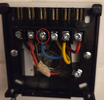
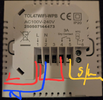
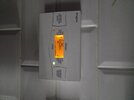
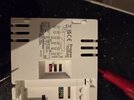
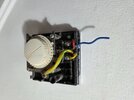
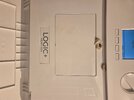
The old thermostat
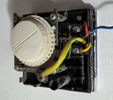
does not care what the voltage is, the new one does. There are three typical voltages used with boilers 0–40 volts, yours is unlikely to be that, 24 VDC and 230 VAC the latter two do not mix, should not even use the same cable for them.
So we have the volt free thermostat to allow it to be powered by 230 volts and switch 24 volts. Dry contacts seem to be another phrase for volt free.
The old system the thermostat and programmer controlled a motorised valve, and the motorised valve controlled the boiler, there were some 24 volt motorised valves which typically had a plug and socket arrangement, but they were a bit rare, so unlikely to find them, if you have motorised valves, then likely 230 volts.
But the latter boilers tend to work direct, and 24 volts DC is a common control voltage, get it wrong, and looking at a new circuit board, which is not a DIY fit, in fact even as an electrician likely I could not change one, as the tools to set it are only held by gas safe guys.
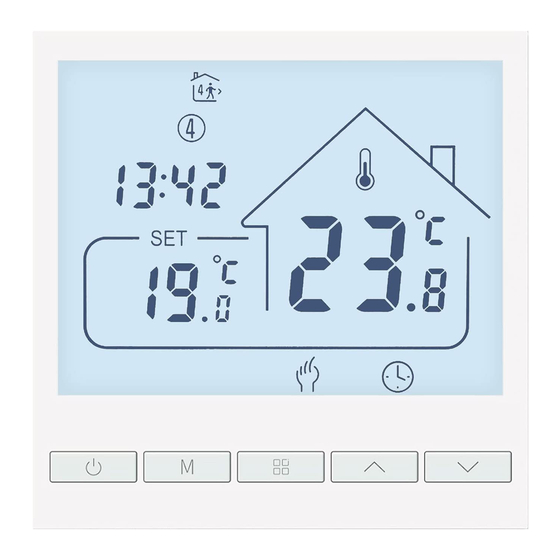
The only battery powered smart thermostat I know of, is the Nest-e, the rest either the hub needs power, or the thermostat needs power, and in the main the reason to move to a smart thermostat is it can integrate with TRV heads and the like, and Nest-e will not do that, the Beok you show seems the same, so a simple non-smart battery powered thermostat like this
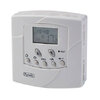
would allow the times and temperatures to be set, but does not connect to your phone, but has nearly all the features of the Beok except for connection to internet. And a simple two wire connection.
The programmable thermostat comes in a few flavours, the simple one shown, but there is also a wireless version, the price jumps, and not really worth it, may as well go the whole hog, and get a smart version if you want wireless, but the smart thermostat also has two versions hub built into the thermostat, and hub independent, with the independent hub, it is mounted close to the boiler, so getting wires to it is no problem, and with some makes, there is no need for a wall mounted thermostat, it can connect direct to the TRV heads. Drayton Wiser and Honeywell Evohome both do not need wall thermostats, although I know Wiser does give you the option.
How do I know? Well I also got it wrong, I fitted Nest Gen 3, only to find it not suited to my house, and now I have Drayton Wiser. My aim was to avoid batteries, but having two parallel thermostats also means I am not relying on one set of batteries.
Since you have this
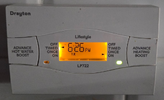
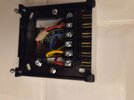
a smart thermostat which uses a hub seems to be the best option, also seems likely you have 230 volt control. Somewhere you likely have a wiring centre (junction box) and likely you will need to make some changes there, often there is simply not enough room in the hub, and there is no option but have a wiring centre
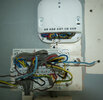
but you need to work out where each cable and wire goes, so making a wiring diagram is a good idea. Good luck.



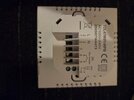




 . Edited my responses for clarity