Beok Thermostat Dry Contact

Joined
17 Jan 2026
Messages
5
Reaction score
1
Country
United Kingdom
Hi all.
I have read a few threads on here, but can't find a definitive answer unfortunately.
I have a standard twisty dial room stat at the moment, but just purchased a Beok wifi digital type. I have a question about the "Dry contact".
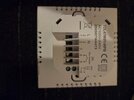
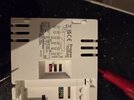
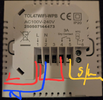
Looking at the diagram the switched live wire will go into terminal 5. Terminal 4 is my issue. Can I link between incoming live at terminal 1 over to terminal 4 of the dry contact?
Thankyou.
 

Attachments

  • 20260109_065028.jpg
    20260109_065028.jpg
    136.3 KB · Views: 14
There should be a Destruction Manual with it. That should tell you all you need to know including what they actually mean by "Dry Contact", I would tend to assume it is a set of contacts which changes state from Closed to Open etc dependant upon temperature and have no voltage present iny any state but you should confirm this first. It should also explain how to use terminals 6 & 7 (Negative Temperature Coefficient ??) if required.

Never assume anything until you have read through the manual though.
 
Thanks for taking the time. The manual is garbage and gives no info. Help on here is my last resort before it gets returned.
 
Same as ebee says, dry contacts are usually switching something supplied by the boiler. If your old thermostat switched a voltage from the stat to the boiler then I suspect you may have bought the wrong sort of stat. Please supply more info ie. make and model of boiler and old stat. and you may get more help.
 
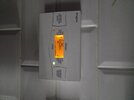
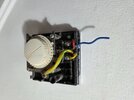
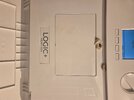
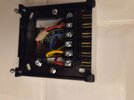
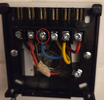
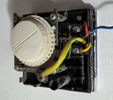
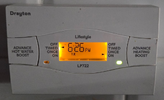
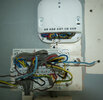
The boiler is gravity fed Logic H24 Heat2 with Drayton LP722 controller. The original thermostat is in the images.
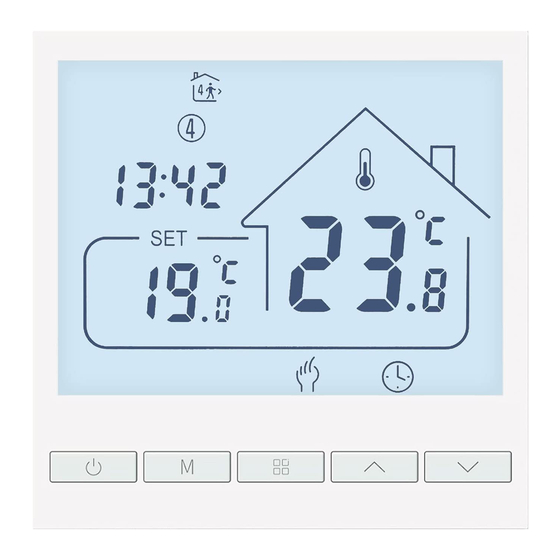
The new thermostat is a Beok TOL47WIFI-WPB, which i believe is the correct model for my needs

20260113_182627.jpg20260107_201144.jpgMo
20260107_201717.jpg20260110_175259.jpg20260107_201148.jpg
 
Once upon a day it was a not uncommon practice to wire a programmer from the mains and likewise the output( heating and/or cooling loads) .
However some then started to require voltage free contacts (sometimes called dry contacts) therefore if mains output was actually required the link was put into the programmer there making the thing easy to use on either version.

My guess (only a guess without seeing the manual) is you might have the type that is for either and you might or might not be able to use the NTC terminals 6 & 7 for something optional.
 
Your Beok needs a permanent live and permanent neutral, so you'd need to leave the heating set to constant on the programmer or take a feed from the wiring center. Also looks like existing is a 2 wire thermostat as the blue (possibly neutral) doesn't appear to be connected. If you can figure out all of that then it becomes a case of N, L , link L to 4 and swl 5.

Or if you want super easy opt for a battery operated thermostat
 
Last edited:
Also looks like existing is a 2 wire thermostat as the blue (possibly neutral) doesn't appear to be connected. If you can figure out all of that then it becomes a case of N, L , link L to 3 and swl 4.

Or if you want super easy opt for a battery operated thermostat
Thankyou. The blue is disconnected yes. I can get a neutral from the wiring centre to that no problem. It was the link to 4 (dry contact) I needed confirmation of. I didn't want to connect it and cause issues. What do you mean by taking a feed from the wiring centre? Would that allow me to use the original programmer/controller instead of leaving CH permanently on?
 
I didn't want to connect it and cause issues. What do you mean by taking a feed from the wiring centre? Would that allow me to use the original programmer/controller instead of leaving CH permanently on?
Yes, as there should be a permanent live already there and a neutral.
 
Last edited:
The old thermostat 1768738821206.png does not care what the voltage is, the new one does. There are three typical voltages used with boilers 0–40 volts, yours is unlikely to be that, 24 VDC and 230 VAC the latter two do not mix, should not even use the same cable for them.

So we have the volt free thermostat to allow it to be powered by 230 volts and switch 24 volts. Dry contacts seem to be another phrase for volt free.

The old system the thermostat and programmer controlled a motorised valve, and the motorised valve controlled the boiler, there were some 24 volt motorised valves which typically had a plug and socket arrangement, but they were a bit rare, so unlikely to find them, if you have motorised valves, then likely 230 volts.

But the latter boilers tend to work direct, and 24 volts DC is a common control voltage, get it wrong, and looking at a new circuit board, which is not a DIY fit, in fact even as an electrician likely I could not change one, as the tools to set it are only held by gas safe guys.

The only battery powered smart thermostat I know of, is the Nest-e, the rest either the hub needs power, or the thermostat needs power, and in the main the reason to move to a smart thermostat is it can integrate with TRV heads and the like, and Nest-e will not do that, the Beok you show seems the same, so a simple non-smart battery powered thermostat like this ae235.jpgwould allow the times and temperatures to be set, but does not connect to your phone, but has nearly all the features of the Beok except for connection to internet. And a simple two wire connection.
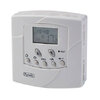
The programmable thermostat comes in a few flavours, the simple one shown, but there is also a wireless version, the price jumps, and not really worth it, may as well go the whole hog, and get a smart version if you want wireless, but the smart thermostat also has two versions hub built into the thermostat, and hub independent, with the independent hub, it is mounted close to the boiler, so getting wires to it is no problem, and with some makes, there is no need for a wall mounted thermostat, it can connect direct to the TRV heads. Drayton Wiser and Honeywell Evohome both do not need wall thermostats, although I know Wiser does give you the option.

How do I know? Well I also got it wrong, I fitted Nest Gen 3, only to find it not suited to my house, and now I have Drayton Wiser. My aim was to avoid batteries, but having two parallel thermostats also means I am not relying on one set of batteries.

Since you have this 1768741085076.png a smart thermostat which uses a hub seems to be the best option, also seems likely you have 230 volt control. Somewhere you likely have a wiring centre (junction box) and likely you will need to make some changes there, often there is simply not enough room in the hub, and there is no option but have a wiring centre upper_wiring_centre_plus_heatlink.jpg but you need to work out where each cable and wire goes, so making a wiring diagram is a good idea. Good luck.

 

If you need to find a tradesperson to get your job done, please try our local search below, or if you are doing it yourself you can find suppliers local to you.

Select the supplier or trade you require, enter your location to begin your search.


Are you a trade or supplier? You can create your listing free at DIYnot Local

 
Back
Top