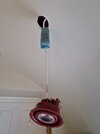
A RCBO supplies one circuit, when it trips we are 95% sure it is that circuit, note the yellow test button, it may be twin or single pole, but since it is unlikely be protected by an upstream RCD it does not matter. The MCB is normally single pole, so even when switched off, there can be a neutral to earth fault, and with a neutral to earth fault the higher the load the more likely it is to trip, so switching on a load can cause a trip, even when that load has no earth fault its self. The Isolator is just a two pole switch, and should never trip as such, the RCD detects an imbalance between lives and earth, both line and neutral are classed as lives.
So it is not 100% but turning off all circuits with MCB protection other than the suspect one, does in many cases remove the background leakage, shown here
without the meter it is guess work, and since the meter will only show leakage with energised circuits, once a circuit is tripping it is not much use. The insulation tester
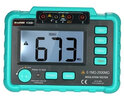
will find most faults with dead circuits, but since some faults will only pass AC it again is not 100%. We also have in our arsenal the RCD tester,
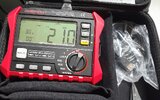
but that is an expensive meter, so unlikely for a DIY person to have one.
So we in the main us experience, and look for likely faults, outside lights, damp walls, areas likely to have rodents, and also places where spiders, slugs or other wild life may have got ingress. So one is a test with only the lights turned on, and the other is a walk around looking for any item which may have water ingress. You can try removing bulbs, unlikely that will help, but I have found a bulb full of water when a shower leaked above it. In theory, it should not have caused tripping of RCD, in practice it did. You can try removing switches with the power off, and looking for spiders/slugs etc.
But due to the cost of the test equipment shown, if you can't see the fault, then likely only option is to call an electrician who will have the test gear.