Controlling multiple electric heaters centrally

E7 is somewhat cheaper overnight, but the day rate is significantly more.
Not with all suppliers (which I confess I find surprising).

The difference between day rate and night rate with E7 is (I think with all suppliers) now an awful lot less than it was in the past, but the day rate is not necessarily 'significantly more' than the single-tariff rate....

My E7 ("So Energy") costs 26.96 p/kWh day and 19.61 p/kWh night, but the single-rate cost is 26.87 p/kWh. The E7 day rate is therefore only 0.09 p/kWh greater than the single-rate tariff rate (not a 'significant' difference) hence making it a no-brainer to go for E7 and hence enjoy the somewhat lower night rate.
 
fitting a programmer would improve that.
Any basic timer will do the job. The poor rating is the lack of any controls, not that it doesn't have some complex smart internet connected piece.

if we fit electric heaters with integrated stat/programmer/smart app functionality is this recognised by the EPC?
If the heaters and controls are of a type which appear on the EPC lists, then yes.

EPCs are a tickbox exercise and good ratings are obtained by having things which are on the list.
Whether they save money or not is mostly unrelated.
 
Modern storage heaters have the same disadvantages as old ones - only of use if you want to heat the building all day, every day. In the past plenty of people did. Today not so much.

I'm not sure if I believe that there has been a change; there are now more "work from home" people who need heat during the day, and just as many retired people who are at home during the day.
 
basic timer will do the job. The poor rating is the lack of any controls, not that it doesn't have some complex smart internet connected piece.
Ok so if I may repeat my previous question re the hot water. It's fed by two immersion heating elements on separate fused spurs. What type of timer would I need for this?


If the heaters and controls are of a type which appear on the EPC lists, then yes.
How do I find out which ones are on the lists?
 
Not with all suppliers (which I confess I find surprising).
Quite, but large suppliers like EDF and Octopus do, and selecting such a thing also locks people out of other cheaper variable tariffs where they could pay less most of the time or have other periods of cheap electricity for various purposes.

Unless storage heaters already exist in the property, E7 and it's variants are irrelevant as the cost of installing storage heaters is vast compared to any future savings that could be made.


there are now more "work from home" people who need heat during the day, and just as many retired people who are at home during the day.
Yes, but even they don't necessarily want the entire building heating up to high temperatures all day every day.
 
I think it's easy for smart meters to switch to economy 7 these days.

But what I meant by the comment above is it's my understanding that E7 is not really used these days. It is difficult to control heat output, expensive units to install, tariffs are expensive.

What I was looking for was a smarter way to control the existing panel heaters and hot water cylinder by adding thermostats and central programmer.
It's time you looked at modern storage heaters, they are soooooo different to those from the ark.

I have a rental flat which had 3.6KW and 2.4KW NSHs in the lounge area. During lockdown my tenants were working from home and the heat was gone by early afternoon. I replaced them with a single 3.3KW HHR (high heat recovery) which provided more heat and right through until mid evening. the day time energy cost dropped significantly and they were more comfortable.
 
Just to squash the storage heater idea for good - it's unlikely we could even install it in this apartment. There is no existing separate off peak wiring or consumer unit - and crucially the existing electricity meters are housed in a separate room at the other end of the block. It's unlikely the freeholder would consent to the required additional off peak switching/control cabling being installed from the meter room, along the communal areas and to this apartment a good 30m away and three floors up. We aren't even sure of the wiring route the existing wiring takes.

So in terms of future EPC compliance, storage heaters are likely to be above the threshold for cost of implementation (£10k threshold in new proposed regs - 4/5 storage heaters plus off peak fuse board plus new radials plus new cabling from communal meter room to flat, will most likely breach that cost) and meet the feasibility constraints due to inability to get permission from freeholder.

I have looked at the EPCs for tens of other apartments within the block, none have storage heaters installed.
 
My reservation would be, they are not really up to switching a 13 amp load
This is also my thoughts, but maybe only a 13 amp plug, and not using 13 amps.

My flat was also all electric heating/cooling, using one of this
1770766825725.png
type of heat pump to both heat and cool, which sat in a box built into the window. In my case mainly cooling, flat was in Hong Kong, but if you want, then heat pump heating and cooling is possible. There are versions not needing the box
1770767212690.png
but what we are looking at is cost, storage heaters
1770767372666.png
are around the same price as heat pumps, so for a whole install likely looking at a few £k, but what is more important is what power comes into the flat, and how much is needed for non-heating use.

My own house, no gas, but I do have room to store oil, any central heating is oil fired, I also wanted to reduce the bill by controlling when and where heating is running, in my case, the problem is the time it takes to re-heat the room. It takes around 2 - 3 hours to re-heat my living room, basic problem is the radiators are too small, I have a 20 kW boiler, but can't use all that power, likely you have the reverse, if you need 24 kWh and your supply is 60 amps, (13.8 kWh) of that, half needed for other than heating, then you have 6 kWh for heating, so to get that energy you need 4 hours, these figures are a guess.

So there is a lot of working out to do, both cost and what can be done. But also what is required, there is a vast difference when arriving home at 6 pm, bed 11 pm and up and out 7 to 8 am, to being retired and living there 24/7.

 
Heaters have thermostats , they have to.
Make ? model numbers ? Has to be on any electrical appliance .
 
Last edited:
So what do they have?
Basic electric panel/convectors.

Most of the EPCs give a poor or very poor rating against the heating and cite lack of programmer /controls.

Heaters have thermostats , they have to.
Make ? model numbers ? Has to be on any electrical appliance .
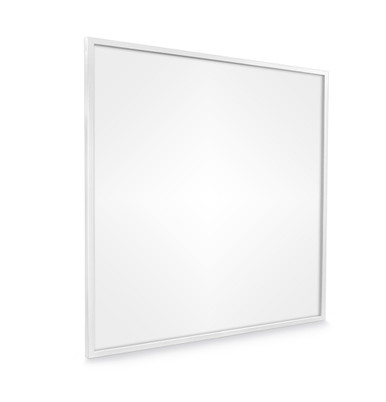
I don't know the make, next time I go I will have a look, but unless it's hidden on the back there is nothing but a small blue LED on lamp on the front of the thin, square, white panels. No dial, no control panel, no display, nothing.

They are similar to this:
 

If you need to find a tradesperson to get your job done, please try our local search below, or if you are doing it yourself you can find suppliers local to you.

Select the supplier or trade you require, enter your location to begin your search.


Are you a trade or supplier? You can create your listing free at DIYnot Local

 
Back
Top