TRV's should not be fitted to all radiators, the room where the stat is located, should not be with a TRV, or the heating may not switch off when unnecessary.
What a load of rubbish, the TRV T stands for thermostatic and stat is short for thermostatic, so you are saying the TRV should not be fitted in a room with a TRV? That is clearly nonsense.
It is a problem having a thermostat on an outside wall, the wall can cool the thermostat, causing it to turn on prematurely. So we do sometimes fit wall thermostats in rooms where the TRV is against an outside wall, and the wall thermostat can then control the TRV rather than the TRV sensing temperature at the side of the radiator.
A wall thermostat which does not display the temperature on the device is often called a sensor rather than a thermostat, it does the same job, just lacking a display. As shown here

both can be linked to the TRV head
there are other makes which do the same, Drayton Wiser if the TRV and wall thermostat are assigned to the same room, they do work as pairs.
The modern analogue system means we have to be very careful about making sweeping statements, there will still be some old digital (on/off) controls. This is the case with my own home, the boiler is still simply turned on and off, this is often the case with oil fired boilers.
With gas fired, most boilers modulate, (turn down output) in order to gain the latent heat from the flue gases, and we want to turn it off/on as few times as we can, as every time it is turned off and on again, the boiler needs to start regulating the output from scratch again.
However, neither do we want the boiler to fire up just to find out if it is required, although the latest boilers may support analogue wall thermostats using OpenTherm and the like, older units don't have that option, so we need a method of turning the boiler fully off when not required.
So we were told, fit an on/off thermostat downstairs, as heat raises, in a room kept coolish so it does not fire the boiler on what is likely going to be a warm day, which does not have alternative heating, including sun through the windows, and does not have outside doors. Most homes, this room does not exist, so we need to compromise.
The common compromise is to use the hall, and we want a short recovery time when the outside door is opened, but also for it to take longer to heat than all other rooms in the home, so the other rooms have time to heat. To do this needs a combination of two thermostats, the one on the radiator (TRV) will allow the hall to start heating up quickly, but before the hall has reached the target temperature, the TRV has started to close, so it takes a long time to get the last couple of degrees required to turn off the wall thermostat. This system does have a flaw, if we want to alter temperature through the day, then both the wall and the TRV need to be programmable, which means we need an electronic TRV head, which is more actuate to a mechanical head so it makes it harder to set.
The easy way out is multi thermostats controlling the boiler. In my main house I have three, they are in parallel, and the modern system allows one to use a single hub, to connect to multi thermostats, and those thermostats can be either wall or radiator mounted, there is no requirement to have any wall thermostats, well building regulations do say what heights any control should be mounted at so it can be used by all, so technically it may breach building regulations, where they have failed to catch up with modern control methods, I can control my heating with voice commands or use my phone, as well as use wall thermostats or TRV heads direct, in fact the Energenie TRV head is nearly impossible to set manually at the head, one has to use some IT method.
The valve seat though is probaby of the "quick opening" type,
This is interesting, I have noted with my TRV heads when they do their weekly exercise, it takes around 4 minutes to fully open, fully close and return to setting, so the setting of the lock shield valve can be important to stop hysteresis.
There is no point putting the temperature on it. People might think that by setting it to say 20°, the room should be 20°.
Only the temperature at the valve will be 20°. Who cares about that?
To some extent true, I know the Energenie has two sensors one for the water and one for the air, the former compensates the latter to get a truer reading, but fitted low down once the air circulation has been established, the reading is reasonably reflective of the room's temperature, the TRV behind me is showing 20°C and table thermometer shows 22.5°C and the wall thermostat 21.5°C just for good measure the other TRV in the room shows 23°C it is down to air movement in the room, sun through windows and height above floor level, the radiator behind me is cooling down, but having two radiators at 90° to each other, does mess up the natural thermic flow of air.
I have TRVs on all my rads. They are all set at max during the winter as is my wall stat. In summer the wall stat stays at max but the rads are turned off. heating and water comes on for an hour in the morning and an hour in the evening and that is sufficient for our needs. We do have a standalone heater in the living room for when it gets really really cold. but that is rarely used. Everything is mechanical ie I operate it all without any stupid electronics involved other than the thermostats on the boiler and the wall. Works okay for me.
My parents house was originally set the same. The central heating was used to heat the house, before raising, and lighting the fires. The reject coke from the steel works was cheap, it was too small for steel making, but idea for the home, but as steel making in Shotton stopped, and coke ovens closed, then new central heating was fitted which was then the primary source of heating. I missed the Aga cooker always on, and the louvered windows in the kitchen to keep it cool enough. But nostalgia does not keep one warm, and I would not want to return to the days with Jack Frost paintings on the windows.
That is where it is useful to have a ceiling fan, it can stir the air, stop the warmth collecting at the ceiling.
Second house did have a Myson fan assisted radiator, but control was by fan speed, not a TRV so to work with modern boilers would need series plumbing not parallel as return water too hot, and it would close down the boiler.
That defeats the whole reason to have any contols on your heating
Yes agreed, this today is the point, gone are the days when you could heat a room over what it requires, but having lived in 4 homes for a reasonable time, I have realised what works in one home may not work in the next. I thought I had the method to set lock shield valves cracked with parents home, I looked at the target and current on each TRV head, and if current exceeded target on heat up, would close the lock shield a tad. It worked spot on, but trying the same with this house, it was a failure. So 15 mm to micro bore, and modulating gas boiler to on/off oil boiler, changed how I needed to set things.
I did have a problem with this house, the hall, where the wires to the thermostat go, cools too slow. So it is not a good place for a single thermostat, only option was multi thermostats.
Quite, if it's too hot turn it down, if it's too cold turn it up. Simples.
That is how we would control solid fuel heating, and you would get up to make a cup of coffee, and when you returned to the room, the heat hit you, while sitting down in front of the fire, we had not realised how hot the room had got. Back in the day one would buy a grate, full stop, did not matter if room 8 x 8, or 18 x 18, we would fit same size fire. Today most can't afford that, OK nice to go into the local pub with a roaring fire, but at home can't afford to do that.



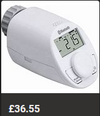 . I am moving to Drayton Wiser,
  but they do far more to the cheap models. Yet we still see adverts like this
 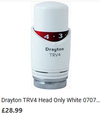 who in their right mind would pay that much for a mechanical TRV head?


