Plumber explains what radiator numbers really mean and why you should 'leave it' at 3

Joined
27 Jan 2008
Messages
28,279
Reaction score
3,439
Location
Llanfair Caereinion, Nr Welshpool
Country
United Kingdom
The article continues:-
1748442256708.png

1748442339765.png

Note it says all. I still have I think 4 radiators with the *123456 marked on them, but most show ºC, and what set to, rather than room temperature. I have 3 types, Bluetooth only which only show target, Wi-Fi which show target and current, and Wi-Fi linked which can fire the boiler.

However I find the old mechanical TRV heads, have around 2ºC or more between fully closed and fully open. So 3 = 19 - 21ºC. Not as the MSN article says a fixed temperature.
1748443240001.png
1748443281567.png
1748443331196.png
1748443418519.png

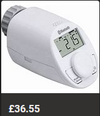
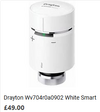
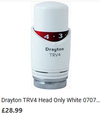
They do seem to have become more expensive, my eQ-3 cost me £15 in 2019 but today 1748443739179.png. I am moving to Drayton Wiser, 1748443944482.png but they do far more to the cheap models. Yet we still see adverts like this 1748444164333.png who in their right mind would pay that much for a mechanical TRV head?
 
Yet we still see adverts like this 1748444164333.png whn their right mind would pay that much for a mechanical TRV head?

Me, I have them fitted all round. They are very reliable, don't need batteries, they just work without any fuss.

However I find the old mechanical TRV heads, have around 2ºC or more between fully closed and fully open.

You are misunderstanding, they do maintain the temperature fairly accurately, they work in an analogue fashion. As the room temperature rises, and they near their set point, they gradually close, until the hit the set point where they are fully closed, as heat is lost, they gradually open more. creating an accurate temperature. They operate, by modulating the flow, just as a modulating boiler is able to.

The digital ones, must have some built in hysteresis, but they can only be open or closed.
 
Last edited:
The digital ones, must have some built in hysteresis, but they can only be open or closed.
Incorrect, you will hear them opening or closing a little more to maintain the radiator temperature to that required to maintain room temperature. With mothers house (modulating boiler) the radiators would just stay warm, this house a bit of a mess, as boiler does not modulate, simply on or off, but the TRV heads seem to maintain the room well, the problem room is wife's bedroom, as about the coldest room in the house, so that room has the Wiser TRV head, so it can start the central heating.

I am undecided, as to if a wall thermostat would have been better? Likely due to stuff stored around the radiator the TRV is better, as if she stops the circulation from radiator then TRV still gets hot and turns boiler off, if a wall thermostat was used, it may never turn off, as wife has so much stuff pilled around the radiator. If she does something daft so is cold, then she can correct it, but if her daft storage causes the boiler to run longer we are both poorer as a result.
 
Heating experts share what the numbers on your radiator valve really mean "says Daily Express"

According to British Gas, the numbers on the radiator typically correspond to the following temperatures: 1 = 10°C, 2 = 15°C, 3 = 20°C, 4 = 25°C, and 5 = 30°C.
Really?

I have found the mechanical valve head has around 4°C between fully open and fully closed. Where an electronic head, more like 0.5 to 1°C. So the number to give 20°C varies depending on room size, radiator size, and outside temperature.

As to why headlines again, I don't know. If the 3 = 20°C then why not just write on it 20°C.
 
The article continues:-
1748442256708.png

1748442339765.png

TRV's should not be fitted to all radiators, the room where the stat is located, should not be with a TRV, or the heating may not switch off when unnecessary.

The numbers on TRV, cannot be directly translated to a temperature, because the numbers are only a rough guide. Actual room temperatures achieved will vary - because TRV's are mounted in far from ideal temperature sensing locations, and orientations. Some mounted vertically, some horizontal, some at floor level, some at the top of radiators. Some on outside walls, others on inside walls, and they are affected by the flow temperature of the boiler itself.
 
Heating experts share what the numbers on your radiator valve really mean "says Daily Express"

Really?

I have found the mechanical valve head has around 4°C between fully open and fully closed. Where an electronic head, more like 0.5 to 1°C. So the number to give 20°C varies depending on room size, radiator size, and outside temperature.

As to why headlines again, I don't know. If the 3 = 20°C then why not just write on it 20°C.
Mechanical TRV "fully open" stroke varies with the setting, the lower the setting, the less the stroke/opening when "fully open", so obviously cannot maintain a set temperature (see below) depending on conditions, however, in tests I did years ago I found that the hysteresis, at least on the one that I tested, was only ~ 1C, but it did/does take a very long time for the valve to fully stroke, probably due to the mass of the wax/liquid in the actuator.
The valve seat though is probaby of the "quick opening" type, nothing to do with the opening speed but based on the valve seat which is designed to give a big flow with a small opening, one might find that say 30% of the maximum valve stroke gives almost full flow to give reasonable room temperature control.
 
Heating experts share what the numbers on your radiator valve really mean "says Daily Express"

Really?

I have found the mechanical valve head has around 4°C between fully open and fully closed. Where an electronic head, more like 0.5 to 1°C. So the number to give 20°C varies depending on room size, radiator size, and outside temperature.

As to why headlines again, I don't know. If the 3 = 20°C then why not just write on it 20°C.
There is no point putting the temperature on it. People might think that by setting it to say 20°, the room should be 20°.
Only the temperature at the valve will be 20°. Who cares about that?
I want a comfortable temperature in the room. With a radiator system, that might turn out to be 20° at my head and 15° at my feet......and 30° at the ceiling.
 
I have TRVs on all my rads. They are all set at max during the winter as is my wall stat. In summer the wall stat stays at max but the rads are turned off. heating and water comes on for an hour in the morning and an hour in the evening and that is sufficient for our needs. We do have a standalone heater in the living room for when it gets really really cold. but that is rarely used. Everything is mechanical ie I operate it all without any stupid electronics involved other than the thermostats on the boiler and the wall. Works okay for me.
 
With a radiator system, that might turn out to be 20° at my head and 15° at my feet......and 30° at the ceiling.

That is where it is useful to have a ceiling fan, it can stir the air, stop the warmth collecting at the ceiling.

I have TRVs on all my rads. They are all set at max during the winter as is my wall stat. In summer the wall stat stays at max but the rads are turned off.

That defeats the whole reason to have any contols on your heating, and will cost you much more to run. All of my TRV's are set to maintain a sensible temperature, in the room they are located. My room stat is normally located in the hall, and is programmed to 14C setback, 18C during the day, and the control system is an optimised system. It tells the boiler at what temperature to run, to just maintain the demand for heat. I never need to touch it, winter or summer, I just leave it to sort itself out, and its economical.
 
There is no point putting the temperature on it. People might think that by setting it to say 20°, the room should be 20°.
Only the temperature at the valve will be 20°. Who cares about that?
I want a comfortable temperature in the room. With a radiator system, that might turn out to be 20° at my head and 15° at my feet......and 30° at the ceiling.
Quite, if it's too hot turn it down, if it's too cold turn it up. Simples.
 
TRV's should not be fitted to all radiators, the room where the stat is located, should not be with a TRV, or the heating may not switch off when unnecessary.
What a load of rubbish, the TRV T stands for thermostatic and stat is short for thermostatic, so you are saying the TRV should not be fitted in a room with a TRV? That is clearly nonsense.

It is a problem having a thermostat on an outside wall, the wall can cool the thermostat, causing it to turn on prematurely. So we do sometimes fit wall thermostats in rooms where the TRV is against an outside wall, and the wall thermostat can then control the TRV rather than the TRV sensing temperature at the side of the radiator.

A wall thermostat which does not display the temperature on the device is often called a sensor rather than a thermostat, it does the same job, just lacking a display. As shown here 1774003507474.pngboth can be linked to the TRV head

1774003574229.png
there are other makes which do the same, Drayton Wiser if the TRV and wall thermostat are assigned to the same room, they do work as pairs.

The modern analogue system means we have to be very careful about making sweeping statements, there will still be some old digital (on/off) controls. This is the case with my own home, the boiler is still simply turned on and off, this is often the case with oil fired boilers.

With gas fired, most boilers modulate, (turn down output) in order to gain the latent heat from the flue gases, and we want to turn it off/on as few times as we can, as every time it is turned off and on again, the boiler needs to start regulating the output from scratch again.

However, neither do we want the boiler to fire up just to find out if it is required, although the latest boilers may support analogue wall thermostats using OpenTherm and the like, older units don't have that option, so we need a method of turning the boiler fully off when not required.

So we were told, fit an on/off thermostat downstairs, as heat raises, in a room kept coolish so it does not fire the boiler on what is likely going to be a warm day, which does not have alternative heating, including sun through the windows, and does not have outside doors. Most homes, this room does not exist, so we need to compromise.

The common compromise is to use the hall, and we want a short recovery time when the outside door is opened, but also for it to take longer to heat than all other rooms in the home, so the other rooms have time to heat. To do this needs a combination of two thermostats, the one on the radiator (TRV) will allow the hall to start heating up quickly, but before the hall has reached the target temperature, the TRV has started to close, so it takes a long time to get the last couple of degrees required to turn off the wall thermostat. This system does have a flaw, if we want to alter temperature through the day, then both the wall and the TRV need to be programmable, which means we need an electronic TRV head, which is more actuate to a mechanical head so it makes it harder to set.

The easy way out is multi thermostats controlling the boiler. In my main house I have three, they are in parallel, and the modern system allows one to use a single hub, to connect to multi thermostats, and those thermostats can be either wall or radiator mounted, there is no requirement to have any wall thermostats, well building regulations do say what heights any control should be mounted at so it can be used by all, so technically it may breach building regulations, where they have failed to catch up with modern control methods, I can control my heating with voice commands or use my phone, as well as use wall thermostats or TRV heads direct, in fact the Energenie TRV head is nearly impossible to set manually at the head, one has to use some IT method.

The valve seat though is probaby of the "quick opening" type,
This is interesting, I have noted with my TRV heads when they do their weekly exercise, it takes around 4 minutes to fully open, fully close and return to setting, so the setting of the lock shield valve can be important to stop hysteresis.
There is no point putting the temperature on it. People might think that by setting it to say 20°, the room should be 20°.
Only the temperature at the valve will be 20°. Who cares about that?
To some extent true, I know the Energenie has two sensors one for the water and one for the air, the former compensates the latter to get a truer reading, but fitted low down once the air circulation has been established, the reading is reasonably reflective of the room's temperature, the TRV behind me is showing 20°C and table thermometer shows 22.5°C and the wall thermostat 21.5°C just for good measure the other TRV in the room shows 23°C it is down to air movement in the room, sun through windows and height above floor level, the radiator behind me is cooling down, but having two radiators at 90° to each other, does mess up the natural thermic flow of air.
I have TRVs on all my rads. They are all set at max during the winter as is my wall stat. In summer the wall stat stays at max but the rads are turned off. heating and water comes on for an hour in the morning and an hour in the evening and that is sufficient for our needs. We do have a standalone heater in the living room for when it gets really really cold. but that is rarely used. Everything is mechanical ie I operate it all without any stupid electronics involved other than the thermostats on the boiler and the wall. Works okay for me.
My parents house was originally set the same. The central heating was used to heat the house, before raising, and lighting the fires. The reject coke from the steel works was cheap, it was too small for steel making, but idea for the home, but as steel making in Shotton stopped, and coke ovens closed, then new central heating was fitted which was then the primary source of heating. I missed the Aga cooker always on, and the louvered windows in the kitchen to keep it cool enough. But nostalgia does not keep one warm, and I would not want to return to the days with Jack Frost paintings on the windows.
That is where it is useful to have a ceiling fan, it can stir the air, stop the warmth collecting at the ceiling.
Second house did have a Myson fan assisted radiator, but control was by fan speed, not a TRV so to work with modern boilers would need series plumbing not parallel as return water too hot, and it would close down the boiler.
That defeats the whole reason to have any contols on your heating
Yes agreed, this today is the point, gone are the days when you could heat a room over what it requires, but having lived in 4 homes for a reasonable time, I have realised what works in one home may not work in the next. I thought I had the method to set lock shield valves cracked with parents home, I looked at the target and current on each TRV head, and if current exceeded target on heat up, would close the lock shield a tad. It worked spot on, but trying the same with this house, it was a failure. So 15 mm to micro bore, and modulating gas boiler to on/off oil boiler, changed how I needed to set things.

I did have a problem with this house, the hall, where the wires to the thermostat go, cools too slow. So it is not a good place for a single thermostat, only option was multi thermostats.
Quite, if it's too hot turn it down, if it's too cold turn it up. Simples.
That is how we would control solid fuel heating, and you would get up to make a cup of coffee, and when you returned to the room, the heat hit you, while sitting down in front of the fire, we had not realised how hot the room had got. Back in the day one would buy a grate, full stop, did not matter if room 8 x 8, or 18 x 18, we would fit same size fire. Today most can't afford that, OK nice to go into the local pub with a roaring fire, but at home can't afford to do that.

 
What a load of rubbish, the TRV T stands for thermostatic and stat is short for thermostatic, so you are saying the TRV should not be fitted in a room with a TRV? That is clearly nonsense.

When the initials TRV are mentioned, most would assume it meant the basic device, operated by a wax capsule, not a fancy wireless, battery operated device. Using your fancy device, there is no real need for a room thermostat in addition, at all.
 
I've got gas and that's how mine works.
Yes my old gas fire was the same. It was 4 kW and as built the only heating in the house, late 70's. Seem to remember 1 to 6 on the dial, and either centre two or four burners, but no thermostat.

Since it did not heat whole house, it was cheap heating, idea was it would heat whole house, as built open plan, but it did not work.

But when we got central heating, that open plan worked against us, leaving a bedroom door open or closed, made a massive difference to room temperature, and we had to fit TRVs up-stairs, non down-stairs, the wall thermostat in the arch between dining and living room controlled downstairs OK.

This does point out how what is required does change house to house.
When the initials TRV are mentioned, most would assume it meant the basic device,
Really, have not used those in years.
Using your fancy device, there is no real need for a room thermostat in addition, at all.
Agreed, but I did say what I was refering to.
TRV's should not be fitted to all radiators, the room where the stat is located, should not be with a TRV, or the heating may not switch off when unnecessary.
That does not say
Mechanical TRV's should not be fitted to all radiators,
And even with mechanical unless there is a room which fits the criteria you still may need both in the same area.
The common compromise is to use the hall, and we want a short recovery time when the outside door is opened, but also for it to take longer to heat than all other rooms in the home, so the other rooms have time to heat. To do this needs a combination of two thermostats, the one on the radiator (TRV) will allow the hall to start heating up quickly, but before the hall has reached the target temperature, the TRV has started to close, so it takes a long time to get the last couple of degrees required to turn off the wall thermostat. This system does have a flaw, if we want to alter temperature through the day, then both the wall and the TRV need to be programmable, which means we need an electronic TRV head, which is more actuate to a mechanical head so it makes it harder to set.
I did explain why we may need even a mechanical TRV and wall thermostat in the same area.

I will admit, I did miss out a referance to the by-pass valve, we don't want a pump working against a sealed system, and the by-pass valve will open allowing water to return to the boiler, uncooled, so turning the boiler output down or off.

Old systems can have a problem, where the pump is on the return, so a by-pass valve will not work. often we would have the bathroom radiator without a TRV so always a route for water to return.

My own house breaks the rules, pumps on return so no by-pass valve, and bathroom part of the DHW circuit, so thermo-syphon. However, one of the advantages of having degrees C marked on the TRV, is I can be sure they are set to close after the wall thermostat, having a TRV with *123456 written on them, you simply don't know if the TRV or the wall thermostat will turn off first.

Basically TRV heads with *123456 have no place in a modern heating system, they are a left over from a bygone age like the motorised valve, which is not required when using electronic heads on the TRVs. But there are still some people living in the past, and we have to say with mechanical or with electronic to cover both old and new.

We have the same with other modern equipment, I see on an LED bulb, 100W in large letters, then in smaller 12W, the old CFL it replaced I note was 20W, I would have accepted 100W and 20W on the CFL, but by time the LED came out, the tungsten had been replaced for years with the CFL, some people just don't seem able to keep up with progress.
 
But when we got central heating, that open plan worked against us, leaving a bedroom door open or closed, made a massive difference to room temperature, and we had to fit TRVs up-stairs, non down-stairs, the wall thermostat in the arch between dining and living room controlled downstairs OK.
We know you have a bespoke system, you have told us many times, I'm glad it works for you but it is very far from the norm.

You keep implying that you have solved the secrets of central heating, but you really haven't. The vast majority of people have much simpler systems and they work perfectly well.
 

If you need to find a tradesperson to get your job done, please try our local search below, or if you are doing it yourself you can find suppliers local to you.

Select the supplier or trade you require, enter your location to begin your search.


Are you a trade or supplier? You can create your listing free at DIYnot Local

 
Back
Top