Wall radiators – worth fitting or outdated?

Joined
14 Mar 2026
Messages
24
Reaction score
0
Country
United States
Hi all,

I’m planning to upgrade my home heating and wanted some advice before going ahead. I’m thinking of installing new wall radiators (standard panel type) to replace older ones, but I’m unsure if they’re still the most efficient choice.

Are modern radiators effective when used with a combi boiler, especially with current energy costs?

Also, are there any key things to consider during installation, like pipe sizing, placement, or system balancing?

The house is a typical 2-storey UK-style setup. I’d really appreciate any guidance, recommendations, or common mistakes to avoid.
 
Hi all,

I’m planning to upgrade my home heating and wanted some advice before going ahead. I’m thinking of installing new wall radiators (standard panel type) to replace older ones, but I’m unsure if they’re still the most efficient choice.

Are modern radiators effective when used with a combi boiler, especially with current energy costs?

Also, are there any key things to consider during installation, like pipe sizing, placement, or system balancing?

The house is a typical 2-storey UK-style setup with radiators installed throughout. I’d really appreciate any guidance, recommendations, or common mistakes to avoid.
thanks in advance for any help
 
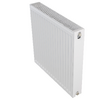
Given you are in the US (this is a UK based site) then the types of radiators may be different than here in the UK, so couldn't be completely sure. If they are similar to the convecting type panel rads as in the pic below - these are Type 22 - K2's that have 2 panels and 2 rows of convecting fins in the centre - then as far as wet central heating is concerned then yes they are amongst the most efficient at space heating.

1776156739740.png
 
In the main, we balance installation cost with performance. But reaction time can be important. So two ways to heat a home, 24/7 or as required. We hear arguments for both, but I go for as required, this means time taken to heat the room is important. But also the space taken by the radiator is also important, so we have two completely different types of radiator, convection and fan assisted.

In the days before the modulating boiler, we could mix and match, but today return water temperature is important, as it turns down the boiler output. And the two radiators use two very different control methods, the convection radiator used water flow control, and the fan assisted uses air flow control.

So the convection use parallel plumbing and a by-pass valve, and the fan assisted used series plumbing and has no need for a by-pass valve.

There has been an attempt to combine
1776160450750.png
and also using kick space radiators in kitchens, having just one fan assisted with parallel plumbing seems to work.

The main advantage with fan assisted is it does not matter if mounted high or low, it will still heat the room, so if we are looking at globule warming and having to both heat and cool the home, the fan assisted works far better, as it can connect to either a heat pump to cool or a gas boiler/water heater, to heat, and use the same radiators.

However, when I looked at the ivector with that idea in mind, the cost of the building management system was silly, so really does not matter how good it is, it will only be used in large commercial buildings, not our homes. It is just a pipe dream.

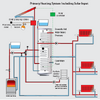
The same with multi-fuel Torrent pipe example.PNG it looks good, but installation costs are silly. I have seen it used once, and yes worked well, but in real life, that tank is two massive 80 gallon cylinders, which need a reinforced floor to take the weight, so only really an option with a new build.

To become an engineer, one needs to go to University and get a degree, and if one has invested in that education, one wants pay to match, so paying for a heating and ventilation engineer to design the system is something most don't do.

To look at an existing home, we already have info as to how much gas/oil is being used, I know my boiler (20 kW) can keep this three story house warm, and I know the living room radiators are around 4 kW and they keep the living room warm, I know a 2 kW fan heater is enough to keep any room in the house warm, so without loads of calculations, I have a reasonable idea of what I need to maintain the temperature. Around 10 kW for whole of house on coldest days of the year.

What however I don't know, is if I want to re-heat my living room from 14°C to 22°C in ½ an hour, what I would need. That's where the engineer earns his money. He can work out a delta whatever, and tell me how much energy to heat 20 x 8 x 7 foot room 8°C is needed. The losses when looking at ½ an hour are not really an issue. But if I want it in 2 hours, then losses matter a lot more.

So with a modulating boiler the aim I am told, is not to turn it off, but to turn it up/down, there will be a point where it can't modulate any more, so just as important not to be too big, as not to be too small. And where every possible we want modulating controls. But modulating controls cost more.

So in the main we are looking at near enough engineering. And what is near enough for you, may not be near enough for me. There is no magic wand.

 
Why are you thinking of installing new radiators?

In terms of efficiency, technically a radiator is always 100% efficient - all of the heat it loses goes into the room you want to heat.
However, some of the heat will be lost in the pipework, which may be in places you don't want to heat. So radiators which transfer more heat (larger, more fins, well designed) combined with well insulated pipework in areas you don't want to heat, will result in a higher proportion of the heat ending up in the room you want to heat. So this is, just in terms of radiators and pipework, more efficient.
 
In the main, we balance installation cost with performance. But reaction time can be important. So two ways to heat a home, 24/7 or as required. We hear arguments for both, but I go for as required, this means time taken to heat the room is important. But also the space taken by the radiator is also important, so we have two completely different types of radiator, convection and fan assisted.

In the days before the modulating boiler, we could mix and match, but today return water temperature is important, as it turns down the boiler output. And the two radiators use two very different control methods, the convection radiator used water flow control, and the fan assisted uses air flow control.

So the convection use parallel plumbing and a by-pass valve, and the fan assisted used series plumbing and has no need for a by-pass valve.

There has been an attempt to combine View attachment 412686 and also using kick space radiators in kitchens, having just one fan assisted with parallel plumbing seems to work.

The main advantage with fan assisted is it does not matter if mounted high or low, it will still heat the room, so if we are looking at globule warming and having to both heat and cool the home, the fan assisted works far better, as it can connect to either a heat pump to cool or a gas boiler/water heater, to heat, and use the same radiators.

However, when I looked at the ivector with that idea in mind, the cost of the building management system was silly, so really does not matter how good it is, it will only be used in large commercial buildings, not our homes. It is just a pipe dream.

The same with multi-fuel View attachment 412687 it looks good, but installation costs are silly. I have seen it used once, and yes worked well, but in real life, that tank is two massive 80 gallon cylinders, which need a reinforced floor to take the weight, so only really an option with a new build.

To become an engineer, one needs to go to University and get a degree, and if one has invested in that education, one wants pay to match, so paying for a heating and ventilation engineer to design the system is something most don't do.

To look at an existing home, we already have info as to how much gas/oil is being used, I know my boiler (20 kW) can keep this three story house warm, and I know the living room radiators are around 4 kW and they keep the living room warm, I know a 2 kW fan heater is enough to keep any room in the house warm, so without loads of calculations, I have a reasonable idea of what I need to maintain the temperature. Around 10 kW for whole of house on coldest days of the year.

What however I don't know, is if I want to re-heat my living room from 14°C to 22°C in ½ an hour, what I would need. That's where the engineer earns his money. He can work out a delta whatever, and tell me how much energy to heat 20 x 8 x 7 foot room 8°C is needed. The losses when looking at ½ an hour are not really an issue. But if I want it in 2 hours, then losses matter a lot more.

So with a modulating boiler the aim, I am told, is not to turn it off but to turn it up or down; there will be a point where it can't modulate any more, so it’s just as important not to be too big as not to be too small, a bit like choosing an oversized boxy shirt where the fit still needs to be right, and wherever possible we want modulating controls, though they do cost more.

So in the main we are looking at near enough engineering. And what is near enough for you, may not be near enough for me. There is no magic wand.
thank you so much for your suggestion
 
In terms of efficiency, technically a radiator is always 100% efficient - all of the heat it loses goes into the room you want to heat.
That is not true, an inferred heater may be 100% efficient (although unlikely) as it switches on only when the room is in use. But most heater take time to heat the room, so if a room is used for 1 hour, and the heater needs to go on 1 hour before the room is used, then that heater is 50% efficient at best.

Only when a room is used 24/7 can the heating be 100% efficient.

In the main we don't allow rooms to cool completely, we maintain a back-ground heat, and also if the boiler can only deliver 10 kW having 15 kW of radiators in one room will not heat that room any faster than 10 kW of radiators.

So we talk about recovery time, last house was open plan, in the living room was a 4.5 kW gas fire, a 3 kW fan assisted radiator and a 2 kW standard radiators, and there was no need for any geo-fencing as the living room recovered so fast. This house, the living room takes nearly 2 hours to re-heat, so again geo-fencing does not work, as it would turn on the heating too late.

With a large property we can prioritise rooms, my programmable TRV heads mean that rooms are heated in a sequence, so heat is directed to rooms where required, when required. My micro bore pipework however does limit how well this can work.

So heating an old peoples home, 24/7 same temperature each room, is very different to the private home, I see no point in heating my bedroom in the day when it is not being used, but there is some heat transfer anyway, so in real terms it is heated 24/7 but not to the same temperature.

So when I don't use the back kitchen except when we have guests, can't see point in heating it, but when I do want it, I want it to heat up fast, the front kitchen is however used every day.
 
That is not true, an inferred heater may be 100% efficient (although unlikely) as it switches on only when the room is in use. But most heater take time to heat the room, so if a room is used for 1 hour, and the heater needs to go on 1 hour before the room is used, then that heater is 50% efficient at best.

[Pendant mode on] To be even more ridiculous, all of the 100% will be lost, from the room anyway, lost through the walls The only warmth from which any value is derived, is the tiny amount, which warms the individuals in the room.
 
Technically, efficiency is the percentage of energy that is in the energy providing object to the energy receiving object.
So if you're using a radiator to heat a room, then the radiator is 100% efficient.

Of course it all depends on the parameters you set - if you are defining the human body as the energy receiving object, then yes, you would have to swallow the radiator to achieve 100% efficiency.
 
Of course it all depends on the parameters you set - if you are defining the human body as the energy receiving object, then yes, you would have to swallow the radiator to achieve 100% efficiency.

The most efficient form I can think of, to transfer warmth to the body, is an electric under blanket.
 
This discussion seems to be descending into semantics!
i agree we often say things like "electric heating or energy in lighting etc will 100" turn to heat now on average it may only be perhaps 95 to 98" but not an important difference in the real world to keep things simple
now saying a radiator is near 100" efficient heat in and heat out for general discussion works well enough even though it may only be say 70% efficient at what its trying to do as the difference tends to be just heat distribution and a bit better way to get it there via fans fins convection and general airflow and deflection in other words its there but needs to be used a bit better to draw out the maximum heat for maximum efficiency ;)
 

If you need to find a tradesperson to get your job done, please try our local search below, or if you are doing it yourself you can find suppliers local to you.

Select the supplier or trade you require, enter your location to begin your search.


Are you a trade or supplier? You can create your listing free at DIYnot Local

 
Back
Top