Wall Tie Replacement - Help

Joined
2 Jun 2026
Messages
12
Reaction score
0
Country
United Kingdom
Hello,

We have exposed the inner leaf of a 1970s extension by completely removing the outer leaf, and found the old galvanised steel wall ties. Most of them look fine but some are rusty. Before we build the outer leaf back up I am thinking it might be sensible to replace all the wall ties. Is this a good idea and how would you do this? The cavity is 50mm and I need to be able to get the materials ASAP.

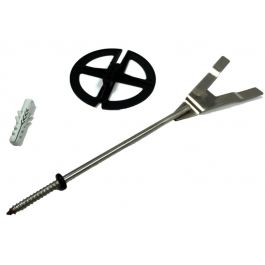
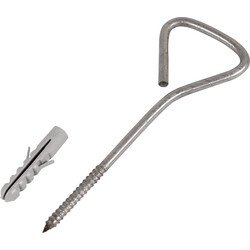
If we pull the old ones out and point new ones into the inner leaf, there won't be much mortar holding them in place. What if we use these so it is easy to just screw them in to the mortar? Would you use resin as well?

Also, there are a generous number of wall ties in there, should we just leave the old ones and add new ones as well or is it best to remove old ones?
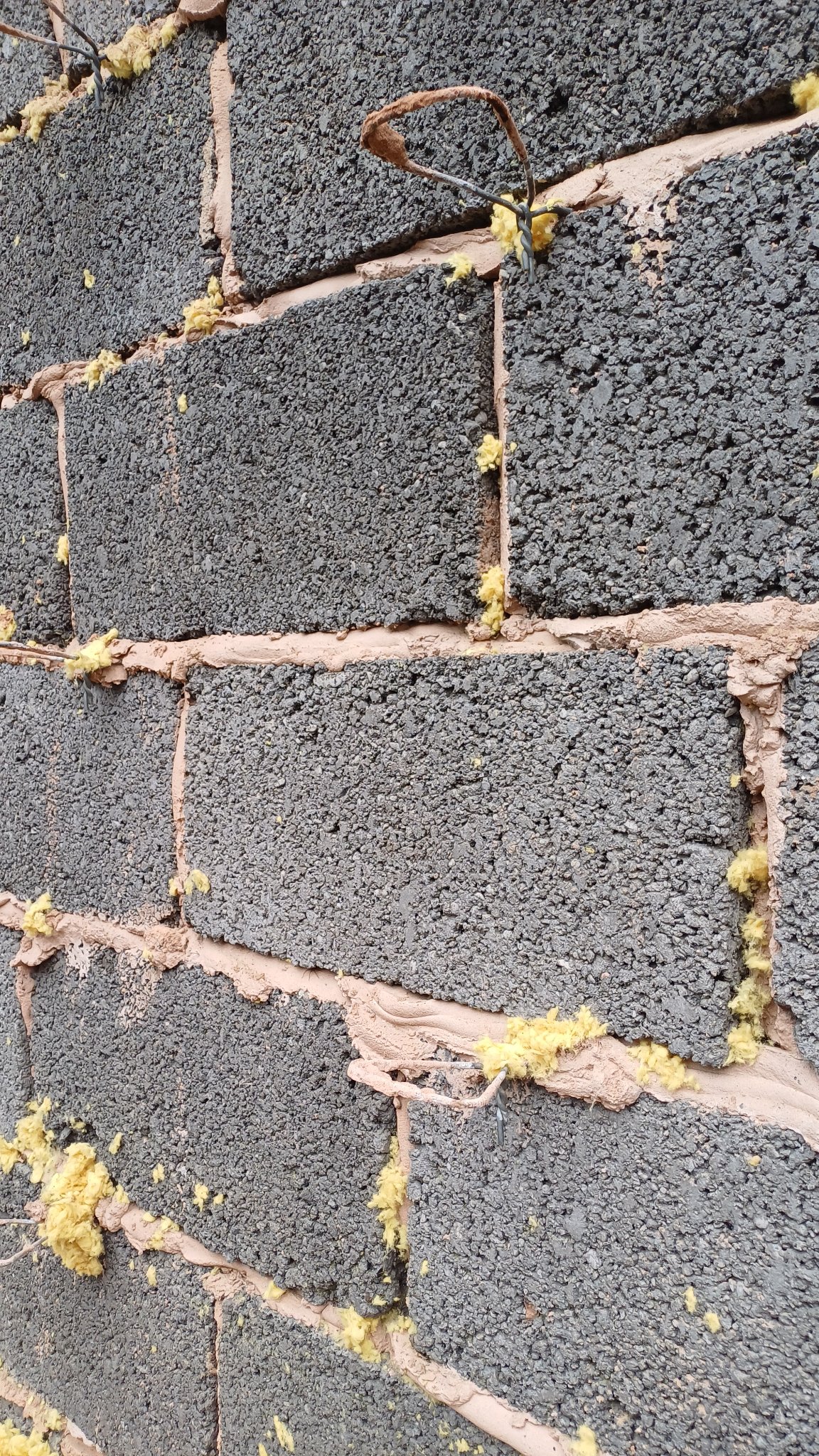
20260601_164534.jpg


Thanks
 
You don't need to remove butterfly wall ties, because they are too thin to damage the brickwork when they rust. It's only the thicker twist type that need removing.
Butterfly ones just tend to break and become ineffective.
 
Looking at the photo you have wall ties every course. The regs for ties back then with a 2 inch cavity were 3ft horizontal and 18inches vertical, or every block at openings. As you have so many I wouldn't worry. You could clean up the rusty ones and get some red oxide spray.
It's easy to forget the ties when building a wall, so they sometimes got stuck in a bit later by raking out the joints and pointing them in. They usually were a bit loose compared to being built in. The CoW's didn't like this practice.
 
Wall starter ties are not designed for the horizontal movement of cavity wall leafs, but for the vertical movement of extensions.
 
For adding new ones, would digging out the mortar and then using resin to hold them in place work?
 
I reckon you'll do more harm than good by disturbing that inner wall if you start messing with them. Remember that it's currently very fragile as you've removed half of the wall. Shoving a hammer drill then expanding fixings into it all over at intervals may just demolish it.

Just build back onto them. They look fine. If you'd never seen them you wouldn't care about them. Are you going to demolish the rest of the house to change the rest of them too?
 
I'd agree with Ivor. There looks to be loads of ties in the wall, and if it's a single story building would be less likely to suffer if the ties did fail. I might spend a bit of time filling any holes in the blockwork though. It's been found through air testing that a certain amount of warm air can escape through poor joints, although it's not a major issue.
 
1971, who knows? Still standing and fine so I doubt it's plaster.

We are leaving the existing ties in but adding some new ones here and there. Belt and braces. For one thing, the existing ones will now be getting slathered in a load of new caustic cement.
 
It does look exactly like plaster. But hopefully it's just some weird local red sand. I suppose if it's not load-bearing then it probably won't fall down. All the more reason not to mess with it.

I guess the main reason it wouldn't normally be used is because it must cost a lot more than sand and cement, which is hopefully enough of a reason for it not to be plaster. I'd have a bit of a dig into it, see what it is out of interest. Plaster would chip with a screwdriver by hand, mortar shouldn't normally.

Perhaps the builder had a surplus of plaster on its use by date?
 
If they've used plaster, it would seem a bit strange that after 55 years there are no cracks. Not even hairline. And it's not as if the rest of the build was really good and rescued what would've been very weak mortar. The build was total **** and partly why this project is happening in the first place. I've seen newer builds than this, with sand and cement mortar, with major cracks and disjointing through it.

My builder concludes that they used fairy liquid as a plasticiser, which was common in those days, which gives it the smooth and light colour look. The pink aspect - well our bedrock in this region is red (North West). And who knows what **** old bags of ****e they had at the time in the way of mortar mixes?
 

If you need to find a tradesperson to get your job done, please try our local search below, or if you are doing it yourself you can find suppliers local to you.

Select the supplier or trade you require, enter your location to begin your search.


Are you a trade or supplier? You can create your listing free at DIYnot Local

 
Back
Top