

- Joined
- 2 Jun 2025
- Messages
- 5
- Reaction score
- 0
- Country

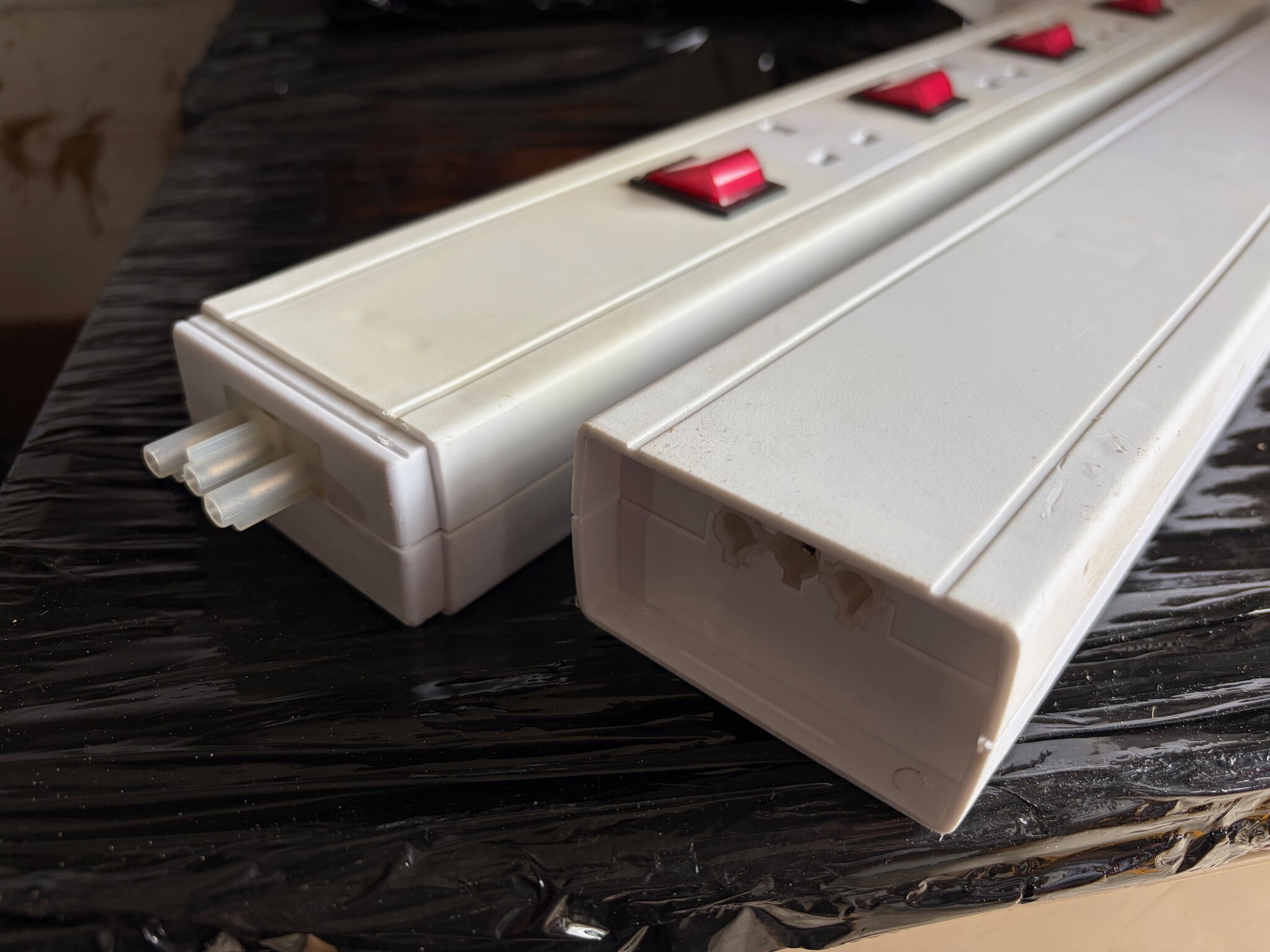
I'm currently preparing for a house move and my workshop (which I'm currently dismantling) has been wired for years using a pre-wired modular trunking system from Wickes which I think I installed about 2002 - the parts labels certainly seem to be from that date. I've attached a photo of a couple of parts. From what I recall it disappeared from sale shortly afterwards and I've seen never anything like it - or as useful - since. So my questions are:
1. Does anyone know why it was withdrawn? Was it unsafe or has it been rendered unacceptable by changing safety standards? I'm guessing it could just be low sales but it seemed to fill a really useful niche and I'd have happily bought more for use elsewhere.
2. After this period of time - I'm pretty sure it's nearly 25 years old - can anyone give a reasonable guess as to whether I should re-use it, or should I just bin it for safety's sake and start again? I should say that it's never given any cause to doubt its safety in the time that I've been using it, but I would point out that it wasn't left live for long periods - I only switched the trunking on at the master plug while using the workshop.
Cheers,
Chris
1. Does anyone know why it was withdrawn? Was it unsafe or has it been rendered unacceptable by changing safety standards? I'm guessing it could just be low sales but it seemed to fill a really useful niche and I'd have happily bought more for use elsewhere.
2. After this period of time - I'm pretty sure it's nearly 25 years old - can anyone give a reasonable guess as to whether I should re-use it, or should I just bin it for safety's sake and start again? I should say that it's never given any cause to doubt its safety in the time that I've been using it, but I would point out that it wasn't left live for long periods - I only switched the trunking on at the master plug while using the workshop.
Cheers,
Chris


