
Dampness around bathroom extractor fan

Joined
31 Jul 2026
Messages
2
Reaction score
0
Country
United Kingdom
Hi,
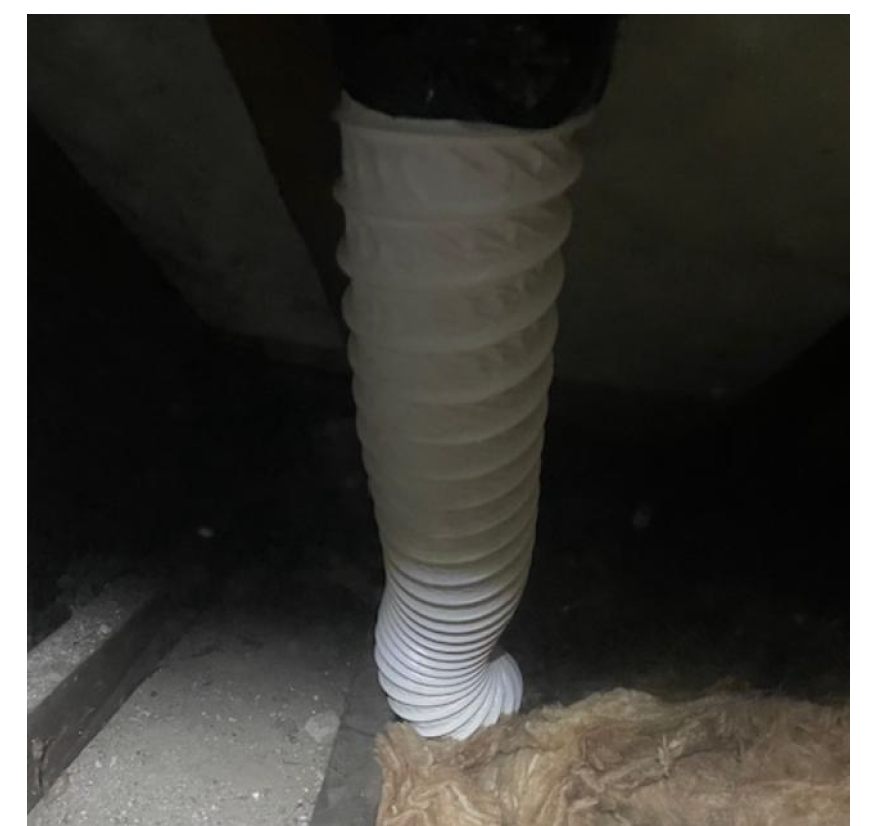
In our bathroom we have Envirovent ECO DMEV T LC extractor fan. This is a top floor flat with the duct from the extractor running through the attic to the roof. When we take a shower the ceiling around the extractor is getting damp and we have now a yellow ring formed. Initially we suspected a problem with condensation running down the duct but the specialist said the attic and duct is bone dry. And the extractor is dry too. Could the issue be a lack of sealant around the extractor?
Thanks
Mehmet
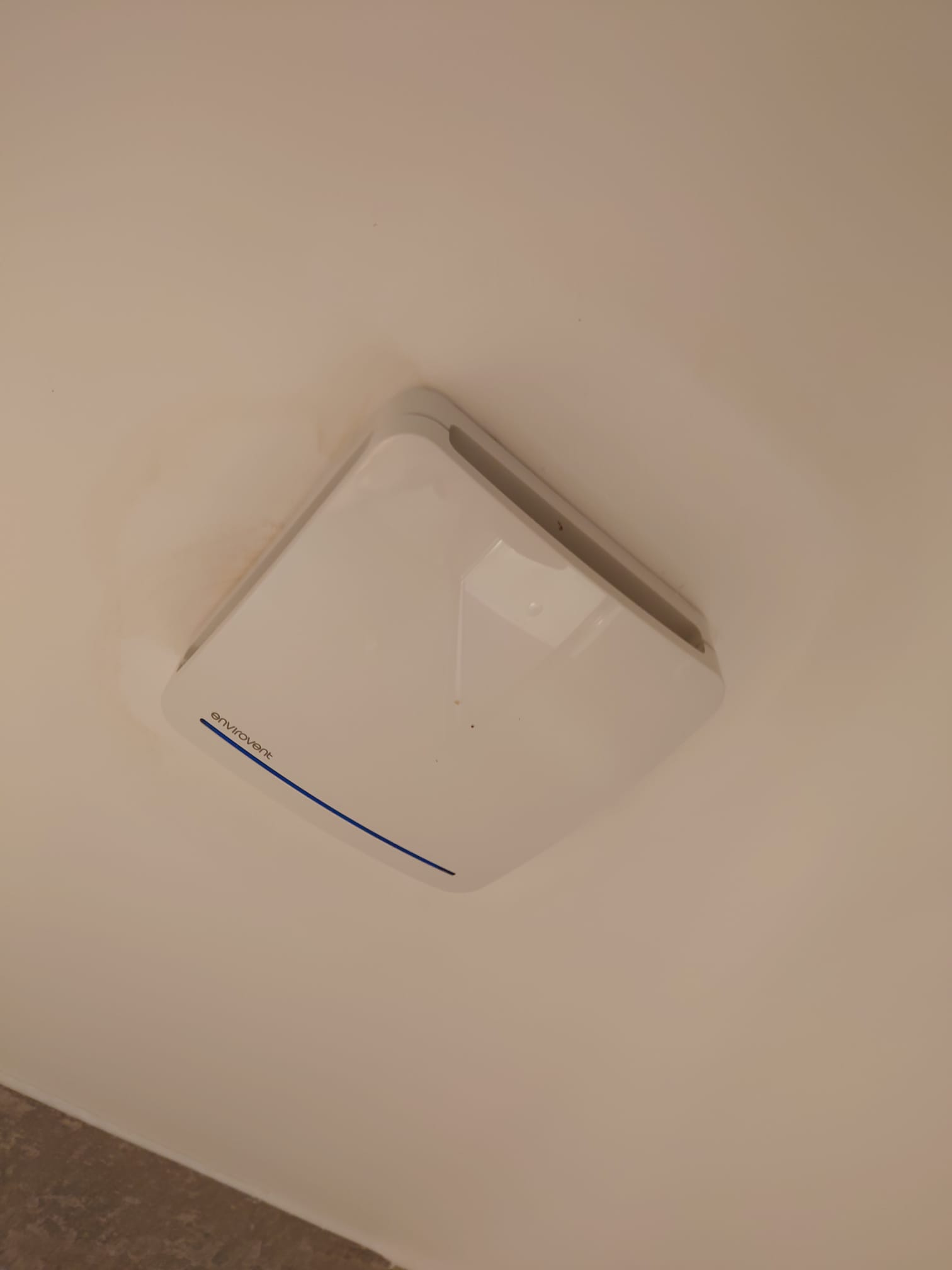
Bathroom Leak 1.jpeg

Attic.png
 
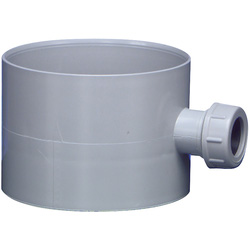
I would say that is definately a problem with condensation and should have a trap fitted between the the fan and the hose.
Obviously I cannot see it but any condensation would be on the inside of the hose not the outside and would settle on the plasterboard as it probably does not go through it. Therfore not run into the fan, so I'm a bit sceptical about how hard your specialist looked at the set up.
 
Last edited:
Hi,
In our bathroom we have Envirovent ECO DMEV T LC extractor fan. This is a top floor flat with the duct from the extractor running through the attic to the roof. When we take a shower the ceiling around the extractor is getting damp and we have now a yellow ring formed. Initially we suspected a problem with condensation running down the duct but the specialist said the attic and duct is bone dry. And the extractor is dry too. Could the issue be a lack of sealant around the extractor?
Thanks
Mehmet
View attachment 419608
View attachment 419609
Duct tape insulation around the hose.
 
The condensation trap is for internal condensation, but sometimes ducts can get condensation on the external surface.

Also check for water coming in via the roof terminal connection and running down.

However you should get none or minimal condensation on a vinyl flexi-tube. You may want to get your loft insulated to be better standard as a warm loft, apart from wasting money, is a massive source of condensation.

Ensure the fan has a 15-minute over run which is normally sufficient to clear the duct of moist air

Remove kinks in the duct as they can hold moisture.
 
My guess would the condensation is forming on the inside of the hose then running down and soaking into the plaster board where it abuts it rather that passing through it. If you wrap duct tape around the hose it will stop the condensate escaping into the plasterboard and build up at the base of the hose possibly until it overflows into the fan.
 
My guess would the condensation is forming on the inside of the hose then running down and soaking into the plaster board where it abuts it rather that passing through it. If you wrap duct tape around the hose it will stop the condensate escaping into the plasterboard and build up at the base of the hose possibly until it overflows into the fan.
I'm not getting what you are saying at all. :confused:

The hose duct is sealed. The insualtion is wrapped around the OUTSIDE. Whether it is bound with string or the odd loop of duct tape is up to the customer. It will help prevent cold spots on the surface of the duct and make for better extraction of the vapour. Pre-insulated duct is available
 
Last edited:
If we are both talking about condensation forming on the inside of the duct then running down and out onto the plasterboard then I agree wrapping duct tape or tying string around it where it meets the fan spigot will stop it leaking out onto the plasterboard.
But what happens to the water then? There is a possibity that it will build up where the duct is now secured to the spigot and overflow the top of the spigot and into the fan body.
Tried to draw a diag. without success but sorry this is the only way I can try and explain it.
 
If we are both talking about condensation forming on the inside of the duct then running down and out onto the plasterboard then I agree wrapping duct tape or tying string around it where it meets the fan spigot will stop it leaking out onto the plasterboard.
But what happens to the water then?
The water does not appear i.e. does not condense on the duct sides and leaves via the terminal as vapour.
 
The water does not appear i.e. does not condense on the duct sides and leaves via the terminal as vapour.
Sorry but we aren't going to be able to agree about this. Hot steam is bound to condense on the inside of a ducting in a cold loft and therefore run back towards the fan.
 
Sorry but we aren't going to be able to agree about this. Hot steam is bound to condense on the inside of a ducting in a cold loft and therefore run back towards the fan.
Whether you agree or disagree is irrelevant. An insulated duct will fare better than one that is not insulated.
 
Whether you agree or disagree is irrelevant. An insulated duct will fare better than one that is not insulated.
We can agree on that perhaps helping but he/she doesn't have an insulated duct and I was trying to help establish what the cause was and how to rectify it.
 
Thanks all. So we will try the insulated duct first as that's an easy fix. If that alone doesn't fix, then may look at the condensation trap.
 

If you need to find a tradesperson to get your job done, please try our local search below, or if you are doing it yourself you can find suppliers local to you.

Select the supplier or trade you require, enter your location to begin your search.


Are you a trade or supplier? You can create your listing free at DIYnot Local

 
Back
Top