Protector-Plug Flymo

Anyway, remember when one popular way of wiring for TT on a consumer unit - One RCD 100mA time delayed connected for all ways and One RCD fed from that one for only 30mA RCD circuits.

Lighting on the 100mA delayed only and Power on both RCDs
 
Anyway, remember when one popular way of wiring for TT on a consumer unit - One RCD 100mA time delayed connected for all ways and One RCD fed from that one for only 30mA RCD circuits.

Lighting on the 100mA delayed only and Power on both RCDs
Yes the TD rcd upfront is a separate matter to the 2 30ma in series
 
Doesn't mean it doesn't provide added security but you won't find it in any electrical design that im aware of
The caravan maybe?

In the main RCDs increase by a factor of 3, so 10 mA, 30 mA, 100 mA, 300 mA, 500mA, 1 amp, 5 amp. The 300 mA for fire and 30 mA for personal means no all steps are a factor of 3.

As to why on caravan sites we have a 30 mA feeding a 30 mA I would assume in case one is missing.

As to the flymo RCD, still here on table, not binned yet, the lack of test button is interesting, and also the way the shutters seem to press the relay. OK I do have an RCD tester, but I would think that is unusual for a retired electrician, but since I never got the RCD to work, I was never able to test it.

1788361003286.png


The way the shutter pushed the relay manually in openning only, did seem odd, The N/C contacts which were opened when the plug was inserted made some sense.

But this is the only RCD I have come across where the inserting and removing of the plug did all the testing of the device.
 
The caravan maybe?

In the main RCDs increase by a factor of 3, so 10 mA, 30 mA, 100 mA, 300 mA, 500mA, 1 amp, 5 amp. The 300 mA for fire and 30 mA for personal means no all steps are a factor of 3.

As to why on caravan sites we have a 30 mA feeding a 30 mA I would assume in case one is missing.

As to the flymo RCD, still here on table, not binned yet, the lack of test button is interesting, and also the way the shutters seem to press the relay. OK I do have an RCD tester, but I would think that is unusual for a retired electrician, but since I never got the RCD to work, I was never able to test it.

View attachment 421562

The way the shutter pushed the relay manually in openning only, did seem odd, The N/C contacts which were opened when the plug was inserted made some sense.

But this is the only RCD I have come across where the inserting and removing of the plug did all the testing of the device.

Agree about the caravan although I'm not familiar

It can in theory be connected to an unknown supply so should have its own 30ma protection

Then it most likely gets hooked up to a 30ma protected supply so 2 in series
 
The caravan maybe?
And similarly the narrowboat.

I can think of a few reasons.

1. Neither the site operator, or the caravan/boat owner can rely on the other being compliant with current, or even any, regs.
2. Caravans and boats may sometimes be connected to supplies not originally/primerally intended for that purpose.
3. The reliability of RCDs in hook-up enclosures can be questionable.

I would presume that while not explicitly covered in BS7671 like caravans and boats are , similar considerations apply to many low-power temporary supplies.
 
When going my site temporaries I always add my own RCD, even if I'm collecting power from a RCD socket which operates when I press the button.

However I do find that there is a much higher chance of tripping with more and more RCDs in line which is something I can't explain.
 
When going my site temporaries I always add my own RCD, even if I'm collecting power from a RCD socket which operates when I press the button.

However I do find that there is a much higher chance of tripping with more and more RCDs in line which is something I can't explain.
1st point - rodger that one.
2nd point - hmm, not actually noticed.

I will have to think back
 
The big problem with a RCD, is testing it actually works. With a socket circuit, easy enough to plug in press the button and see it trip. But with an immersion heater, cooker etc, for me, it means standing on some form of step up to reach the consumer unit, remove the cover and earth wire to the cover, try to balance the tester somewhere, hold on two leads, and press the test button.

So sockets tested around once every 6 months, but the rest, likely never tested since they were fitted.

But in the main, the most likely circuit to get a shock from is the socket circuit, but even with the socket circuit. The two double RCD sockets easy to test, the rest to go down to reset, and to correct all the clocks, rare to test, until something goes wrong.
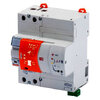
 
The big problem with a RCD, is testing it actually works. With a socket circuit, easy enough to plug in press the button and see it trip. But with an immersion heater, cooker etc, for me, it means standing on some form of step up to reach the consumer unit, remove the cover and earth wire to the cover, try to balance the tester somewhere, hold on two leads, and press the test button.

So sockets tested around once every 6 months, but the rest, likely never tested since they were fitted.

But in the main, the most likely circuit to get a shock from is the socket circuit, but even with the socket circuit. The two double RCD sockets easy to test, the rest to go down to reset, and to correct all the clocks, rare to test, until something goes wrong.
It wasn't that long ago RCDs were only fitted to socket circuits
 
Before 1980 when I went to Algeria I do not recall any RCD, RCCD, or ELCB of any type, although sure they existed.

From Algeria went to Falklands, and on return around 1988 they seemed to be everywhere, the big problem was many isolators of the time did not switch the neutral, and there were a lot of ELCB-v around, and it was all too easy to by-pass the earth solenoid so it would not work.

We got all sorts including auto resetting, temprcd.jpgI was considering getting these, then banned for domestic, the ones with warning windows seemed next option X-pole.jpg I know hunting the internet for Xpole did get some ammusing results, think they were more akin to other meaning of RCD recreational craft directive, at least the recreational bit.
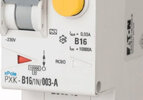
But then the RCBO arrived, the first type it connected to the MCB, and then we got the single module width type, and even double pole switching, it has moved on so much.

But we are still left with the risk assessment, is it better not to loss light, freezers, etc. So my central heating is not on a RCD, but think there is one of a sort built into the inverter, and the freezers have RCD sockets, so very unlikely to get a nuisance trip. Even with RCBO I have had nuisance trips, after testing with RCD tester, clamp-on ammeter, and 250 volt insulation tester, no faults found, and it has reset never to trip again. The surge protection device means 500 volt testing is not really possible any more.

I have had one RCBO fail, it would not reset, and one trip for a very good reason, roof leaked and socket showed real signs of internal damage. I have used active RCD's as no volt release on machine tools, also had them trip and cause a heavy mag mount drill to fall, so there are cases specially with reduced low voltage for not fitting them.

In the early days finding versions which would work with reduced low voltage was hard, and I remember a very heated discussion about at what voltage it was OK if they failed to work, never really answered, is it 50 volts to earth, or 50 volts line to line, and should a unit designed for 230 volts, work on a 110 volt system? As under fault conditions a 230 volt supply could drop to 110 volts.

I have seen it with 250 kVA generators where due to the volt drop, the overcurrent release failed to work, and the exhaust was glowing red-hot.

We tend to forget what can happen under fault conditions. I think that was the whole idea of the low volt release with active RCD's if the voltage when low enough to stop them working, they would open anyway.
 

If you need to find a tradesperson to get your job done, please try our local search below, or if you are doing it yourself you can find suppliers local to you.

Select the supplier or trade you require, enter your location to begin your search.


Are you a trade or supplier? You can create your listing free at DIYnot Local

 
Back
Top
