Cost of running dishwasher

But the hot fill is interesting, as the amount of water my dishwasher uses, I would not think even if connected to the hot supply, it would get any hot water, as need to run nearly a whole boil of water before I get hot in the sink.
Same here. It might work for someone who has a combi next to a DW (or WM) but if one is using 'stored hot water' from a relatively remote cylinder, then it's just not going to work. As far as efficiency/wastage is concerned, that doesn't matter too much during winter, since the heat 'lost' from pipes into which hot water is drawn (without reaching the machine!) will just become part of the house heating - but in the summer it is just 'wasted energy'.

... and, as I have said, having hot-only filling would preclude any 'low temperature cycles' being available.
 
Same here.
You are spot on, it is not only the DW and WM, when comparing methods to heat water, the loses in pipe work it seems is ignored, I can see the problem, as not all homes are the same, but we have looked at a local to sink DHW supply.

So 1757591590394.png I actually know how much I use to heat DHW, idea is heated with solar, but what I don't know is how much of that went to just heat the pipes? At 6 litres and 1.5 kW one of these
1757591822734.png
could go under the sinks, but they will also have loses, and we loose space under the sink.

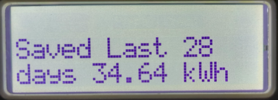
So 34.64 kWh = £5.20 so 19 months to get the money back if it use no power. 5 sinks in the house, not counting the two baths, so 7.8 years again if I used nothing, add to that may be using power at 30.17p not 15p, and we are looking at more like 25 years for pay back, so simply not worth it. Specially when I have not considered the install costs.

The problem is, things move on,
1757592518541.png
I remember the twin tub, and on washing day no cooking got done, kitchen full of clothes, so no worry about circuit overloads, as nothing else used. But we forget what it was like, my kitchen changed with the dish washer, one thing we needed more plates, Ikea plates stack close together so take up less cupboard space, the willow patten may fade or wash off, so plain white, every item we buy, we look to see if dish washer safe.
 
I am not 100% sure if it's fancy enough to have a drying cycle? Only one I've ever owned. Maybe they all do.

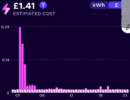
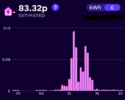
I bought ours, as a spur of the moment purchase, rather unusual for me, but I never checked to spec., or bothered to check it since, or even researched how they work. It was bought, I installed it, used a few times, then interest lost in it. I didn't know anything, really, about how they worked, or how to use one. Curiosity got the better of me, having smart meters, so I decided to investigate the consumption using the smart meter's consumption graphing facility.
 
Curiosity got the better of me, having smart meters, so I decided to investigate the consumption using the smart meter's consumption graphing facility.
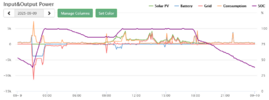
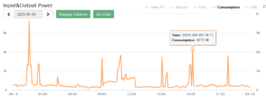
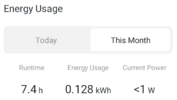
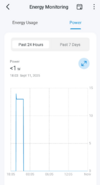
Not found any information from the smart meter which can help in any way work out what any item uses. Exporting 1.jpg Most of the time I am awake, it shows in the green, the phone is little better, 1757609496160.png1757609599923.png it shows when I charged my battery first one, and when the sun was shining second one, both the 9th Sept, and very little else. The solar software shows more, 1757609817874.png also the 9th, 1757609905035.pngtaking consumption alone not so bad, but it includes everything, you can see how many cups of coffee and when I had a shower, but one item's use, near useless. The Tapo smart adaptors now show energy use, the P100 did not, but the P110 does, 1757610487614.png1757610538656.png this shows the light on my shed turned on at dusk and off at 10 pm, and the bulb used around 13 watts, not as good as the old Energenie MiHome monitor, but not bad really, and I did not get them to monitor energy used. We seem to be collecting smart adaptor plugs 1757610932014.png1757611065934.pngThe most expensive tells me the least, it is really only to relay the info from the TRV, hence no watts shown, but monitoring anything plugged in is easy, but as to if it helps, that is another question, the refrigeration units yes, every so often I check what they are using, so if losing gas I get some advanced warning. I also check the battery chargers, it shows when batteries are fully charged rather than just in the last stage, but one soon stops measuring other items, how does it help me to know the tumble drier uses x kWh? I see it uses 600 watt, and I see with some loads it uses a mark/space ratio to adjust the temperature, but how does that help, showing me that the new heat pump tumble drier is not much difference in efficacy to the old vented tumble drier when set to 1000 watt, is rather like a kick in the teeth. OK there are other benifits, like closing the window, and getting rid of the mould on the wall due to an open window, and I know the heat pump drier is better than the other condenser drier as the others you can't vary the power used, as you can with a vented drier. But once one has a drier, one is committed, how does it help knowing what it uses?
 
Not found any information from the smart meter which can help in any way work out what any item uses.
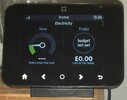
The pink gadget uploads a continuos stream of data, logged every 10 seconds, to Octopus. The Octoaid app, then lets you view the graph of that uploaded data, instantly, going back in time, 60 minutes, accurate to 1 watt.
 
This is how much hot water I need to draw off before it burns my finger, 10mm radial from unvented cylinder.

IMG_20250911_190219468.jpg


Screenshot_20250911-190907.Chrome.png
 
The pink gadget uploads a continuos stream of data, logged every 10 seconds, to Octopus.
But it reads import and export, not what you are using. While the solar or battery is satisfying my demand, no meter measuring import/export to grid is going to do a thing.

And with so much automated, how does one know if the 250 watt is for fridge, freezer, central heating, or dishwasher?
 
But it reads import and export, not what you are using. While the solar or battery is satisfying my demand, no meter measuring import/export to grid is going to do a thing.

That is for you to work out.

And with so much automated, how does one know if the 250 watt is for fridge, freezer, central heating, or dishwasher?

Surely, you know what your usual base-load is, and can turn any potential unknowns to off, for the duration of a test?
 
But the hot fill is interesting, as the amount of water my dishwasher uses, I would not think even if connected to the hot supply, it would get any hot water, as need to run nearly a whole boil of water before I get hot in the sink.

Yup. And even worse - I think that what Why Not Indeed showed is typical

1757619029180.png


It certainly matches my experience, that the first thing a dishwasher does is to spray unheated water around, so a hot fill would go cold.

At least with a WM it takes in water and immediately heats it, so a hot fill is not wasted.
 
I bought ours, as a spur of the moment purchase, rather unusual for me, but I never checked to spec., or bothered to check it since, or even researched how they work. It was bought, I installed it, used a few times, then interest lost in it. I didn't know anything, really, about how they worked, or how to use one. Curiosity got the better of me, having smart meters, so I decided to investigate the consumption using the smart meter's consumption graphing facility.
My first DW was as spur of the moment as it could possibly be.
Around 16:30 24th December possibly 1987 or 88 a discussion with the then Mrs Sunray pointed to an advert for packs of 5 VHS tapes on special Christmas offer in Rumbalows, within minutes I was in the store waiting for an assistant to become free, watching and listening to another customer discussing the wire drawers of the open DW with said assistant.
She thanked the assistant and he moved on to me, I ordered the pack of tapes then asked about the DW, a couple of minutes of sales pitch and I said 'I'll take it' - 'delivery will be 27th December Sir'. Sunray says 'No I'll take that one with me'. 'Ah but that is our demonstrator, you cant take that one as we won't be able to demonstrate it to customers.' 'No problem I offer, you won't have any more customers before 27th - I'll take this one and the one you order comes to the shop to become the demonstrator - simple.' Some back and forth as to why I should not take it with me and 'But this one is damaged' And it certainly was, I'd seen the massive deep scratch and chipped paint on one side 'No problem that'll never be seen, how much discount for the damage?' Getting near closing time they wanted to lock up and all of their arguments worn out (including the one about it not fitting in a car when I pointed to my bedford CF parked within a few yards of their front door) they suggested a discount bigger than I'd have asked for.
I flashed the plastic as quick as I could (including for a Y adapter and longer cold fill hose) then the sack barrow appeared and together we lifted it into said CF van parked in the High Street and wished merry Christmas to each other.
The conversation with the then Mrs Sunray was something like 'did you get it?' 'Yes can you help me unload it' A very confused then Mrs Sunray assisted carrying it through the house to the workshop extension where the WM resided. Within the hour of the finger pointing to the newpaper advert the DW was doing the recomended initial wash cycle.

Now that was spur of the moment in a big way. But I knew I wouldn't be breaking my back all afternoon the following day washing up for about 10 peoples Christmas dinner.
 
Last edited:
This is how much hot water I need to draw off before it burns my finger, 10mm radial from unvented cylinder.
How far ('as the pipe flies') from unvented cylinder to the tap - and why only 10mm pipe?

My kitchen (and DW) is fed from a cylinder on the floor above, via an initial bit of 22mm and mostly 15mm pipe. I've just tried, and with today's ambient temp, I have to draw off about 4.5 - 5 litres before there is any perceptible increase in temperature and a total of 6-7 litres or so before it gets to the point of being too hot for my finger.
 
How far ('as the pipe flies') from unvented cylinder to the tap - and why only 10mm pipe?

My kitchen (and DW) is fed from a cylinder on the floor above, via an initial bit of 22mm and mostly 15mm pipe. I've just tried, and with today's ambient temp, I have to draw off about 4.5 - 5 litres before there is any perceptible increase in temperature and a total of 6-7 litres or so before it gets to the point of being too hot for my finger.

I estimate about 8m. All my hot outlets are supplied via radials (sink/basin/appliances 10mm, showers 15mm) so we get hot water everywhere in seconds.

I've mentioned this before when people witter on about spending a fortune on secondary circulation systems for not especially large houses.

I ran the dishwasher on a 75° intensive cycle yesterday, it has a built-in consumption record and showed 1kw and 14l of water - so it will have had to top up the 65° cylinder water a bit.

I'll try the eco setting next time and see what the difference is.
 

If you need to find a tradesperson to get your job done, please try our local search below, or if you are doing it yourself you can find suppliers local to you.

Select the supplier or trade you require, enter your location to begin your search.


Are you a trade or supplier? You can create your listing free at DIYnot Local

 
Back
Top