How does my downlight circuit work?

Joined
8 Jan 2025
Messages
19
Reaction score
0
Country
United Kingdom
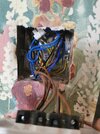
I am looking at adding some lights to a kitchen lighting circuit. Iv had a poke around to establish the initial circuit and it's going to be a "leave it to the professionals" job, however, I would like to satisfy my own curiosity and frustration. If anyone would be kind enough to explain I would be extremely grateful.

I have drawn a diagram of what I know so far.

Where would the "unknown destination" cable be going and why can't I find a switch cable - could it be wired from a terminal to the switch directly?

In which case, how would I extend the circuit?

I only have one MCB feedback all my downstairs lights.

The switch arrangement is two gang. Two cables into one switch and 3 in the other for another set of lights.

IMG_20260130_223148.jpg
 
Where would the "unknown destination" cable be going and why can't I find a switch cable -
As it is drawn, presumably the unknown destination is the switch and it is a switch cable.

could it be wired from a terminal to the switch directly?
I don't think you are using the word terminal correctly but - yes.

In which case, how would I extend the circuit?
Run a cable from the switch to a new switch and then the lights.

I only have one MCB feedback all my downstairs lights.
So what?

The switch arrangement is two gang. Two cables into one switch and 3 in the other for another set of lights.
Ok. You will have to use the switch with the electric supply.
 
The standard British wiring uses the ceiling rose as a junction box, so when it is replaced with down lights, we should have a junction box
1769856914496.png
to replace the ceiling rose, the other method is to use the switch back box as a junction box, as done in many other countries. But where the change has been done DIY we often find a mass of tapped up cables.

If there are three wires in a switch it is likely two-way, i.e. connects to another switch somewhere else.

Often wiring of lights is dictated by the access we have to wiring.
 
As it is drawn, presumably the unknown destination is the switch and it is a switch cable.


I don't think you are using the word terminal correctly but - yes.


Run a cable from the switch to a new switch and then the lights.


So what?


Ok. You will have to use the switch with the electric supply.
Thanks alot EFL.

I think I meant - the wire from the fuse board goes to a junction box directly to the switch and from the switch feeds the light circuit, correct?

I want the new lights to be on the same switch, in which case, could I just continue off the last downlight, it's connecting to a 3 way terminal block for the new lights fitting.

Cheers
 
The standard British wiring uses the ceiling rose as a junction box, so when it is replaced with down lights, we should have a junction box View attachment 406239 to replace the ceiling rose, the other method is to use the switch back box as a junction box, as done in many other countries. But where the change has been done DIY we often find a mass of tapped up cables.

If there are three wires in a switch it is likely two-way, i.e. connects to another switch somewhere else.

Often wiring of lights is dictated by the access we have to wiring.
Thanks Eric.

Yes, that's right. The 3 cable is feeding a two way. So does that mean that the 2 cable is one power cable going into the switch and one cable going out to the first LED i.e. The unknown destination wire.

I have no idea where the junction boxes are hidden
 

Attachments

  • IMG_20260130_215256.jpg
    IMG_20260130_215256.jpg
    285.7 KB · Views: 24
Feed in, feed out, maybe a 3 core for the 2 way going to the next switch, feed to downlights

No junction box needed.
 
Feed in, feed out, maybe a 3 core for the 2 way going to the next switch, feed to downlights

No junction box needed.
Thank Pete. I see, so the live cable would go to one switch and then just feed all other additional switches?
 

If you need to find a tradesperson to get your job done, please try our local search below, or if you are doing it yourself you can find suppliers local to you.

Select the supplier or trade you require, enter your location to begin your search.


Are you a trade or supplier? You can create your listing free at DIYnot Local

 
Back
Top