Are these bricks rejects?

Joined
14 Sep 2005
Messages
6,360
Reaction score
2,852
Location
Englandshire
Country
United Kingdom
I just got a batch of class B engineering bricks delivered. I realise that of course they're not for decorative use. But they all have cracks and crazing on their faces. I've bought them before elsewhere but have never seen them looking like this...
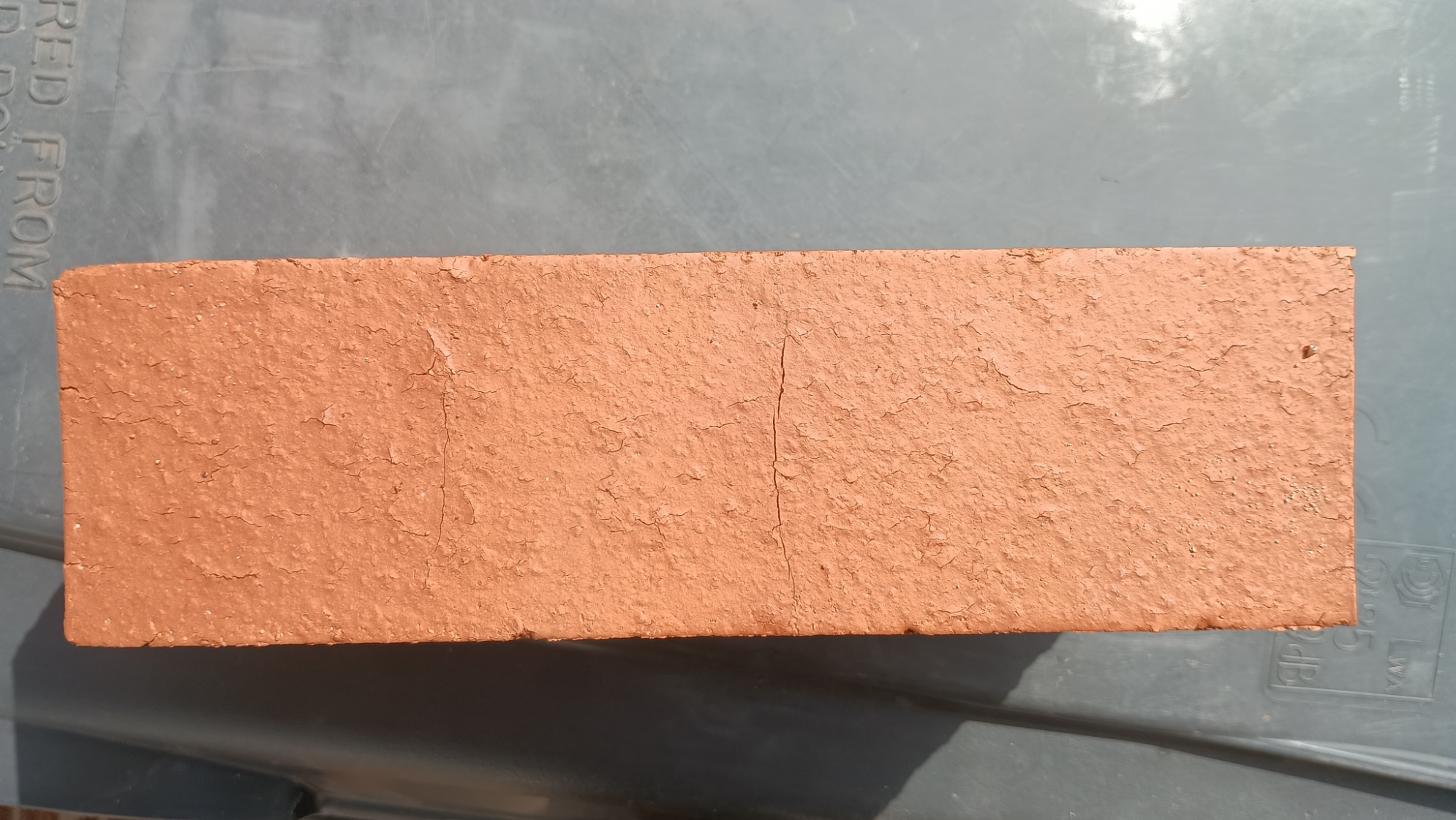
IMG_20260826_131923447.jpg


They're to be used in a retaining garden wall. I'm concerned that the water will get into all these cracks, freeze and blow them apart.

The pallet looks really old, the paper between the layers is mouldy. I'm suspecting they've seen a DIY order and have sent the old rubbish that their trade customers wouldn't accept. It was all wrapped in black pallet wrap.

What do others think? Accept or ring them up and reject them?
 
It depends if you paid for perfect or imperfect bricks and also if the crazing is characteristic of the clay or manufacturing process.

The brick would not necessarily be affected by freeze/thaw because of those fissures and crazing, rather it would take other factors such as clay impurities or the firing process.

It may be down to how many of the pack have the fissures.
 
I rang them. They crumbled as quickly as the bricks. They'll bring others and take them away, said they've changed suppliers due to quality issues. I said they look like old stock.

They were trying it on, trying to get rid of their junk on me. The curse of trade suppliers for DIYers, sadly. I've experienced similar before with another supplier.

If you zoom in on that first photo it's not just the two cracks, the entire surface is crazed. They're all as bad.
 
Last edited:
The replacement bricks were just as bad as the first lot. It's about 10 years since I last used engineering bricks, they definitely didn't look like this then. They could be a bit rough round the edges but I've never seen cracked faces before. I'll request a refund and look elsewhere.

It's for a retaining wall to the side of the house. It will be visible, but needs to be strong and frost resistant. I probably need to look at a decent frost-resistant facing brick rather than engineering bricks, if they're all as terrible as these nowadays.

Would be grateful for other opinions - do nice shiny presentable engineering bricks still exist?
 
I’ve deffo laid recent blue class Bs with cracks on the “good” face like your pic, and not batted an eyelid (rightly or wrongly). But I’ve no idea how many were like that, I tend to trust my merchant and didn’t pay much attention.
I also don’t reckon merchants deliberately fob off certain people with known defective products tbh…
 
I just phoned Brickhunter, who I've bought from before. Really helpful bloke, he just emailed me some photos of their bricks, Sandown Red Class B Perforated...

WB Red Class B Perf Engineer (1) (1).JPG


WB Red Class B Perf Engineer (3).JPG


They're more like it. Not looking for perfection, these look vastly better. Will order from Brickhunter instead of local junk then.
 
I’ve deffo laid recent blue class Bs with cracks on the “good” face like your pic, and not batted an eyelid (rightly or wrongly). But I’ve no idea how many were like that, I tend to trust my merchant and didn’t pay much attention.
The two big cracks are obvious. But zoom into that original photo and the entire surface is crazed.

I doubt they'd last a winter. Especially not as the top course will be on edge, with their faces upwards.
 
The two big cracks are obvious. But zoom into that original photo and the entire surface is crazed.

I doubt they'd last a winter. Especially not as the top course will be on edge, with their faces upwards.
You don't want to be using class B's for finishing off a wall (coping). The random size differences alone mean they could be in and out like a fiddlers elbow, and may not stand the freeze thaw all that well either.
 
You don't want to be using class B's for finishing off a wall (coping). The random size differences alone mean they could be in and out like a fiddlers elbow, and may not stand the freeze thaw all that well either.
Good point. I have done this with Class B before and they looked great and were fine for years. But I guess that I probably should be using Class A?

I'll speak to BrickHunter, will get them to swap out some Class B for Class A and charge the difference. While I'm at it I'll get blue ones for the top, as they're lovely.
 
When doing a brick on edge with Staffs I'd have 2 separate mixes. One slightly drier for the bed joint, and a slightly wetter one for the cross joints. It's harder to butter up the bricks with dryer mortar, but easier for lay them on a dryer bed joint.
 
When doing a brick on edge with Staffs I'd have 2 separate mixes. One slightly drier for the bed joint, and a slightly wetter one for the cross joints. It's harder to butter up the bricks with dryer mortar, but easier for lay them on a dryer bed joint.
Because of their weight? Would they tend to sink if using one mix that's wet enough for the joints?

I suppose they also have very little suction, so the bed will remain as wet after placing them, not stiffen up in five minutes as it would normally.
 
As you suspect there's very little suction with them. They are also quite heavy, so with a wetter bed they are more likely to float and sink a bit. The mortar needs to be wet enough for you to be able to work with though. It's a bit of trial and error the first time you lay them.
When you start at the end bits of 3x2 or 4x2 as profiles are good to pull the lines off and hold the end brick in place.
Although a bit tricky to lay they are really hard wearing. I did these steps at home about 15 years ago.
I did a brick on edge with a similar brick a few years back on a job up the road with lime mortar. I used NHL3.5/sand for the bed joints, but the cross joints were really tight at around 2-3mm so a very fine sand(0.5mm down) and lime was used for them. Having really tight cross joints does resist the weather better, as they are a weak spot on the top of a wall, and the bigger they are the more they weather out.
IMG_20260829_122824.jpg
 
Last edited:

If you need to find a tradesperson to get your job done, please try our local search below, or if you are doing it yourself you can find suppliers local to you.

Select the supplier or trade you require, enter your location to begin your search.


Are you a trade or supplier? You can create your listing free at DIYnot Local

 
Back
Top