24/7 Unattended Comms Equipment - Preventing Electrical Fires?

  • Thread starter Thread starter exotic
  • Start date Start date
Does this device have a transformer between mains and the ELV circuitry ?

Probably not, In which case the design is that the mains 220 volt AC is fed directly to a rectifier producing 308 volt DC which is smoothed by an electrolytic capacitor. This DC is then fed into the switch mode regulator. In the UK the voltage may be 240 volt AC which means the capacitor has 336 volt DC and this is most often the failure when this capacitor shorts out.

Many of these have a resistor in series with the mains to limit the current through the rectifier until the capacitor is charged. That resistor often fails as it is severly over loaded for the couple of mains cycles that it takes to charge the capacitor.

http://www.everbuying.net/product560441.html said:
Frequently Asked Questions:
Q1. Why are these called "Arduino Compatible"?
A1. The Arduino group demanded us to remove their logos and rename these products so that they do not lead customers to believe they are the same units sold by Arduino
Q2. Are these 100% compatible with the "normal" Arduino's?
A2. Yes, they really are completely compatible with "normal" Arduino's. Build quality looks the same and everything (studio, library, tools, etc) just works
Q3. Are these actually original Arduino's, then?
A3. We can only officially answer we don't know
 
Exotic, could you please open the rest of the case and post a photo of the whole circuit board? Thanks.
 
Dantech cctv power supplies , made here and don't fail .....unlike our cheap and nasty Chinese friend !
 
As suggested, get a reputable PSU, and place it on a non-combustible surface - a layer or two of plasterboard will suffice.

A "proper" PSU will incorporate an internal fuse (which may actually be a resistor), but just in case, you can provide additional external fusing - feed it via a fuse that's as small (in rating) as possible to limit the fault current if it does fail.
 
Any switch mode power supply can fail. With the old transformer and rectifier and regulator circuit all the capacitor did was smooth and even when they go it's not that much of a problem. But with a switch mode there are two things one can do. One fuse it and two metal case it. We have done this for years with computer power supplies and after about 10 years even the best of them go pop.

With power supplies in sealed packages the only safe way is to fuse down and to place where if it does go then any bits fall onto a non combustible surface.

Any electrolytic capacitor has a limited life. So any switch mode power supply also has a limited life. One would hope internal fusing so when it goes it fails safe but one can only guess as to what is inside.
 
Any electrolytic capacitor has a limited life.
In 1980 I recovered the analogue 12 volt 10 amp power supply from a redundant photo plotter and put it to use supplying the heating controller in the house we were building. It was probably 10 years old then. It was still in service in 2011 when we sold that house. In 30 years it had never been switched off except by power cuts.

One of several "common" failures in switch mode supplies is when insulation between the windings on the high frequency transformer fails. This can connet the Live of the supply to the outputs. Sometimes the device still has 5 volts between the output pins so appears to be working but touching them will be the same as touching a live wire. In some cheap items where the two windings have no physical separation between them this safety critical insulation is nothing more than the few microns of laquer on the winding wires.
 
Last edited:
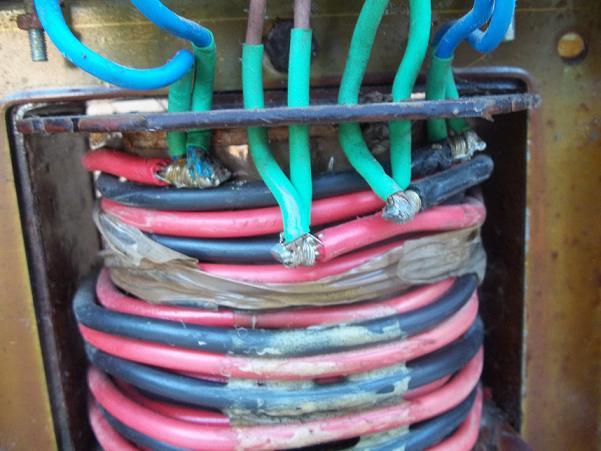
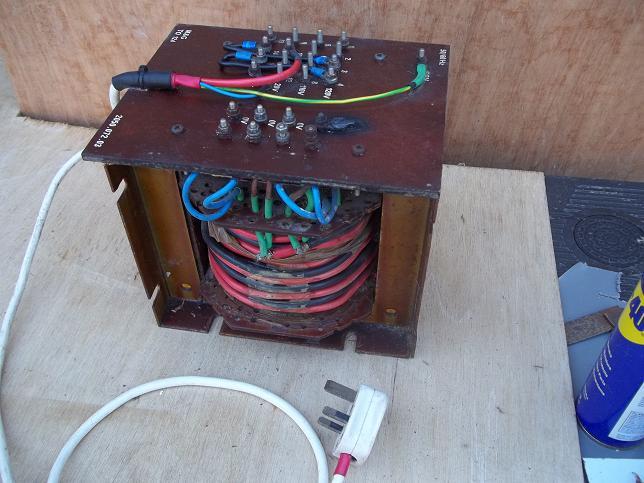
In other words you can't go wrong with a big copper winding ! Less to go wrong than a box of components !
 
In other words you can't go wrong with a big copper winding ! Less to go wrong than a box of components !
Somewhere I have an ELV lighting transformer like that - it's about as big as a shoebox (size 12 walking boots, not size 4 ladies sandals), and it's *&£^%#@~ heavy.
 
powerplug-composite.jpg
This sign shows a fail safe isolating transformer and this one
powerplug-safetyisol.jpg
is not fail safe i.e. it does not have short circuit protection. Where a transformer reduces the voltage 5:1 ratio or more then the output can't exceed 50 volt when used with a 250 volt supply but where units work from 100 ~ 250 volt that clearly means 20 volt maximum output when all is working correctly.

I have some old radios which have still got the original capacitors but when looking at 1940's radios that is often the first job replacing the old electrolytic capacitors they may last 5 years or 80 years but they do have a limited life. Where the shellac I suppose still has a limited life as does cotton but nitrocellulose lacquer and others which replaced shellac have such a long life time as to be as far as we are worried going to last well past the date when it's going to be still in use.

It would be nice to say simply use expensive stuff and it's OK but often expensive means some one has a silly mark up on the price. Even good well known names does not always help. One sees comments like made in China being the same as poor quality but my Tamron lens on my camera is made in china and it is a very good lens.

We hope if bought in UK either it is British or the Importer has batch tested to ensure they comply but that's not always the case. All we can do is hope it's good quality and to take measures to protect us just in case it's not.
 
Just buy some reputable plugtops. There are companies like sunpower who should be able to sell you something suitable, especially if you want several:

http://www.sunpower-uk.com/ranges/Plugtop-Power-Supply/42/default.htm
http://www.sunpower-uk.com/public/ranges/pdfs/r400/r400_1.pdf

You cannot buy plugtops separately. A plugtop is the cover of a plug.

That website does not seem to know that either. I would not buy from a company that does not know the difference between a cover and a plug.
 
You cannot buy plugtops separately. A plugtop is the cover of a plug. ... That website does not seem to know that either. I would not buy from a company that does not know the difference between a cover and a plug.
In that case, I guess you need to take TLC off your suppliers' list - click here !!

Kind REgards, John
 

If you need to find a tradesperson to get your job done, please try our local search below, or if you are doing it yourself you can find suppliers local to you.

Select the supplier or trade you require, enter your location to begin your search.


Are you a trade or supplier? You can create your listing free at DIYnot Local

 
Back
Top