
ABVs and Pump performance curves

Joined
15 Dec 2025
Messages
7
Reaction score
2
Country
United Kingdom
Anyone up for a(nother) discussion) on ABVs?

1. ABVs open in response to the increased upstream pressure that results from closure of MVs (or TRVs).
2. This mechanism will only operate effectively if the performance characteristics of the pump concerned include a pressure increase large enough to open the valve, for whatever change of flow is involved.
3. Inspection of performance curves for different pumps, on constant speed settings, shows a wide variation in the extent to which reduced flow is accompanied by increased pressure. Grundfos pumps for example have relatively flat curves i.e. reduced flow is accompanied by only small pressure increases. Stuart Turner pumps have curves with a greater gradient at low flow rates. Attached is a sketch where I have transcribed the published performance curves for setting II on the Grundfos Alpha2 15-60 on the same axes as the Stuart Turner ST 15-60.
4. Pumps like the Stuart Turner should therefore be inherently better at operating ABVs. With pumps like the Grundfos (i) it will be hard to set the ABV correctly and (ii) in order to allow adequate flow during over-run, the ABV will also be open to some extent during normal operation (bearing in mind that the valve characteristics involve progressively greater opening as pressure rises, rather than a cliff-edge effect).

I have a system boiler with S plan, two MVs, hot water cylinder, Honeywell autobypass valve (ABV)and a mix of standard and TRV rads. The pump is a Grundfos, and my experience confirms these predictions: if the ABV is set to give an adequate flow under over-run conditions (say 300 L/h) it will inevitably also be open to some extent under normal running conditions. My estimate (based on the power consumption of the pump, which is shown in real time on the Grundfos) is that under normal CH running conditions, with the HW MV closed and CH MV open, a little under half the boiler flow is passing through the ABV. Because of this I am considering changing it for another pump with a steeper performance curve, in order to improve the overall performance of the system.

Does this make sense and, if so, why have I been unable to find any coverage of it on the web? It seems a significant issue!
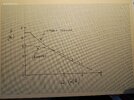
 

Attachments

  • 1000005502.jpg
    1000005502.jpg
    398.6 KB · Views: 11
I have tried to get my head round this before but not for a while now. It gets even more confusing when you use Constant Pressure mode. There is all sorts of advice out there, much of it contradictory. From using a manual bypass in conjunction with an ABV to using a normally open motorised valve.

Is there a faster speed on the Alpha 2 which looks more like the Stuart Turner curve.
 
I've also been wrestling with this for years - partly because I have found that professionals tend to screw the valve down a long way so as to minimise flow during normal running, apparently without realising that this is accompanied by inadequate flow during over-run.

I've attached the performance curves for all settings on the Alpha2. As you suggest, setting III on the Grundfos does indeed seem a bit more promising, at least until you get down to about 0.7m3/h, where there is an inflection and the line goes almost horizontal. The Stuart Turner on setting II also has an inflexion (see previous attachment), but this doesn't kick in until flow is below about 0.3m3/h.

I used to run the Grundfos on setting III and the ABV problem was, as predicted from the curves, less severe than it is with setting II. The new boiler does not like setting III however. It repeatedly shuts down - I am guessing because the return temperature is too high for its liking. Setting III is really more than my smallish terraced property needs anyway.

I've always assumed that constant pressure modes are a no-no because there would be no pressure increase at all to open the ABV, when the flow rates declines. And the Grundfos "Proportional pressure" modes are even worse because pressure actually declines as flow rate goes down!

The more I think about this, the more surprising it seems that these valves get installed in systems with apparently no thought as to whether the pump properties will allow them to work properly.
 

Attachments

I've also been wrestling with this for years - partly because I have found that professionals tend to screw the valve down a long way so as to minimise flow during normal running, apparently without realising that this is accompanied by inadequate flow during over-run.

I'm interested in how they calculate the minimum flow rate during overrun. How much heat is actually retained within the heat exchanger once the flame has gone off. Presumably, you would need to know the weight of the heat exchanger and its average temperature. Say you have 2 litres of water within the boiler and another litre within a 3m bypass. Which means you have 3 litres of water circulating through the boiler during overrun. And say when the boiler switches off the flow temperature is 80C. Presumably the aim is both to minimise localised heat stress and also to stop the water reaching boiling point. How fast does it need to flow and for how long.
 
Yes, that's another can of worms.
In their instructions, Honeywell specify aiming for the "minimum boiler flow" when setting up the ABV. My understanding however is that when boiler manufacturers use this term, they mean the minimum flow that the boiler requires in order to fire. For my 18 kW boiler, this is about 0.8 m3/h. There seems no reason to assume that this much flow is also needed during over-run, when firing has ended. Indeed if the ABV is set up to have this much flow during over-run, it will inevitably have an unacceptably high flow rate during normal running (where flow rates are often barely any higher).
I have not so far been able to find a published figure for over-run flow requirements (or desired rate of heat loss). In principle it will depend on the factors you list. How about the following for starters (the figures and assumptions may be wildly out):

Mass of heat exchanger 5kg
Temperature of heat exchanger at start of over-run period 150C
Material of heat exchanger: aluminium, heat capacity 0.9 kJ/kg°C

So, amount of heat to be dissipated to reduce heat exchanger temperature from 150C to 100C = 0.9x5x50 = 225 kJ

Say Delta T (flow - return) 10C
Then amount of water needed to remove 225kJ = 225/4.2x10 = 5.4 kg

In the absence of any better information I tend to aim for about half the "minimum flow rate" during over-run i.e. 0.4m3/h or about 6L/min. This is pure guesswork, but together with the above figures it would predict that heat exchanger temperature is reduced to 100C in under a minute.

The results of this calculation are reassuring but this may be false comfort if the numbers and assumptions are dodgy! The short period derives principally from the low heat capacity of aluminium (or more specifically, the difference in heat capacity between aluminium and water). Things would be very different with a steel exchanger..............
 
I think steel heat capacity is actually about half that of aluminium.

The limiting factor to me seems to be the amount of headroom you have to heat the water in the bypass circuit without it boiling. Say the water is very hot when the boiler turns off (e.g. 80C). You only have 20C more to play with. If there are 3 litres (3 kg) of water in total in the bypass (including the water in the boiler):

20C x 4.2 x 3kg = 252kJ

That would be my starting point.

In the absence of any better information I tend to aim for about half the "minimum flow rate" during over-run i.e. 0.4m3/h or about 6L/min. This is pure guesswork, but together with the above figures it would predict that heat exchanger temperature is reduced to 100C in under a minute.

Modern boilers can have a minimum flow rate of about 0.15m3/hr when fully modulated. It is logical that the minimum flow rate when the boiler is off must be less than that.
 
I think steel heat capacity is actually about half that of aluminium.
Apologies - my hallucination

Modern boilers can have a minimum flow rate of about 0.15m3/hr when fully modulated. It is logical that the minimum flow rate when the boiler is off must be less than that.
That's interesting. My previous boiler (Vaillant Ecotec plus 418, 2015 vintage) specified, in the Installation Instructions, a minimum flow rate of 12.9 L/min (0.77 m3/h). The current one (Vaillant EcoFit Pure 418) has no minimum flow rate in the instructions, but on the phone Vaillant quoted me an almost identical figure for it. If the minimum flow is actually as low as you suggest, however, I will need to get the drawing board out again.
 
That's interesting. My previous boiler (Vaillant Ecotec plus 418, 2015 vintage) specified, in the Installation Instructions, a minimum flow rate of 12.9 L/min (0.77 m3/h). The current one (Vaillant EcoFit Pure 418) has no minimum flow rate in the instructions, but on the phone Vaillant quoted me an almost identical figure for it. If the minimum flow is actually as low as you suggest, however, I will need to get the drawing board out again.

I was just trying to use some maths. If a boiler can modulate down to 4kW and you want a dT of 20C, then the flow rate is about 0.17m3/hr. I think the flow rates you have been quoted are to ensure you install a pump which can produce enough flow at full power i.e. 18kW.

Casting my mind back, I am sure I read a discussion last year about setting a manual bypass at 2L/min for pump overrun.
 
That's very helpful. But if domestic installations require overrun flows of only about 0.1 m3/h, I'm puzzled why the flow operating range for the Honeywell valve runs up to 1500 kg/h (1.5 m3/h). Chart attached.
One reason why the "minimum flow rate" quoted by Vaillant seemed a reasonable starting point is that it falls more or less in the middle of the valve's operating range.
 

Attachments

That's very helpful. But if domestic installations require overrun flows of only about 0.1 m3/h, I'm puzzled why the flow operating range for the Honeywell valve runs up to 1500 kg/h (1.5 m3/h). Chart attached.
One reason why the "minimum flow rate" quoted by Vaillant seemed a reasonable starting point is that it falls more or less in the middle of the valve's operating range.

That figure was my memory of a discussion quite a while ago now on another forum, so it shouldn't be relied on. I suppose, though, it fitted in with my "first principles" approach, that the minimum flow rate when a boiler is turned off should be less than when it is firing. However, something has just occurred to me. It could well be the case that, immediately before a boiler shuts down, it was actually running at full power. Would that mean there was more retained heat in the heat exchanger? If so, that would change the calculus.
 
I suppose in some installations, for example where all rads have TRVs and there is no MV, the ABV will come into play while the boiler is still running. In that case a higher flow rate would be required than is the case when it is just used in over-run mode (e.g. with MVs and an S plan). This would explain why the operating range goes as high as it does.
From our discussion I think I can afford to screw the ABV down another turn or so which will help. Maybe 3 or 4 L/min for safety.
The original problem remains but I have ordered a Stuart Turner pump (they also cost less than the Grundfos!). It will be interesting to see how much difference it makes.
Thanks very much for your replies which raised some points I hadn't previously considered and also corrected a couple of misapprehensions.
 
I suppose in some installations, for example where all rads have TRVs and there is no MV, the ABV will come into play while the boiler is still running. In that case a higher flow rate would be required than is the case when it is just used in over-run mode (e.g. with MVs and an S plan). This would explain why the operating range goes as high as it does.
From our discussion I think I can afford to screw the ABV down another turn or so which will help. Maybe 3 or 4 L/min for safety.
The original problem remains but I have ordered a Stuart Turner pump (they also cost less than the Grundfos!). It will be interesting to see how much difference it makes.
Thanks very much for your replies which raised some points I hadn't previously considered and also corrected a couple of misapprehensions.

I'm not a plumber or gas engineer. Just someone who likes to discuss some of the more science-y bits. So, please bear that in mind before doing anything drastic.
 

If you need to find a tradesperson to get your job done, please try our local search below, or if you are doing it yourself you can find suppliers local to you.

Select the supplier or trade you require, enter your location to begin your search.


Are you a trade or supplier? You can create your listing free at DIYnot Local

 
Back
Top