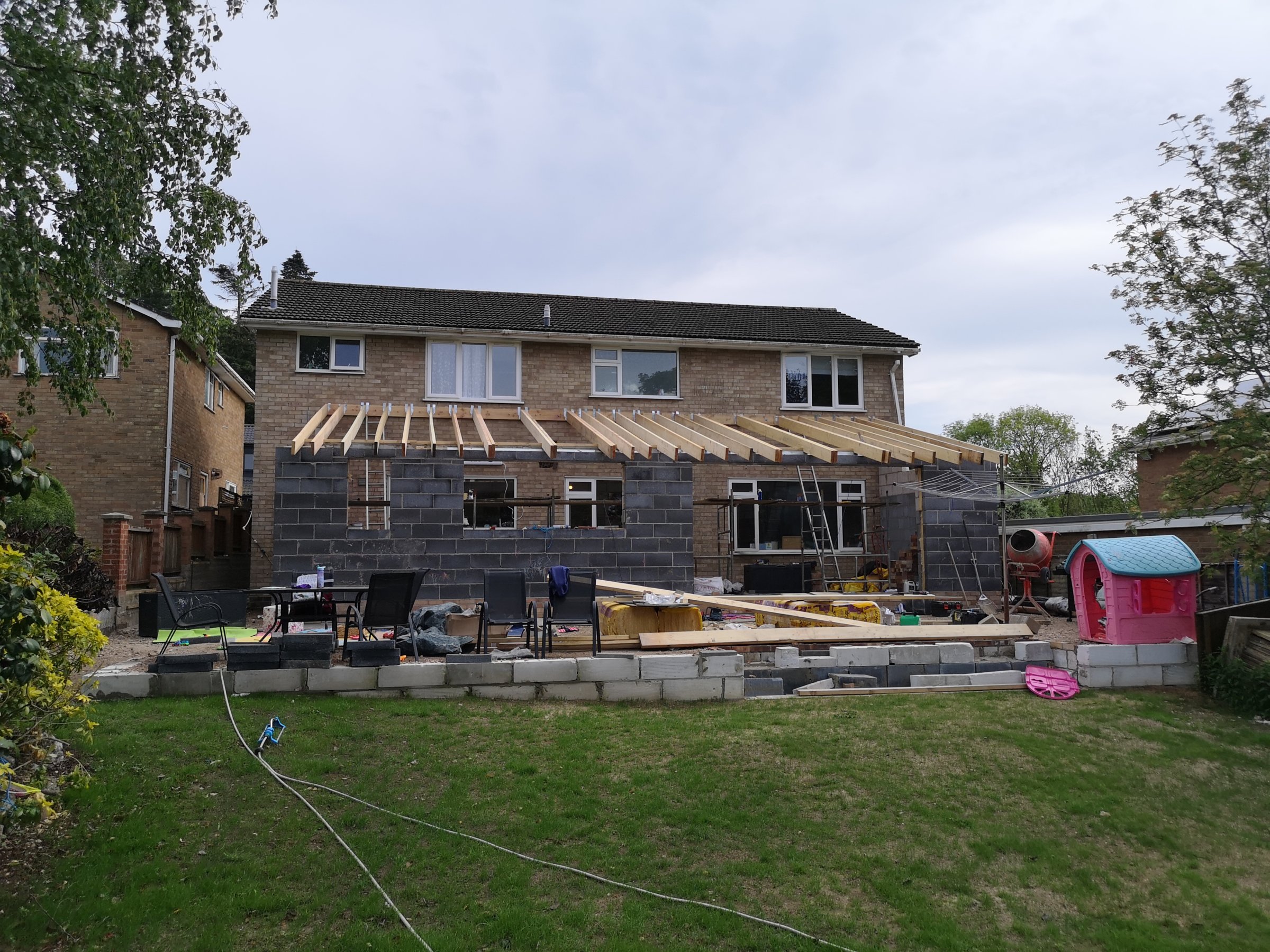
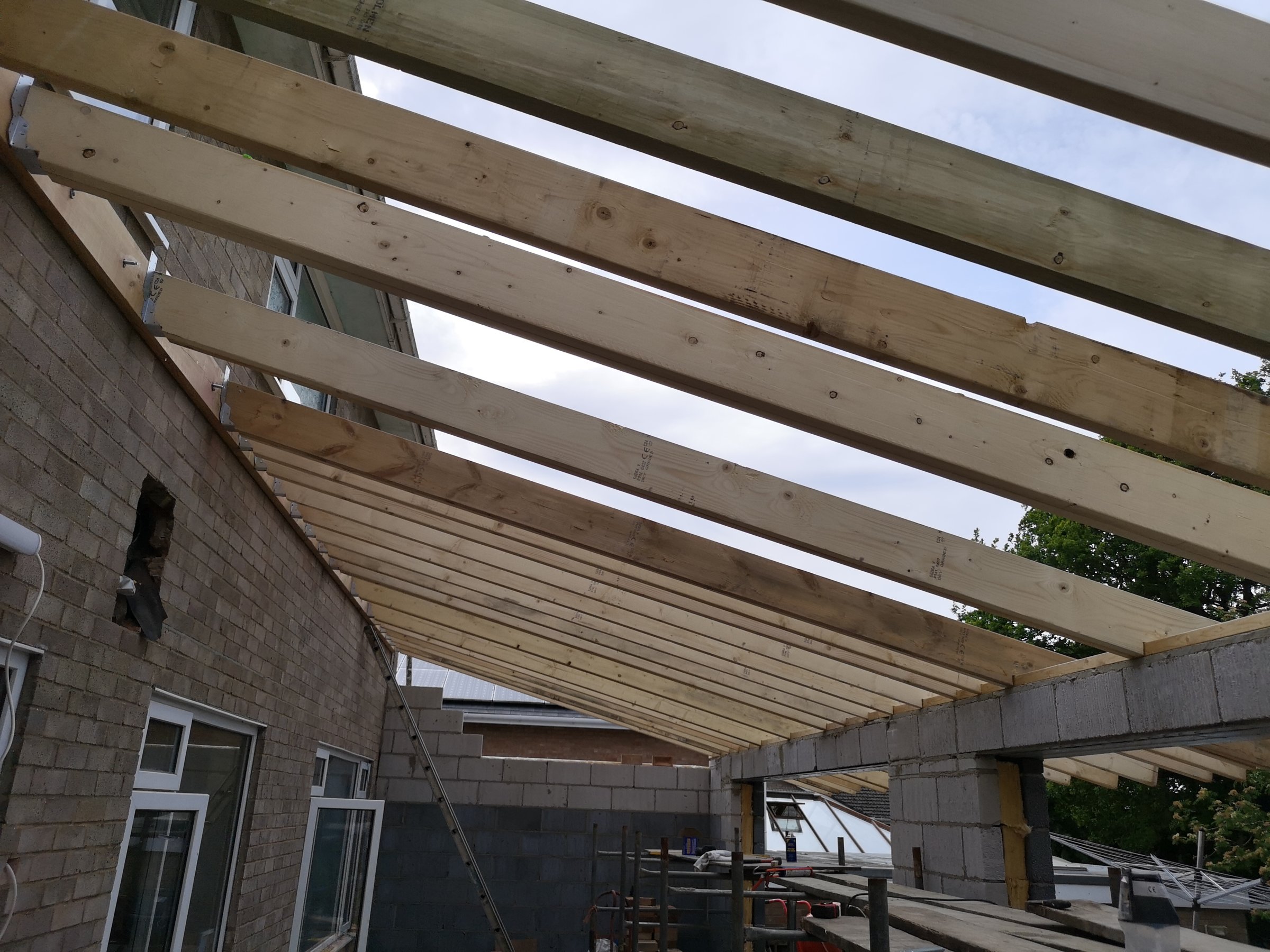
Birds mouth seat cut overhang

Is it really that simple? Isn't it about shear strength at the end, versus overall deflection, and the notch is only going to affect the shear?

What's the span on the rafters, ann20?

Yes I agree that it isn't as simple as what Woody says. The span extension is 3.4 meters so rafter length is about 3.5...
 
So looking at some tables it would seem that my span of 3.4 meters only requires a 150 rafter at 400 ctrs and I am using 197 rafters at 400 ctrs so cutting 50mm out as I have should be fine from what I can see.
 
Is it really that simple? Isn't it about shear strength at the end, versus overall deflection, and the notch is only going to affect the shear?

What's the span on the rafters, ann20?
Yes it's that simple.

A given section will have certain performance for the typical forces at the bearings (shear) and along its length (bending, deflection, buckling). If you make the beam section less by cutting it, then you alter the performance characteristic.

Whether it makes a difference or not is another matter and needs to be checked, but the concept is that you don't just go cutting timber willy nilly.
 
Yes it's that simple.

A given section will have certain performance for the typical forces at the bearings (shear) and along its length (bending, deflection, buckling). If you make the beam section less by cutting it, then you alter the performance characteristic.

Whether it makes a difference or not is another matter and needs to be checked, but the concept is that you don't just go cutting timber willy nilly.
So not actually that simple then!! Haha

Thanks for help woody. I am going to plough on through. I don't beleive I have any issues with what I intend to do after speaking to a few different sources.
 
Yes it's that simple.

A given section will have certain performance for the typical forces at the bearings (shear) and along its length (bending, deflection, buckling). If you make the beam section less by cutting it, then you alter the performance characteristic.

Whether it makes a difference or not is another matter and needs to be checked, but the concept is that you don't just go cutting timber willy nilly.

I was thinking.... Many people seem to secure the top of their rafters on a lean to roof to the header plate with 4 nails (two each side). This fixing method must have the same effect as my cut that I'm talking about as the nails do not pick up the bottom of the wood. I will be using hangers (which will need a small notch taken out of wood to work).
 
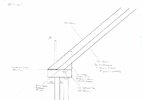
apologies for bringing an old(ish) thread back to life, but does this look okay or...? I've emailed this sketch to my BCO for his input. The house has a new cathedral ceiling and originally, the roof had lightweight cement tiles. I want to install CUPA H3 Slates which work out around 49kg per m2, opposed to around 18-19kg per m2 originally. I guess the important detail is how much of the weight the rafters carry actually transfers through what remains of the original rafter/ceiling tie onto the wall head - works out about 35mm, indicated on the sketch. The roof is at 40 degrees, the rafters are around 5.4m long and go over a chunky ridge beam (115x495) with small collars tying opposing rafters above the ridge beam. I just wish the location plate between the rafter and rafter/ceiling tie was wide enough to completely span the joint between the rafter/remainder of the ceiling tie but as seen on the image, it's short by around 10-15mm. I would value any input, while waiting for my BCO to reply
 

Attachments

  • rafter-seat.jpeg
    rafter-seat.jpeg
    73.2 KB · Views: 1

If you need to find a tradesperson to get your job done, please try our local search below, or if you are doing it yourself you can find suppliers local to you.

Select the supplier or trade you require, enter your location to begin your search.


Are you a trade or supplier? You can create your listing free at DIYnot Local

 
Back
Top