Boiler types

Joined
26 Feb 2010
Messages
50
Reaction score
2
Country
United Kingdom
Hi All,

Just trying to understand heating systems/boilers, as I am currently looking at buying a new property and don't want to get bitten with lots of work. Unfortunately google didn't give me a clear answer so asking here :)

A property we like has what is called a hot air system for a boiler. I noticed the property has no radiators and has these vents in the rooms on the ceiling. Is this is a very old type of system and is it older than system boilers (which I believe is a hot water tank radiator system)? Is a property with a hot air system likely to be very costly to upgrade to a combi boiler? How does a hot air system heat water for showers etc?
 
Probably pre 1990 ,will have a separate hot water heater either attached seperate, some people love them ,not very efficient and as far as replacing it’s compete system .
 
We had a hot air system in a new house we moved into in 1971. Horrible, horrible noisy thing. Gave us all dry throats too.
 
How does a hot air system heat water for showers etc?
It doesn't, that bit is simple, I had a hot air system in the first house we had, it seems likely it was damaged on the installation, it was too easy for someone to step on the ducts, so we found it expensive to run, but that may have been because damaged.

Back then,1977 I think, as in that house in the Winter of Discontent which I think was 1978, the windows were single glazed, and there was no other heating in the house. Some good points, and some bad points, from turn on to warm house it was fast, much faster than water systems, but also cooled down fast.

Today this may be good. However, back then, the vents in the walls would not turn fully off, so all rooms were heated even if you tried to turn it off. All the doors had vents, to allow the air to return to the furnace, can't really call it a boiler, as no water to boil, and it made the house very dry, we would put trays of water in the air intake.

With the electric being turned off, during the Winter of Discontent, we got very cold, as even if gas fired, with no electric it will not run, so we moved house, to one with a flue gas fire, which had not electric required, so we could keep warm in a power cut, which after Maggie crushed the Unions, did not really happen again anyway.

As to domestic hot water, the immersion heater is not as expensive, as to what I first thought. A boiler, be it gas or oil (Yes I know they don't boil water any more, but we still call them boilers) has a large heat exchanger which needs heating up, so there are a lot of losses when using a boiler. An immersion heater will also have loses, but it depends on the size of the tank, and how much insulation.

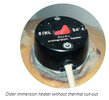
We have two extremes with DHW (domestic hot water) washing hands, and having a bath. One is using maybe a litre of water, the other maybe 40 gallons, and the old idea was only heating the top of the tank, unless having a bath. Immersion-heater.jpgThe Irish worked out how to heat varying amounts with the Willis system, but we were too tick to work that out in the rest of the UK. The other method is to heat the water local to the taps, fitting these
1755621074534.png
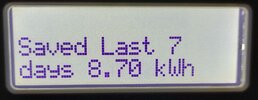
under the sink, resulted in no wait for hot water, and reduced loses, but no good to fill a bath, I have two instant electric showers, also two baths in the house, but the baths are never used, however I have 5 sinks, so fitting 5 units starts to look rather expensive, so I use a single central hot water cylinder Tank after lagging.jpg and in summer it is heated with electric, from the PV solar panels, so the unit which does that, also records how much used, so this shows Last 7 days - 18 Aug.jpg how much used in 7 days before yesterday, at 25p/kWh looking at around £2.30 per week, for me with PV solar and off-peak, looking at around £1 a week in lost revenue as not exporting the solar. So 5 x £100 for units at each sink, does not make sense.

Returning to the hot air heating, while we were both at work, it worked well, as it heated the house so fast, we simply turned it on when we got home, but once we had our first child, so heating wanted 24/7, then it worked out expensive.

 
and it made the house very dry, we would put trays of water in the air intake.
lol. We would unscrew the lounge outlet vent and put a dish of water in there.

I remember my dad called the council round as the sliding air vent above the front door wouldn’t close as it had been painted over. When they came round, they said they were deliberately painted over to stop them being closed as that was the only way that air can get into the house for the heating system!
 
A property we like has what is called a hot air system for a boiler.

There are/were systems run via gas, and systems run on electric - for valid advice, you will need to indicate which type it is.

Most gas operated systems by now, will have burnt out heat exchangers, and be beyond repair.
 
We had a hot air system in a new house we moved into in 1971. Horrible, horrible noisy thing. Gave us all dry throats too.
I had forgotten about the noise, can't remember it keeping us awake, not like when I was living in Algeria with heat pumps, we called them air conditioners back then, but were heat pumps, that pumped heat out of the home. And they also dry the air, last few days had one running it this house, condensate bottle holds about a gallon, emptied it about 5 times a day, shows how much it dries the room.

Yours, a bit older than the one we had, don't remember vents to the outside, ours had a forced air flue, so combustion air came from outside, and flue gases blown outside, and there was a flap, so boiler would not run if flue motor not running.
and systems run on electric
I had forgotten about them, there were some council flats in North Wales with the then new Economy 7 heating, but not storage radiators, but a central storage room, with ducts, it worked far better than the storage radiators, it would stay warm for a week.
 
Is this is a very old type of system and is it older than system boilers?
Possibly
(which I believe is a hot water tank radiator system)
Not how they work
? Is a property with a hot air system likely to be very costly to upgrade to a combi boiler?
Depends where you live, who you employ, what requirements are needed. You need to consider a new gas run, from the meter, how many bathrooms there are and whether combi is the way to go, radiators and all associated pipework to and from the boiler, including any hot and cold
How does a hot air system heat water for showers etc?
It doesn’t
 
I had experience of Warm Air heating unit for several years and will share with you what I learned:

1. Warm is air blown into the bathroom, displacing the existing air. Where did this moist and erm..... stale bathroom air go? out of the bathroom door down the passage and sucked back into the inlet duct of the system for re-distribution to all of the rest of the house. lovely!

2. Kitchen, as bathroom see above. Imagine the smell of cooking chips coming from the grilles in the bedrooms.

3. Poor comfort: Hot when the hot air was blowing on you directly, then instantly you felt cold the second the thermostat switched it off. A few minutes later a cold blast of air when it restarted before the hot air from the heater reached the grilles.

4. No zone control. Hot kitchen when cooking, yet the thermostat in cool lounge kept the system running which pumped more hot air into the kitchen. OK I would sometimes manually close the kitchen grille [I use the term 'close' loosely here, there was always some air that managed to get through even when it was shut] but then forget to open it again before I went to bed. It was impossible to get a comfortable temperature in every room. Lounge temp was OK'ish (other than 3 above) where the thermostat was, but other rooms that were too cold one day could be too hot the next if the sun shone on them because the grilles didn't have any thermostatic control.

5. Noise: Voices, TV etc travelled through the ducts from one room to another, especially in the bedrooms where the grilles were back to back. This wasn't so noticeable when the system was running as the noise of the fan & moving air drowned it out.

Hope that helps your evaluation. :giggle:
 
Hi All,

Just trying to understand heating systems/boilers, as I am currently looking at buying a new property and don't want to get bitten with lots of work. Unfortunately google didn't give me a clear answer so asking here :)

A property we like has what is called a hot air system for a boiler. I noticed the property has no radiators and has these vents in the rooms on the ceiling. Is this is a very old type of system and is it older than system boilers (which I believe is a hot water tank radiator system)? Is a property with a hot air system likely to be very costly to upgrade to a combi boiler? How does a hot air system heat water for showers etc? Using HIU SERVICE for boiler types is a smart choice. Regular maintenance ensures efficiency, prevents breakdowns, and extends system lifespan. Their engineers provide expert checks, cleaning, and energy-saving advice, making the service reliable. With clear pricing and 24/7 availability, it’s a convenient solution for keeping boilers running safely and efficiently.
A hot air system, unlike system boilers, uses ducts and vents to circulate heated air, not water through radiators. These systems, often older, are less common today. Upgrading to a combi boiler could be costly, requiring new pipework and radiators. Hot air systems typically use a separate water heater for showers. Check the system’s age and condition to avoid unexpected repair costs
 
Last edited:
I've known people who love their warm air systems but most find them difficult to live with.

A separate qualification is needed to work on warm air appliances. As these systems are getting older and more scarce, most gas engineers don't bother to get the additional qualification. This means that you may struggle to find anyone to service or repair.
 

If you need to find a tradesperson to get your job done, please try our local search below, or if you are doing it yourself you can find suppliers local to you.

Select the supplier or trade you require, enter your location to begin your search.


Are you a trade or supplier? You can create your listing free at DIYnot Local

 
Back
Top