Checking if thermostat broken

Joined
1 Dec 2007
Messages
175
Reaction score
4
Country
United Kingdom
Hello,

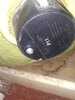
I would like to know how can I check if the thermostat is broken or the element in the immersion heater?

I have attached a couple of pics.

Regards
IMG_20201221_170829926.jpg
 

Attachments

  • IMG_20201221_171043267.jpg
    IMG_20201221_171043267.jpg
    280 KB · Views: 214
You should hear it clicking as you turn the dial each way. Do you have any test equipment?
 
Well, firstly and more importantly, the earth wire is supposed to be connected to the big bolt/screw with the nut at the bottom and another nut.

As to your problem -

Do you have a multimeter (without which no electrical work can be tested)?

If so, with the power OFF, test for continuity between the two terminals of the thermostat while you move it from minimum to maximum.
Then, with the wires disconnected from the element, measure the resistance of the element. It should be around 19 Ohms. If open circuit, then it is dead.

If not, get one.


This assumes there is a wire, which cannot be seen, from the thermostat's other terminal to the element.
 
Is that earth conductor fitted into the same terminal as the neutral ???
Hopefully not !
 
yes i have a small multimeter and will use that.

in terms of the earthwire, the long screw is where the thermostat cover bolts onto via nut. Are you saying the earthwire should be attached to the long screw rather than where it is now?
 
I can't make out exactly how wired, it does not look correct, but could be mistaken? There are three devices built into the immersion heater, the heater its self, the thermostat, and the cut out, in your case latter seems to be built into the thermostat I can see word re-set.

So inside the thermostat there are two independent sets of contacts, the one set is operated as the tube expands and contracts there is a rod inside the tube made of a different material and that causes the contact to open when the rod heats up, plus there is a bi-metal disc which is domed and with click across if over heated. The latter is re-settable where multi-heating is used, but often not re-settable when the immersion is the only way to heat the water.

So the line (brown) goes into the thermostat, then a short link thermostat to element, and neutral (blue) goes to other end of element, and the earth goes to casing so should the element fail by going to earth, the RCD back in the consumer unit will auto turn it off.

The length of the thermostat matches the length of the element.

To test you need some thing to measure with, be it a multi-meter, or a clamp-on meter but there is nothing to see without using some thing to test with.

If there is alternative water heating then pressing the re-set is first thing to try, but if the immersion is only water heating then best option is renew the thermostat. There has been a number of deaths caused by thermostat failure, from Emma Shaw to baby where the thermoplastic tank ruptured and dropped boiling water on the baby, with the old metal header tanks it was common to hear the water boil when the solid fuel water heating had been running for some time, it was common as a kid to be told to run off hot water, as mother baking so we had too much, but for some reason plumbers stopped using metal or thermal setting plastic tanks which could take the heat, and used the flimsy thermal plastic type which can't stand boiling water, so at around £12 for a new thermostat simply not worth taking the risk.

 
Definitely looks as though the earth wire is wired to neutral!
At the far end of that threaded stud is a nut, a washer and a cup-shaped part. The bared copper of the earth wire should be bent around the stud, fit neatly in the cup and be clamped in place by the washer and nut.
 
Dunno, if you look closely at the earth it looks like a washer and possibly a ring crimp, hard to say for sure about the actual situation without another angle
 

If you need to find a tradesperson to get your job done, please try our local search below, or if you are doing it yourself you can find suppliers local to you.

Select the supplier or trade you require, enter your location to begin your search.


Are you a trade or supplier? You can create your listing free at DIYnot Local

 
Back
Top