• Looking for a smarter way to manage your heating this winter? We’ve been testing the new Aqara Radiator Thermostat W600 to see how quiet, accurate and easy it is to use around the home. Click here read our review.

Composite Door Leaking

Joined
12 Oct 2024
Messages
205
Reaction score
10
Country
United Kingdom
Hi all,

I had a composite door fitted a few months ago on my new extension. I keep noticing that when it rains a lot, the bottom of the frame fills up with water, to such an extent that the two draft excluder strips end up completely saturated. How they will end up drying I don't know.

I had to dry it out once yesterday where it was filling up in the middle, like a canal, then later on it seemed to be happening again. I should have left it the first time to see if it ended up overflowing to the inside, which it looked like it would with the low threshold.

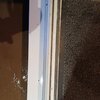
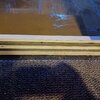
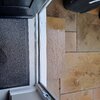
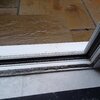
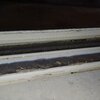
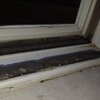
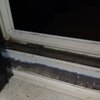
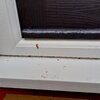
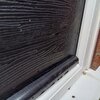
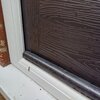
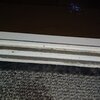
I attach some photos of it later on after I'd already dried out the pooling. Does this look normal or acceptable to you? The fluffy strip things are soaked now and the rain stopped last night. Just looks like a place for mould to happen.

There are two drainage holes which work. I poured a jug of water in earlier and the water did run out over the sill. The problem is that most of the water which makes it into the centre and to the back draft strip doesn't seem to makes its way to the holes.

Thanks
 

Attachments

  • 20251114_162500.jpg
    20251114_162500.jpg
    459.3 KB · Views: 24
  • 20251114_202139.jpg
    20251114_202139.jpg
    410.7 KB · Views: 25
  • 20251114_202250.jpg
    20251114_202250.jpg
    531.3 KB · Views: 25
Take some better pictures of the drain holes, but I dare say it's just poorly drained. The profile should be drilled down from that centre channel and then through the face (outside) and internal wallings to meet it, at the bottom of the profile, so water can go in the direction of the blue arrow:

1763201614777.png


To have drilled only the red arrow path (it seems) gives nowhere for water that had tracked further back to go, and it's very possible for water to track down the face of a door, under the bottom, clinging to the horizontal surface by tension, and track backwards toward the house. Also looks like the white weather strip will help water that runs down the face of the door pool up between the door and the seal, because when. Compressed in service that strip will have an downwards angle. You can't do so much about that, just be arrange for water that it collects to be drained elsewhere
 
Thanks Robin.

I've taken more photos.

The drain holes are working - as in, if I put water into them, it flows through to the outside. It seems to me that there is an excessive amount of high ribbing along the bottom of the frame, which then prevents water flowing towards the holes at the front. My other doors have the same type of holes but without the OTT ribs. This seems like a design flaw. Why are the ribs needed there? That said, how is so much water getting between the central and rear ribbing if the front part is drained by the holes?

I could gouge out some of the ribbing so water can flow to the holes? Or put additional holes in as you suggest through the flat surface in the middle, although I would be guessing about what happens to the water that passes through those. What if it ends up on the flat, ribbed part at the back of the sill and stays under the door frame?

The other possibilities are that too much water is getting in to begin with, either because the seals are crap or the door hasn't been fitted properly allowing more gaps than should be present between door and seal/frame.

Thoughts?

The company who fitted it has so far said it is normal during heavy rain, but I find it unacceptable to have pooled water and absolutely soaked draft strips, especially the rear strip. If water gets in behind the door seals it should stay in the front part of the frame and then make its way out.
 

Attachments

  • 20251115_110556.jpg
    20251115_110556.jpg
    584.1 KB · Views: 21
  • 20251115_110603.jpg
    20251115_110603.jpg
    396.9 KB · Views: 22
  • 20251115_110614.jpg
    20251115_110614.jpg
    230.5 KB · Views: 19
  • 20251115_110617.jpg
    20251115_110617.jpg
    229.8 KB · Views: 20
  • 20251115_110622.jpg
    20251115_110622.jpg
    245.8 KB · Views: 20
  • 20251115_110643.jpg
    20251115_110643.jpg
    477.5 KB · Views: 18
  • 20251115_110647.jpg
    20251115_110647.jpg
    253.7 KB · Views: 23
  • 20251115_110651.jpg
    20251115_110651.jpg
    377.5 KB · Views: 20
  • 20251115_110655.jpg
    20251115_110655.jpg
    326.7 KB · Views: 18
Last edited:
As you suggest looks like far too much water getting throught the seals

Silly question.... is the door at full compression? , locking mechanism not engaged so full compression isn't achieved or door hasn't been adjusted on the door keeps enough to achieve full compression
 
As you suggest looks like far too much water getting throught the seals

Silly question.... is the door at full compression? , locking mechanism not engaged so full compression isn't achieved or door hasn't been adjusted on the door keeps enough to achieve full compression
Good question.

As it happens, there is a separate issue where half of the time or more, when you put the key in to lock the door, it just keeps turning but not catching to actually lock. It will turn and turn and turn. So then I pull the handle down, open the door, then close it again firmly and try again. After doing this, sometimes more than once or twice, the key catches whatever it is and locks the door.

Could this be linked to it not being tight enough?
 
Dry everything thoroughly, then place clean sheets of 3" wide paper or card, numbered, over the draft brushes on the threshold, close the door then pour a few jugs worth of water gradually down the door surface (or soak it with the hose on rain mode) and frame edges. Can you see where the water goes? Does staining on the paper help locate?

I suspect that it'll be the corner joints where door meets frame (they're blurry/hard to see in your pics) but it's important to note, door and window frames aren't supposed to be impervious, and the seals aren't supposed to keep out 100% of water. In stead the assumption is that water will make its way into the frame at some point and it should be drain holed so it can get out again. Once water is in the centre channel of your threshold, it isn't going to climb out, over small plastic walls, and find a drain hole. Wherever is the lowest point is, that's where it should be drained from
 
Have the same issue here, someone mentioned this thread, hadn't found it in initial search.
Ours doesn't have any ridges though and the brush gets saturated and leaks into the house onto the floor, has been adjusted but it still leaks, and also then makes it impossible to use the door when the sun has been on it and it expands. Seems a flawed design as there is nothing to stop the inner brush getting soaked.
Given the wood effect texture on the face I don't think the rubber seal is upto the job despite compression.
 
The company is replacing my door. The frame is fine but turns out the door slab is bowed, causing 2.5mm less compression at bottom corners than there should be. So that and the outer weather seal and the brushes at bottom being replaced. And the lock. They also found the colour has faded on the outside (black) even though the door is like 5 months old. I have to say I am sceptical about these composite doors after this. Old upvc one at the front thirty years old no problems at all. Although I had already ordered a composite replacement of that to match other before realising the problems so will see how that pans out. To be fair to the supplying company, they sent an engineer out approximately 24, hours after the issues reported and he was excellent and very honest, so kudos on that front since they are replacing it.
 
Have the same issue here, someone mentioned this thread, hadn't found it in initial search.
Ours doesn't have any ridges though and the brush gets saturated and leaks into the house onto the floor, has been adjusted but it still leaks, and also then makes it impossible to use the door when the sun has been on it and it expands. Seems a flawed design as there is nothing to stop the inner brush getting soaked.
Given the wood effect texture on the face I don't think the rubber seal is upto the job despite compression.
Just to say, for what it's worth, it is absolutely normal for some water to get in at the bottom, especially during heavy rains, and the drain holes are there to take it away. But the brush things shouldn't be getting soaked, especially not the rear one, and if water is getting into the house the company will definitely consider that unacceptable - assuming it has happened whilst the door was closed and sealed, rather than getting soaked by being left open or whatever.

Things to consider are: is the frame all square? Is th slab all plumb (apparently unusual that mine is bowed). More obvious and easier issue is that the outer weather seal might need replacing and/or lock needs adjusting so the door gets pulled in more to the seal. On the latter point, I think the upvc door locks where you lift the handle up and it pulls the door to the seal might be better. I've asked for that on the new composite door. The one on my existing composite door you don't pull the handle up, just turn the key. Unclear whether this will make a difference though as apparently composite doors don't have the rollers in the locks which cause that pulling in effect.

Seems like another case of new, clever ideas being a load of **** but I'll try to keep an open mind...
 

If you need to find a tradesperson to get your job done, please try our local search below, or if you are doing it yourself you can find suppliers local to you.

Select the supplier or trade you require, enter your location to begin your search.


Are you a trade or supplier? You can create your listing free at DIYnot Local

 
Back
Top