Correct use of automatic transmissions

Joined
17 Apr 2007
Messages
2,665
Reaction score
141
Country
United Kingdom
I'm asking out of curiosity.

When stationary in traffic, such as lights, should the transmission remain in D or be moved to N?

My aunt has a 1994 Merc C220 and if in D, it will creep forward if the brakes aren't applied which in my opinion strains the car.

From a YT video, it said an automatic should be in N before applying the handbrake and then moved to P if being parked up.

I've never owned an automatic.
 
My last auto car (diesel) had a foot operated hand brake and a hand release under the dash making it very difficult to use in traffic. I always just kept foot on brake when stationary .Any diesel I have had including current had a tick over speed fast enough to move the vehicle once brake released .
I can get from zero to around 45mph without touching the throttle and just changing up thru gears (6 speed).
 
When stationary in traffic, such as lights, should the transmission remain in D or be moved to N?
No harm leaving it in D.

My aunt has a 1994 Merc C220 and if in D, it will creep forward if the brakes aren't applied which in my opinion strains the car.
It will creep forward (also not run back on slight inclines) - keep your foot on the brake, presumably it was applied to get the car to stop.
Strictly speaking you should apply the handbrake, but...

From a YT video, it said an automatic should be in N before applying the handbrake and then moved to P if being parked up.
I would think that sticklers for safety would say applying the handbrake when stationary was the priority.

I've never owned an automatic.
I've had one for sixty years. I can't understand why manuals are made.
 
Agreed, but specifically covering parking procedure.

To the OP I would advise that it's not necessary to select N or P when stationary in traffic, in fact doing so constantly can do more harm than good.
All the autos I've owned (all with torque-converters) have crept forward when in D & this is more noticeable these days as emission conscious idle speeds tend to be higher.
 
Our car has a conventional torque convertor and will creep if your foot is off the handbrake. It also has an 'auto hold' button that can be permanently left on. When it’s on, if you come to a complete stop whilst in Drive, you can take your foot off the brake and it will stay there until you touch the throttle. There’s no mention in the handbook of any damage being caused to the gearbox when using the auto hold function.
 
As mentioned above, creeping forward is normal. Put your foot on the brake, as noted.

I've never driven an electric vehicle, but from what I've heard, they also want to creep forward at traffic lights, and you have to apply the brake with them, too. I would have expected an electric vehicle to have its motor shut off when stationary. I gather they have been designed that way to mimic the behaviour of cars fitted with auto transmission.

However, having said all that, if you think the car at traffic lights is pulling too strongly and you have to apply what seems excessive pressure to the brake pedal to keep the vehicle stationary, then I suspect it has a problem. Only light pressure on the brake pedal should be sufficient to keep it from moving forward.
 
electric vehicle, but from what I've heard, they also want to creep forward at traffic lights,
Some do. Others do not.
That behaviour is just a software option chosen by the manufacturer. It's not required or even desirable.

. I would have expected an electric vehicle to have its motor shut off when stationary.
It is, even in those that creep forward.
If the vehicle is not moving, neither is the motor.

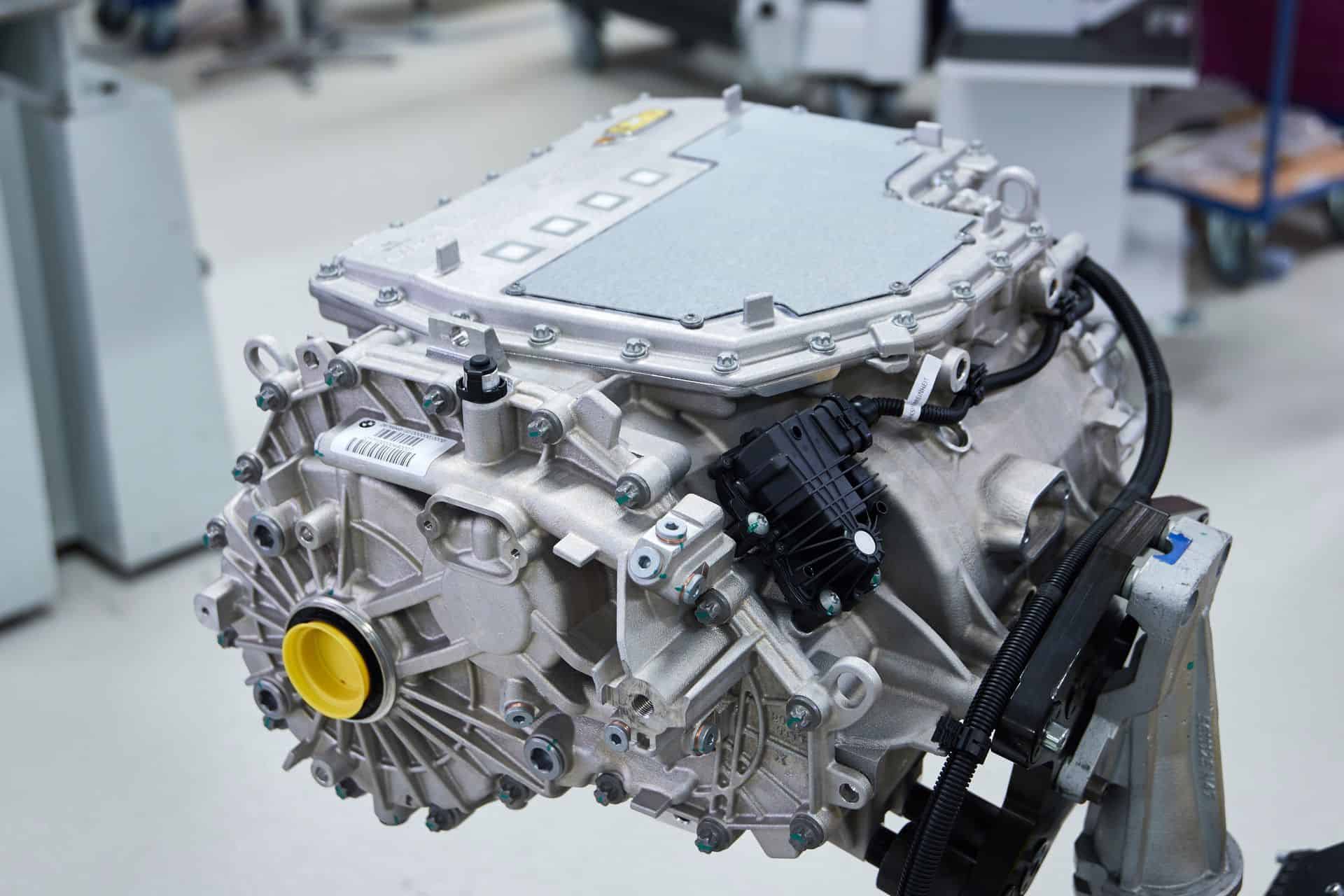
Electric vehicles are
electric motor -> fixed reduction gear -> wheels
 
Good point. So, when (some) EVs are stationary at traffic lights (foot on the brake), when you ease off on the brake, the motor engages, without touching the accelerator pedal to give that familiar slow crawl forward that conventional auto trans vehicles do. Not sure I like that idea.
 
I'm asking out of curiosity.

When stationary in traffic, such as lights, should the transmission remain in D or be moved to N?

My aunt has a 1994 Merc C220 and if in D, it will creep forward if the brakes aren't applied which in my opinion strains the car.

From a YT video, it said an automatic should be in N before applying the handbrake and then moved to P if being parked up.

I've never owned an automatic.

I think that at that age, the Merc is probably a conventional "torque converter" auto? If you come to a stop in "drive" (or any gear), and hold the car on the footbrake, the torque converter will just slip. It's just hearing fluid when it does that. There are no friction linings being worn. At idle speed, there is hardly any power being generated through the engine and being transmitted by the torque converter, so it would probably happily sit there like that until it ran out of fuel.

At higher RPM, it would quickly build up a fair bit of heat in the transmission fluid, which would be undesirable.

If you took it out of gear each time you came to a stop, there would be some wear on the clutches inside the gearbox that hold the gears as the engage / disengage. This wear would put particles of friction material into the transmission fluid, which isn't ideal. However, the ca would use a tiny bit less fuel at idle.

I think conventional wisdom, is to leave them in "drive" if you're only going to be stopped for a few minutes.

With automated manual ("DSG" or "Tiptronic") type transmissions, they DO have clutches - sometimes oil-immersed, sometimes dry) which would wear if left in gear at the lights, I think most (perhaps all?) of them just automatically disengage their clutches if the computer sees zero road speed and some pressure in the brake lines, for more than a few seconds.

It therefore, doesn't seem to matter much ether way?

 
As mentioned above, creeping forward is normal. Put your foot on the brake, as noted.

I've never driven an electric vehicle, but from what I've heard, they also want to creep forward at traffic lights, and you have to apply the brake with them, too. I would have expected an electric vehicle to have its motor shut off when stationary. I gather they have been designed that way to mimic the behaviour of cars fitted with auto transmission.

However, having said all that, if you think the car at traffic lights is pulling too strongly and you have to apply what seems excessive pressure to the brake pedal to keep the vehicle stationary, then I suspect it has a problem. Only light pressure on the brake pedal should be sufficient to keep it from moving forward.

One thing I'm not sure about with EVs...

They don't have a clutch or a torque converter, so if the car stops, the motor stops. When running normally, the electric motor is turning and each set of windings only sees current for a fraction of a second, before it passes to the next set.

What happens when you try to hold an EV stationary on a hill, with the throttle? I've tried it on mine and it seems next to impossible, as the hill-hold just comes on and (I imagine) power is removed from the motor. If you COULD do it, I'd have thought you'd burn out whichever set(s) of windings were carrying the current when it stopped?
 
The creeping forward is actually a good thing, when you are on a incline you won't roll back.

When you come to a stop just put your foot on the brake and wait, if its going to be a longer wait for some reason then go into park & handbrake on.
 
What happens when you try to hold an EV stationary on a hill, with the throttle?
It does exactly what you expect. Holds there, or apply more power and it moves forwards. Apply too little and it could roll back, depending on whether the software has been configured to allow that to happen.

When running normally, the electric motor is turning and each set of windings only sees current for a fraction of a second, before it passes to the next set.
EVs mostly have permanent magnet AC motors, all of the windings are connected all the time. There are no brushes or windings to switch on and off.
Same concept as 'brushless DC' power tools.
 
It does exactly what you expect. Holds there, or apply more power and it moves forwards. Apply too little and it could roll back, depending on whether the software has been configured to allow that to happen.


EVs mostly have permanent magnet AC motors, all of the windings are connected all the time. There are no brushes or windings to switch on and off.
Same concept as 'brushless DC' power tools.

Fair enough. Mine's unusual in that respect.

 
Back
Top