Damp Cellar - how do I work out what's causing it?

Joined
4 Jul 2020
Messages
145
Reaction score
1
Country
United Kingdom
I bought a hygrometer with a Dew point sensor. The readings were as follows.

Temp 19.1 degrees
Humidity 77%
Dew point 11.2 degrees

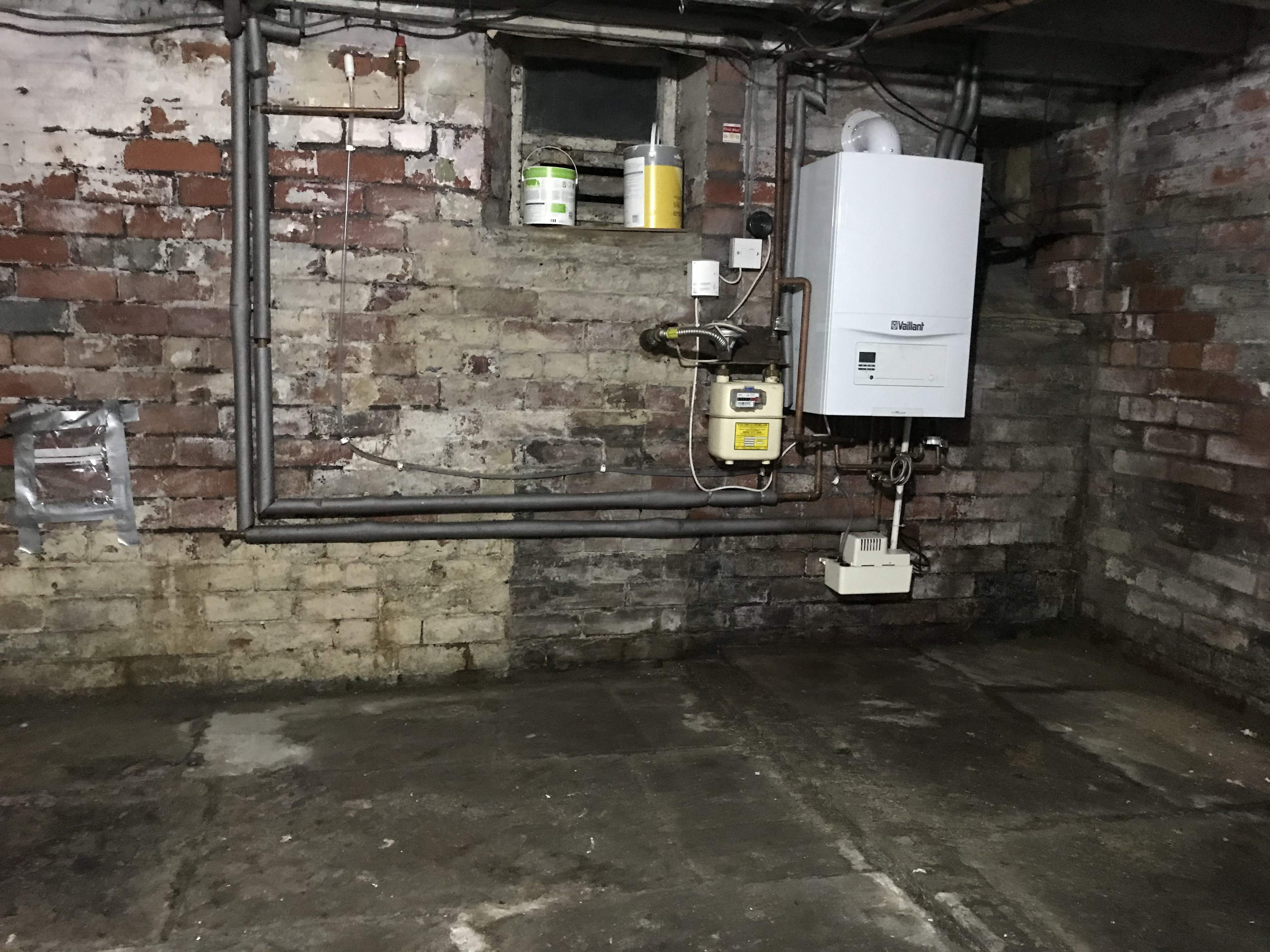
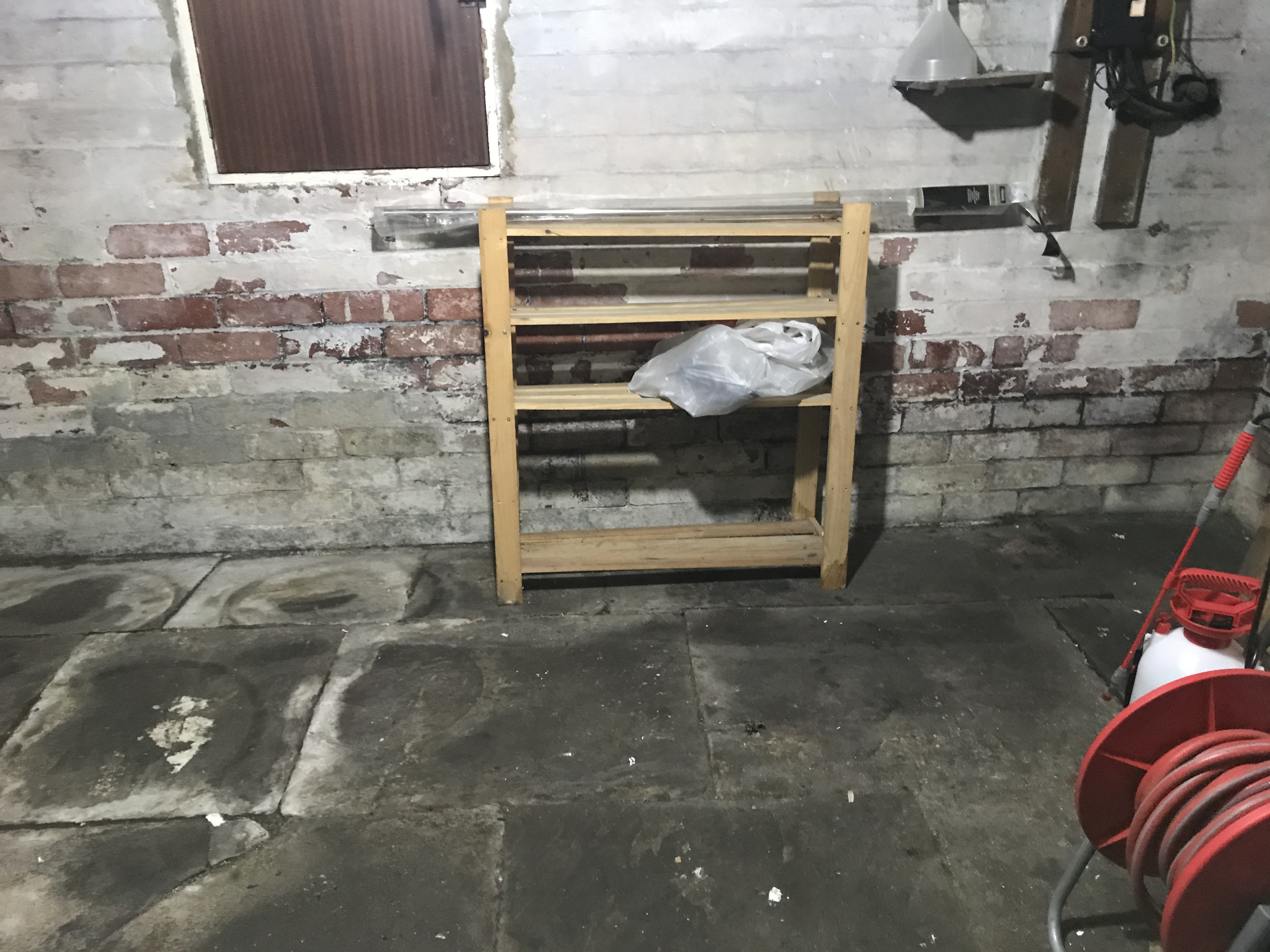
There is a small window thats left open as well as a metal coal shoot that has 6 metal holes in it that's always uncovered.

The stones are wet - but there is no flowing or dripping water - so is this dampness due to condensation or water ingress?
 
outdoor temperature today is very warm, and the warm air will hold water vapour.

When it touches a cold surface, such as a beer glass or a cellar wall, some of the water vapour will form condensation on the cold surface.

If you want to check, rub a cold surface brisklyly with a dry cloth to get some of the water off, and wrap it tightly in clingfilm. If water forms on the exposed surface of the clingfilm, it's condensation.

However, if growing amounts of water appear on the stone and push rhe clingfilm off, the water is penetrating through the wall.
 
What temperature are the stones??

I don't know - I will have to buy an infra red thermometer first. I will put a thermometer on the floor and let it adjust - perhaps that might work.
 
I have rubbed the walls and they feel dry. However the floor and about 2ft up it seems damp in places - but higher up its bone dry.
 
are these external walls, with earth on the other side? Or internal, with another cellar on the other side?

Does the floor seem damp all over? This is to be expected if it is old with no dpm.

It is very common (univeral) for old clay gullies and drains to crack and leak, leading to water in the ground around old houses. Water pipes also leak. You can often locate the problems by looking for cracked, sunken or patched concrete or paving near downpipes and gullies.
 
are these external walls, with earth on the other side? Or internal, with another cellar on the other side?

Does the floor seem damp all over? This is to be expected if it is old with no dpm.

It is very common (univeral) for old clay gullies and drains to crack and leak, leading to water in the ground around old houses. Water pipes also leak. You can often locate the problems by looking for cracked, sunken or patched concrete or paving near downpipes and gullies.

The external wall to the soil outside is the one with the damp / water ingress. There is wetness at the bottom of the all but its bone dry from about 1ft up.

The foul pipe from the toilet runs on the outside about 2.5ft to the left of the window as you are facing it from the inside.


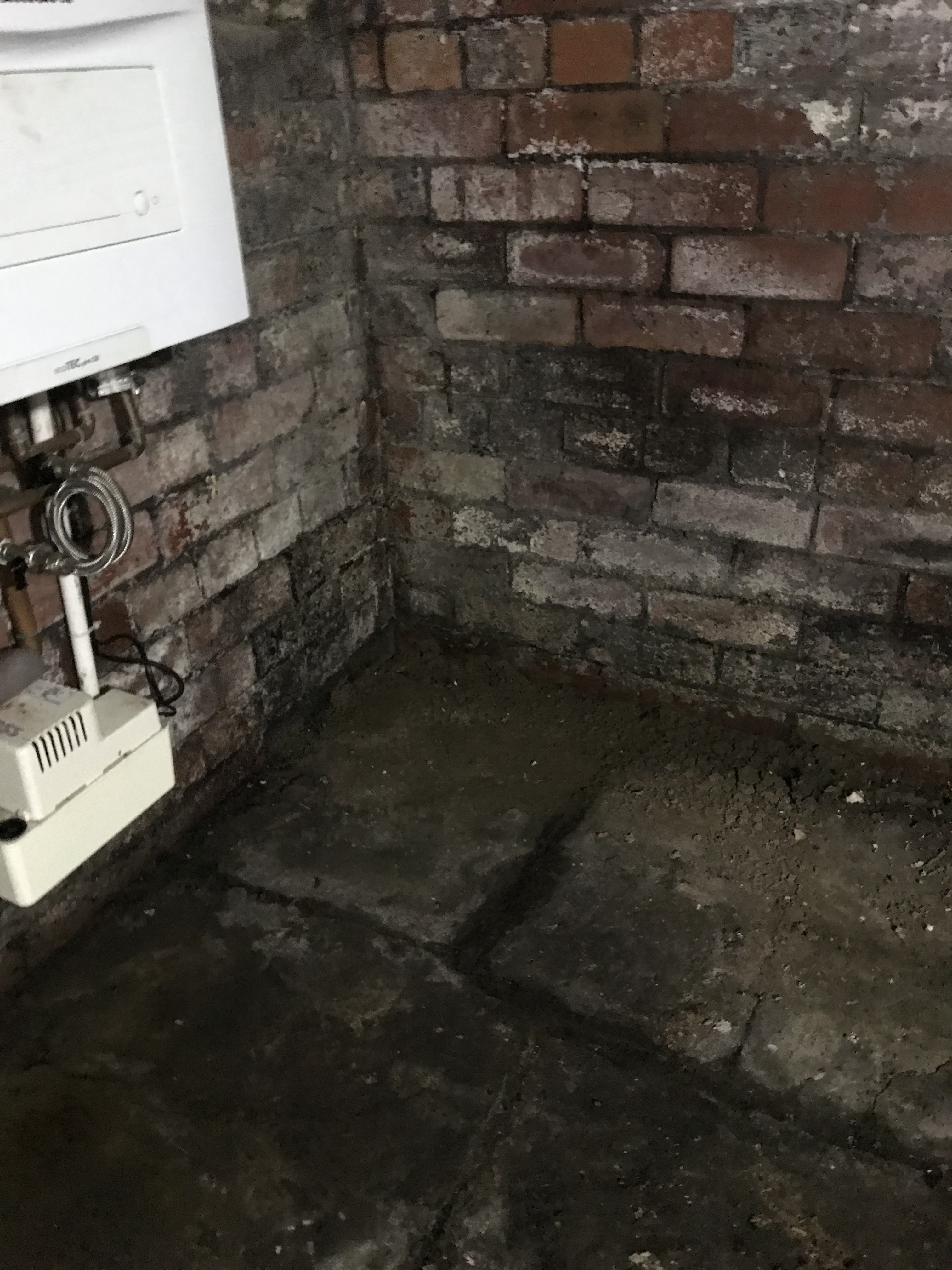
dYVdSR.jpg


This is the corner below the coal shoot.

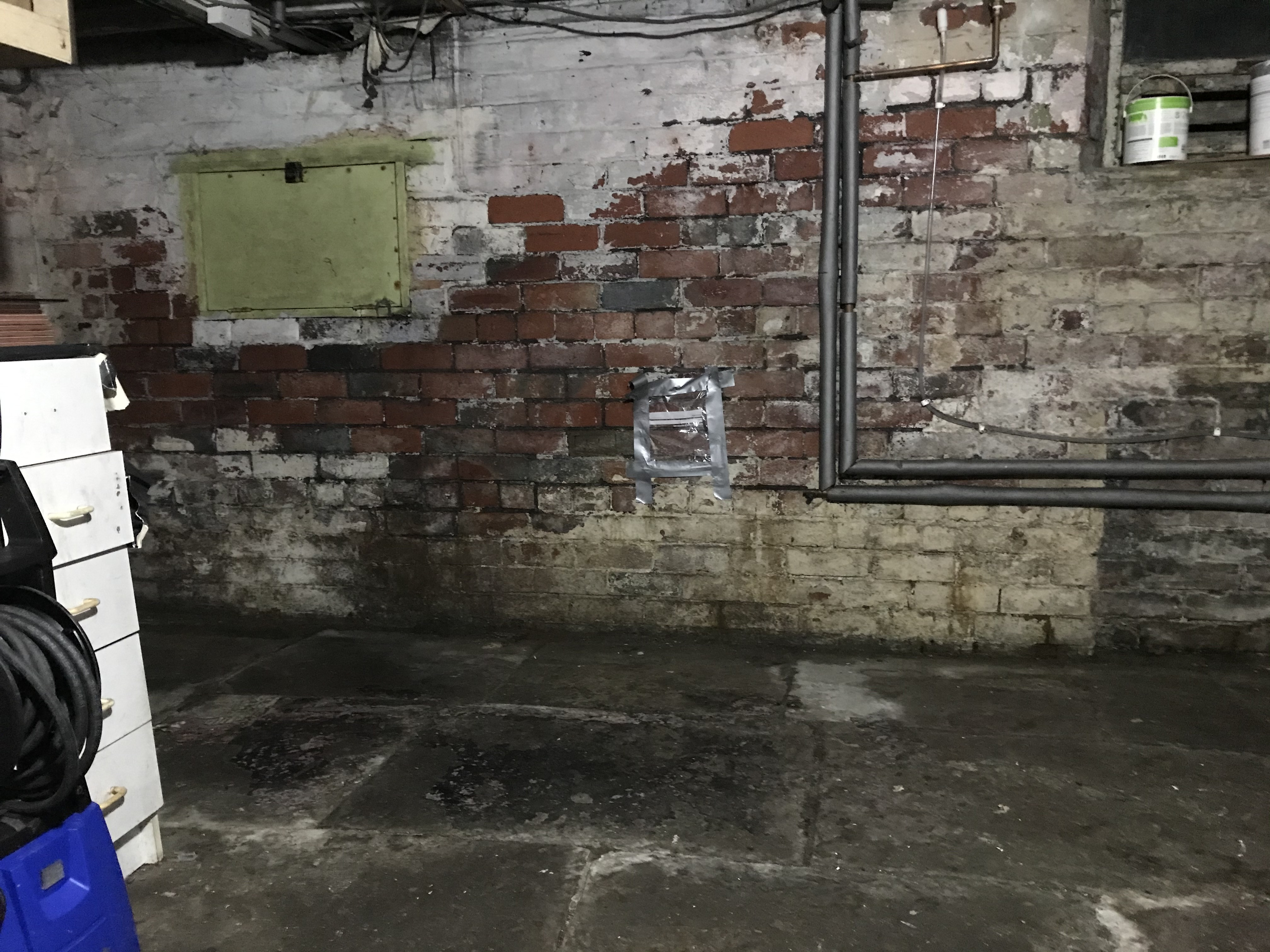
dYV39p.jpg


This is the cellar wall - on the other side is the soil and garden.

dYVJcv.jpg


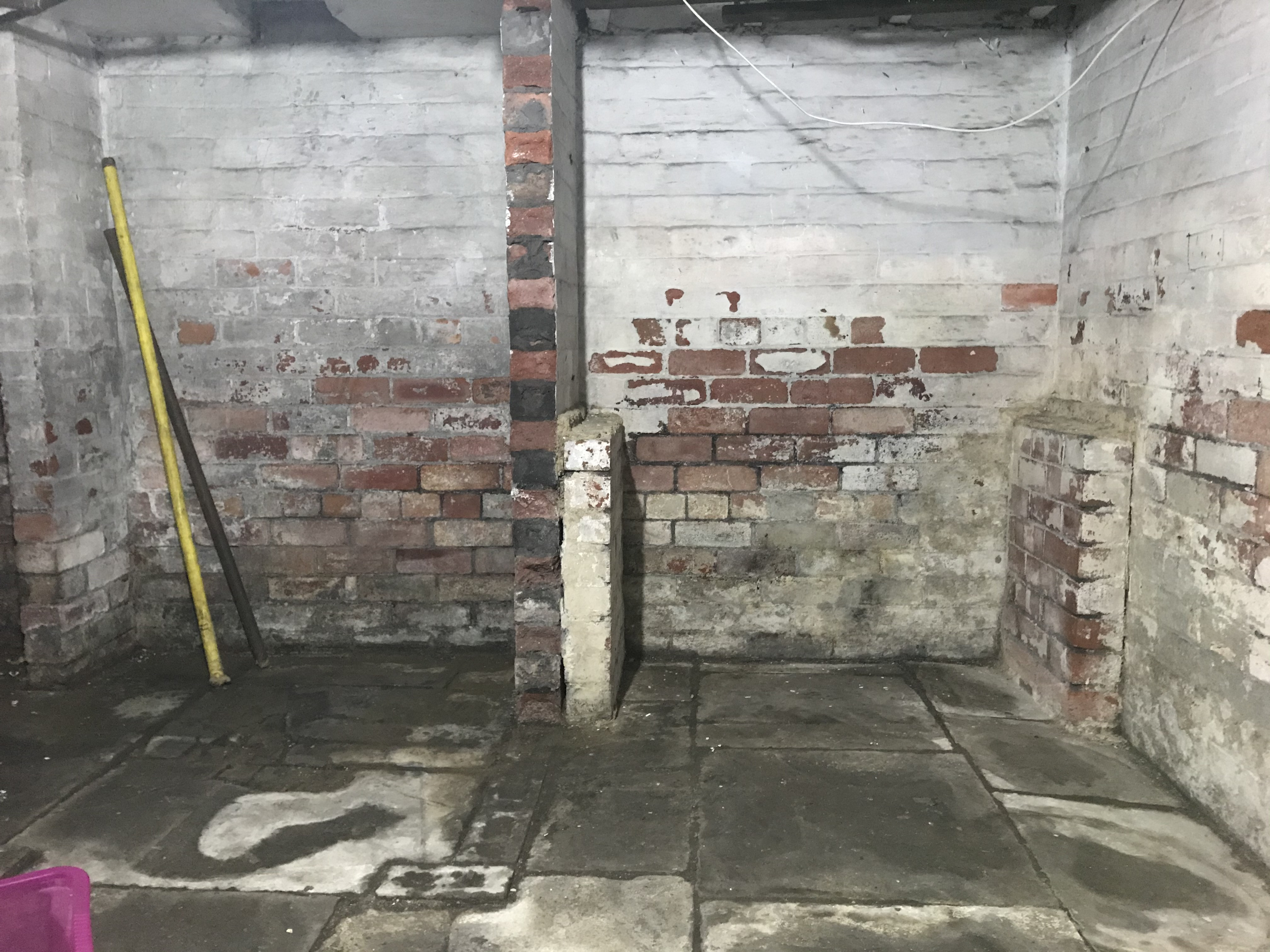
The other 3 walls are bone dry.

dYVFAN.jpg


dYVKNI.jpg
 
the floor looks wet, and there is efflorescence on the floor and wall, suggesting water penetration (not condensation)

You can see a buildup of limescale on the walls in some areas, these are likely to be close to the source of water.

It might be that in your district it is unavoidable, but it is worth inspecting drains to see if they are cracked or leaking (they probably are). If the damp is caused by wet ground or high water table, I'd expect to see it on all cellar floors, not just the area nearest the plumbing and drains.

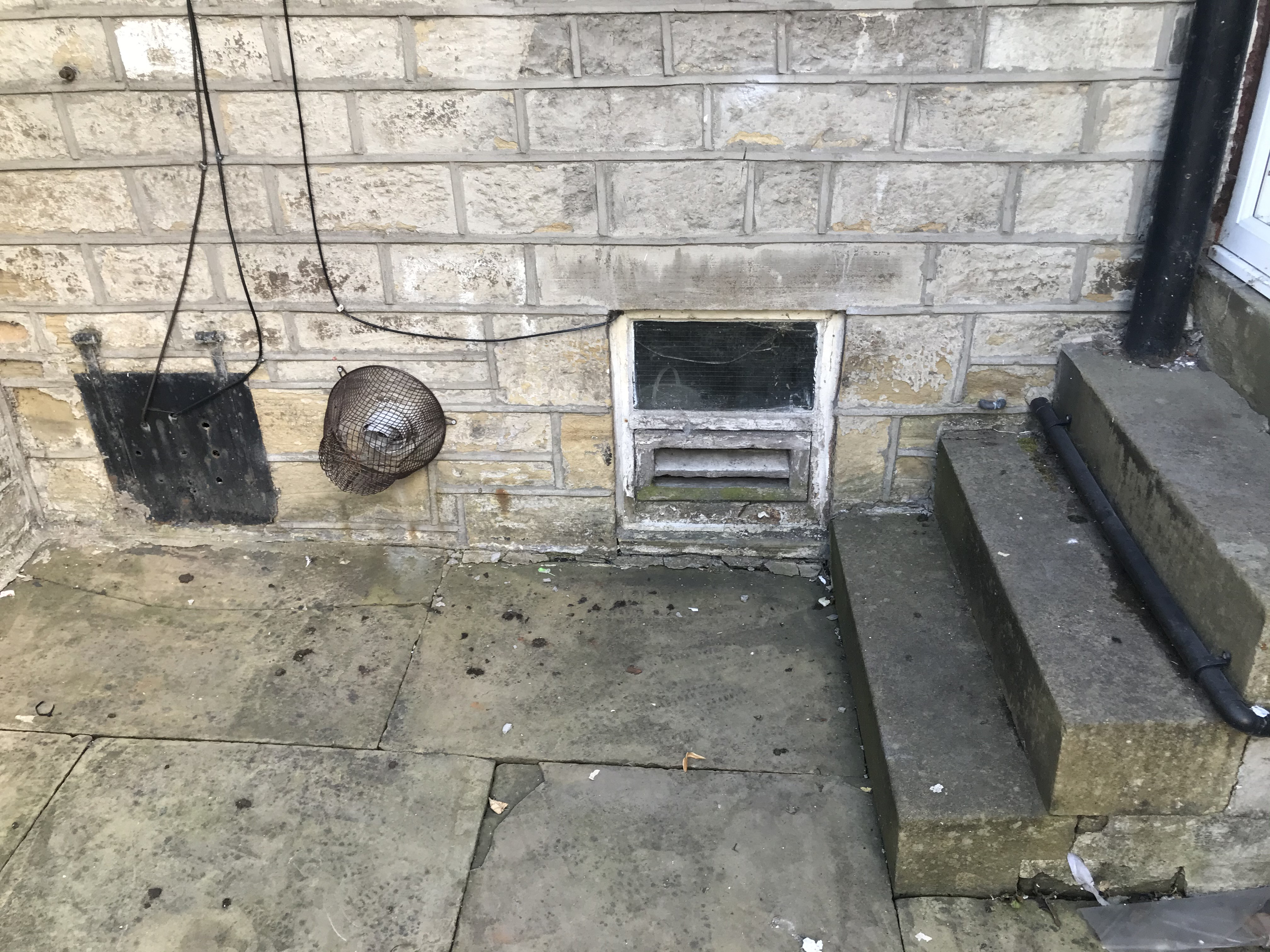
can you take some photos of the ground or paving on the outside of the wet wall(s) please? Show the drains as much as you can. Also rainwater downpipes if present. And any "manhole" covers.
 
This is the view from the outside. The big black pipe is the soul water pipe. There are no manhole covers other than a drain where the gutters run into and the pipe from the boiler.

How would you get access to the trap?

The pipe that you can see running over the second step is from the boiler and feeds into the drain about a metre away from the steps which is next to the wall.

daoBSf.jpg
 
not much of the route is visible, but I would suspect the nearby drain. If you can lift one of the slabs, see how wet the ground is beneath it, and if there are red worms. The steps look like they might have been added after the initial build. Presumably stone?

It might be easier to dig a trial pit in the garden, as close as you can get to the house.

Do you ever get wild tomato plants coming up?

Are there other drains along that wall, for gutter downpipes, kitchen or bathroom?

It is possible to have a CCTV survey done, when they poke a small camera on a flexible pole up the drain.

IME the clay pipe usually breaks at the bend, next to the house wall, where the vertical soil pipe turns (almost) horizontal. In your case the steps would make that difficult to dig out, but removing a slab may get you near enough to see. As well as being wet, the soil commonly is washed away to leave a cavity, which may fill with soapy water when someone pulls the bath plug. Water companies can test to see if the water contains soap, or sewage, or chlorine, or leaf particles, showing where it came from. Condensate from the boiler is slightly acidic and erodes limestone and concrete.

The cavitation causes paving to subside, or have hollows undrneath. Can you detect that? The sinking has often had several attempts to fill or repair it, but the patches usually crack or sink if the leak is not repaired.

If paving sinks, it may cause rainwater to puddle and run towards the house wall, making damp worse,

p.s.
I like the quality of your brick and stonework. Looks like it was an expensive house when built.

 
Last edited:
I will take some more pictures and prise up the flagstones - they look very heavy!
 

If you need to find a tradesperson to get your job done, please try our local search below, or if you are doing it yourself you can find suppliers local to you.

Select the supplier or trade you require, enter your location to begin your search.


Are you a trade or supplier? You can create your listing free at DIYnot Local

 
Back
Top