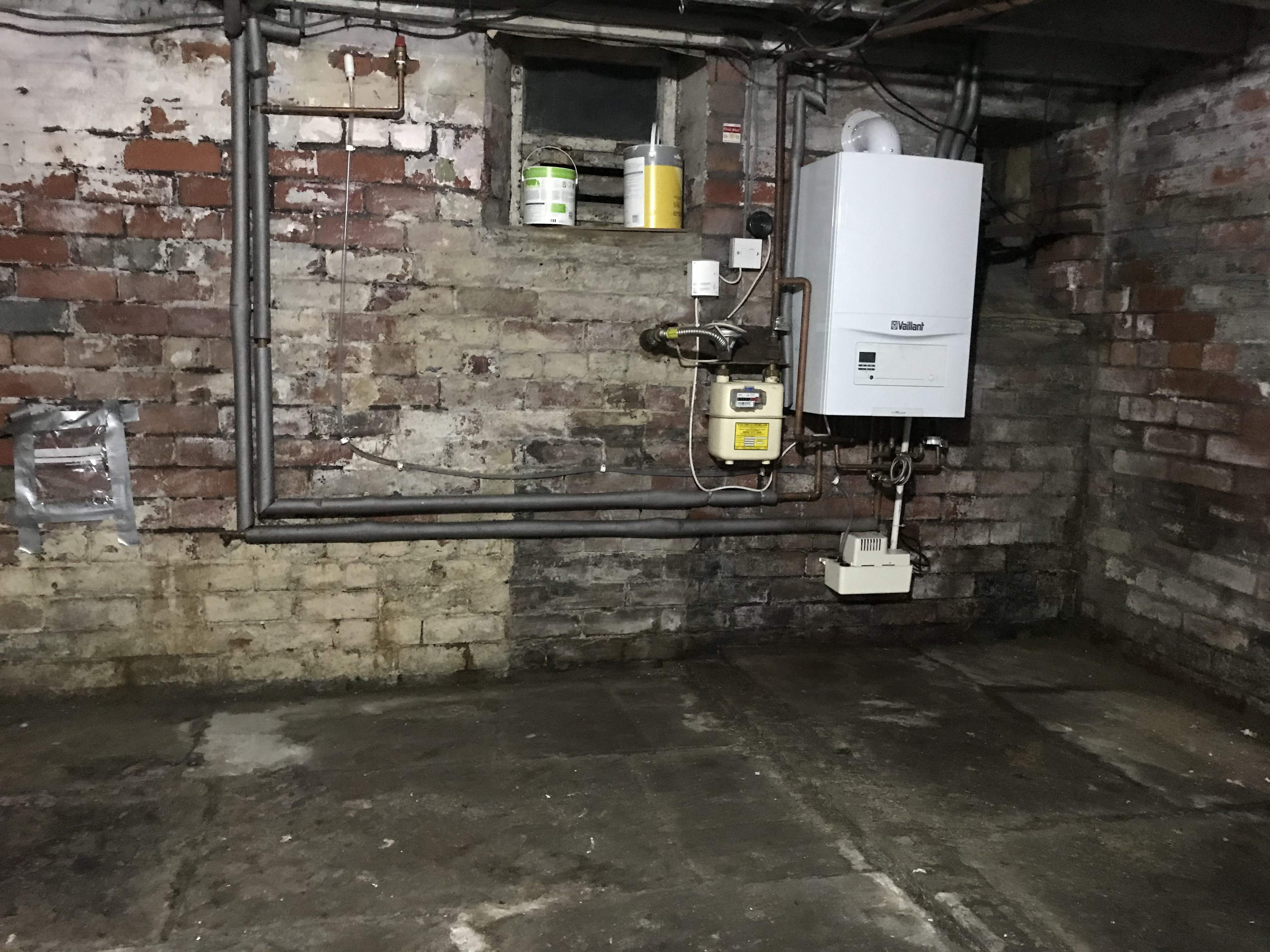
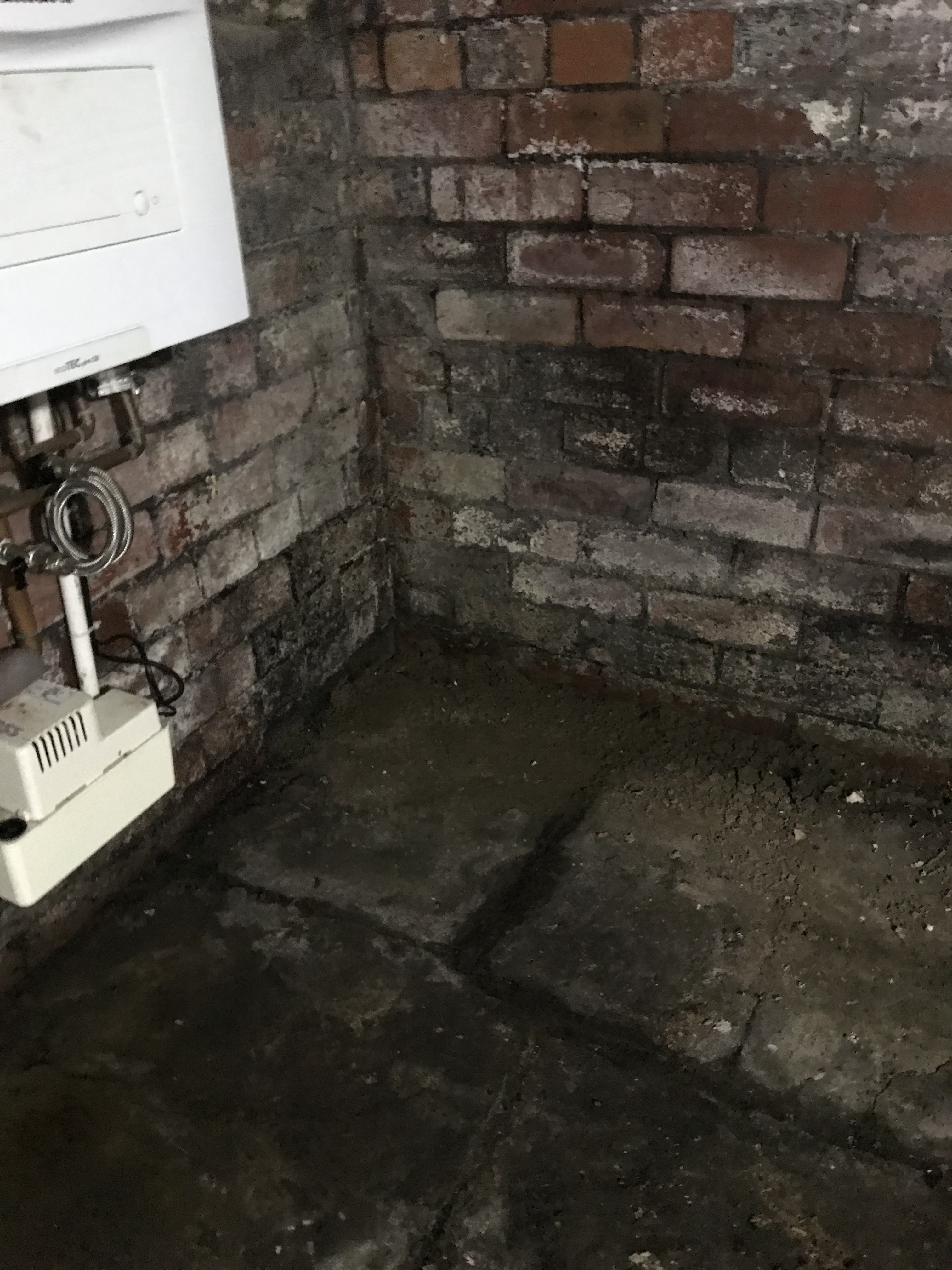
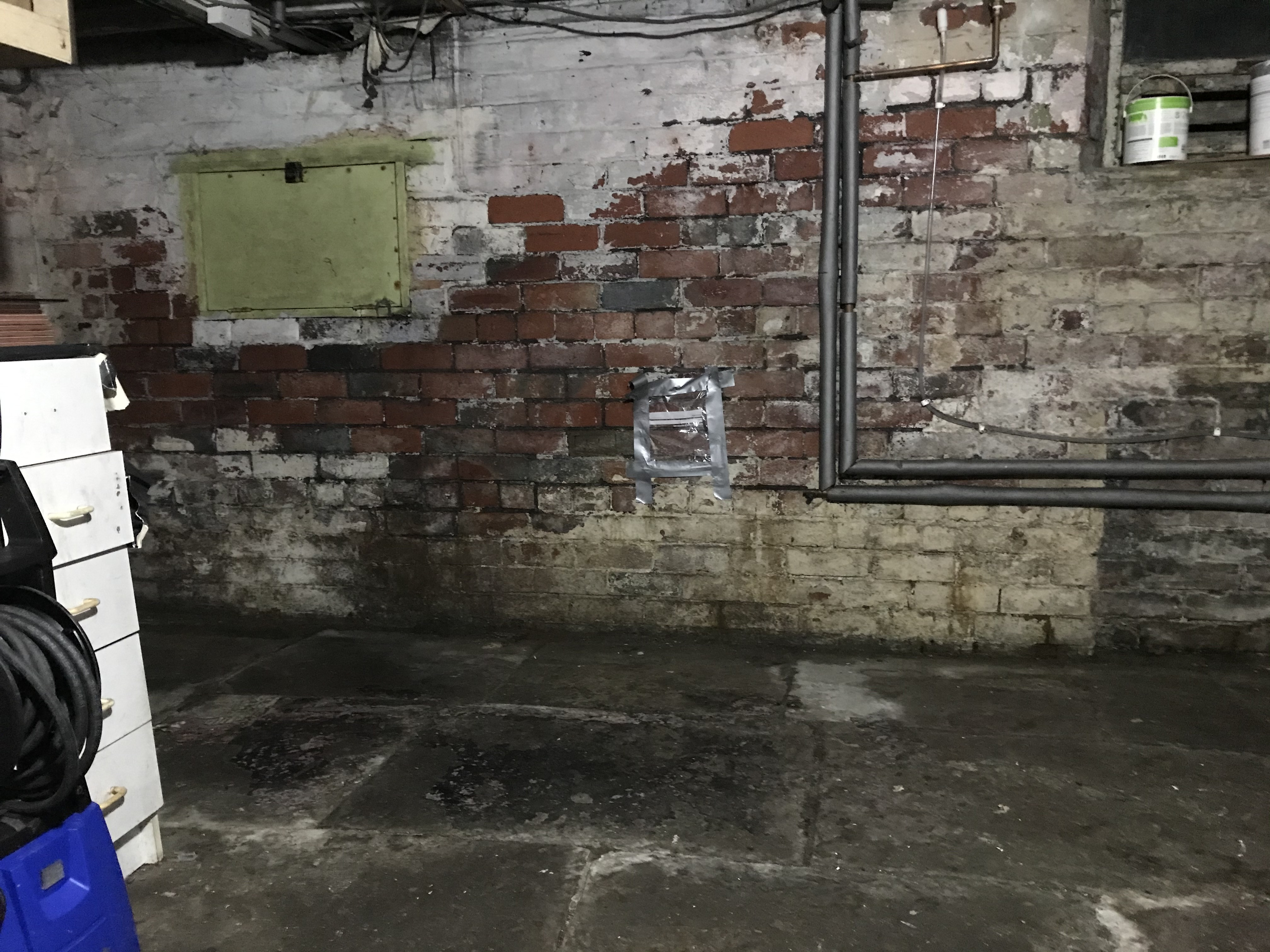
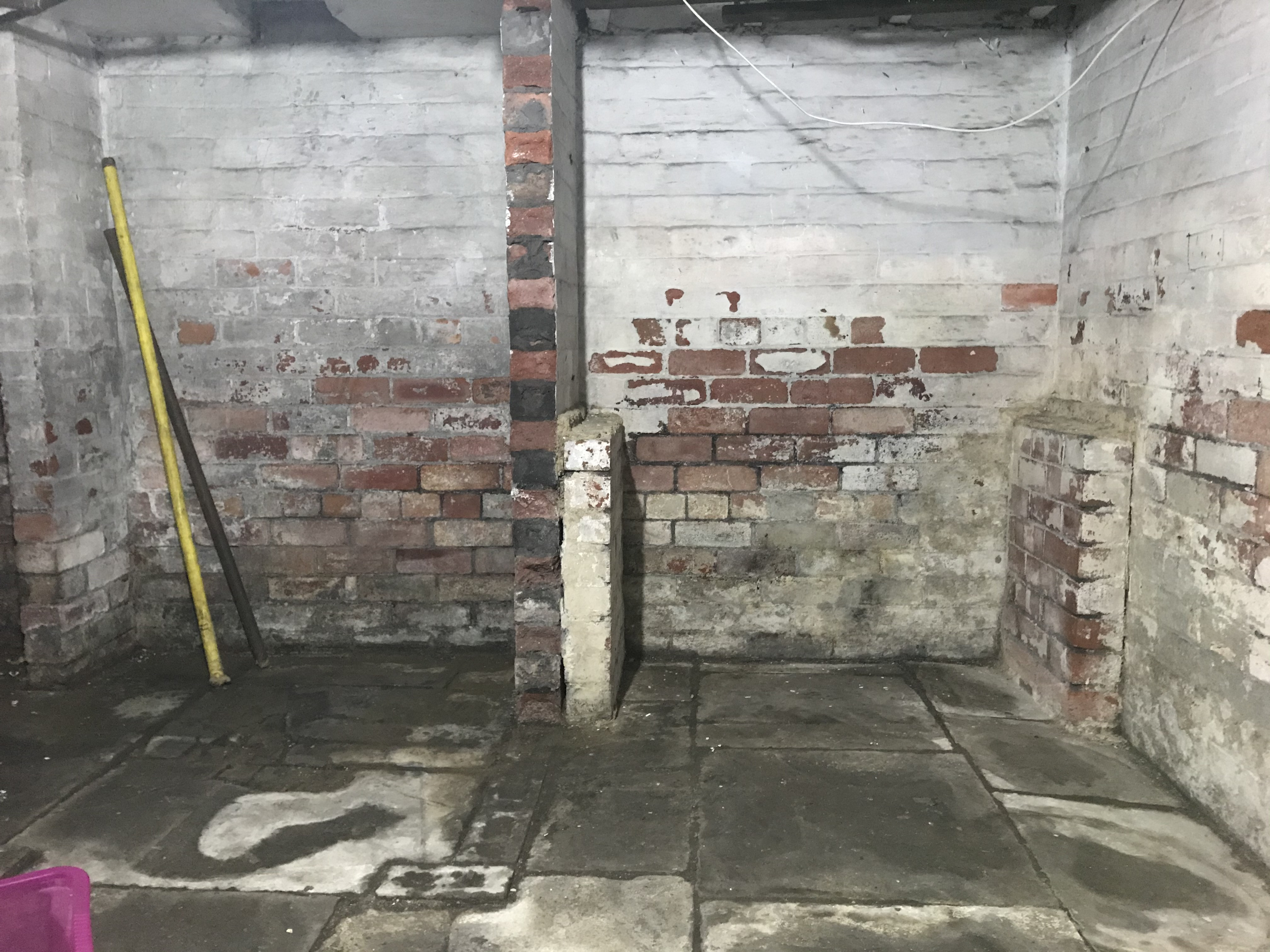
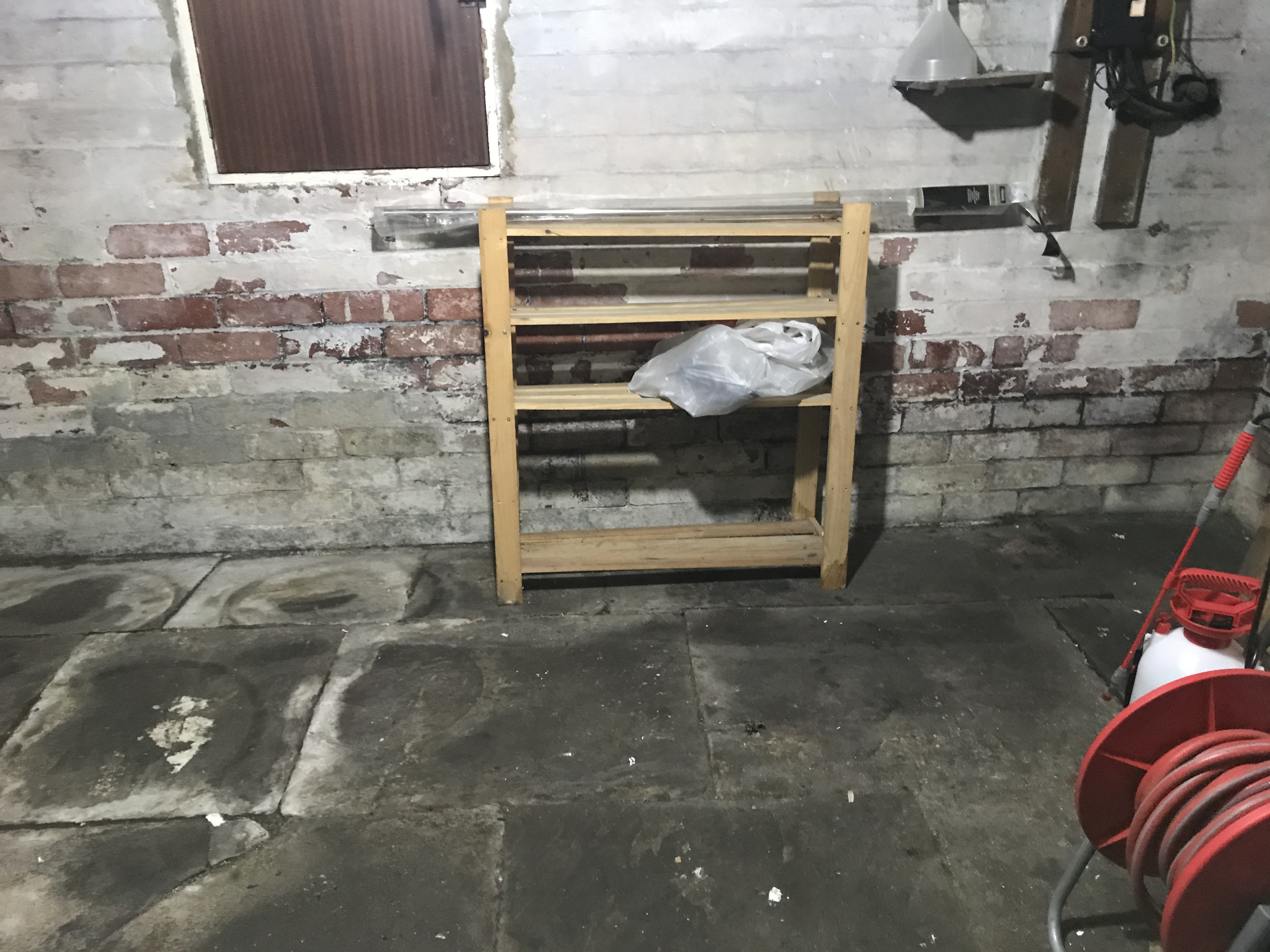
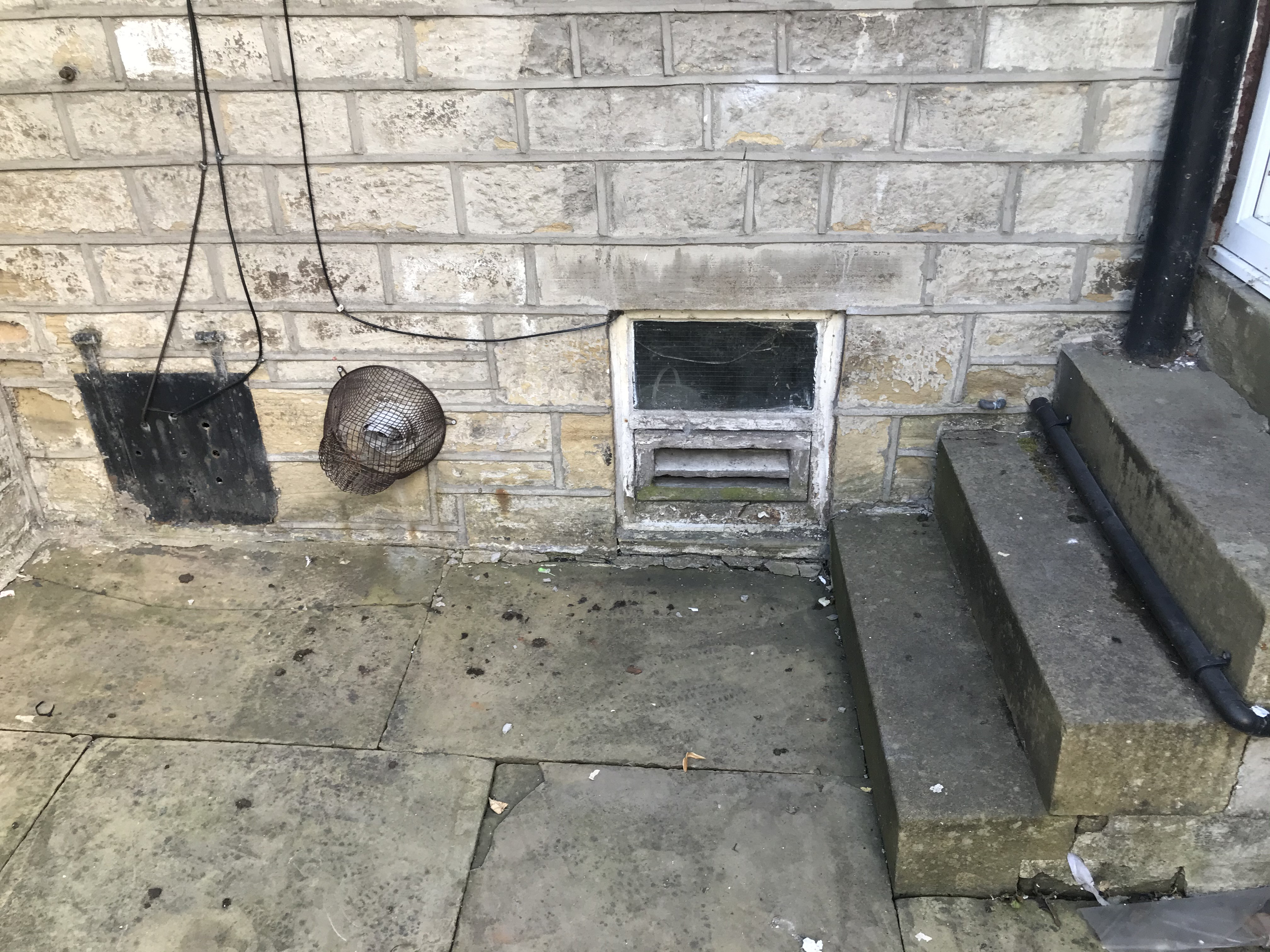
not much of the route is visible, but I would suspect the nearby drain. If you can lift one of the slabs, see how wet the ground is beneath it, and if there are red worms. The steps look like they might have been added after the initial build. Presumably stone?
It might be easier to dig a trial pit in the garden, as close as you can get to the house.
Do you ever get wild tomato plants coming up?
Are there other drains along that wall, for gutter downpipes, kitchen or bathroom?
It is possible to have a CCTV survey done, when they poke a small camera on a flexible pole up the drain.
IME the clay pipe usually breaks at the bend, next to the house wall, where the vertical soil pipe turns (almost) horizontal. In your case the steps would make that difficult to dig out, but removing a slab may get you near enough to see. As well as being wet, the soil commonly is washed away to leave a cavity, which may fill with soapy water when someone pulls the bath plug. Water companies can test to see if the water contains soap, or sewage, or chlorine, or leaf particles, showing where it came from. Condensate from the boiler is slightly acidic and erodes limestone and concrete.
The cavitation causes paving to subside, or have hollows undrneath. Can you detect that? The sinking has often had several attempts to fill or repair it, but the patches usually crack or sink if the leak is not repaired.
If paving sinks, it may cause rainwater to puddle and run towards the house wall, making damp worse,
p.s.
I like the quality of your brick and stonework. Looks like it was an expensive house when built.