• Looking for a smarter way to manage your heating this winter? We’ve been testing the new Aqara Radiator Thermostat W600 to see how quiet, accurate and easy it is to use around the home. Click here read our review.

Damp floor, diagnose cause? (Ed.)

Joined
24 Feb 2025
Messages
2
Reaction score
0
Country
United Kingdom
Hi all.

I really need help determining whether a damp issue is the result of rising damp or of an acute leak. I’ve had different views from different specialists with vested interests.

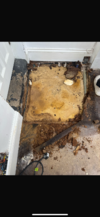
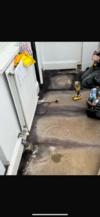
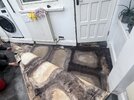
I’ve taken up the conservatory floor as suspected it was an issue with the drainage pipe that runs underneath it. That seems to be intact. It either seems to be moisture from rising damp pooling

Per moisture measurements the property does indeed seem to have a damp issue. But before I spend a lot of money on treating that, I need to be certain there isn’t an acute problem to deal with. I’d really prefer to avoid taking up the adjacent kitchen and bathroom floor unless I absolutely have to.

Any views on whether the damage in the attached photos could conceivably be caused by rising damp alone or whether it is a clear sign of a leak somewhere?

There was damp in the socket on the wall which tripped the electrics, hence identifying the issue.

Thanks very much.

Kester
 

Attachments

  • IMG_4889.jpeg
    IMG_4889.jpeg
    401.5 KB · Views: 60
  • IMG_5342.png
    IMG_5342.png
    1.5 MB · Views: 57
  • IMG_5341.png
    IMG_5341.png
    1.2 MB · Views: 70
I should add that there are clear signs of damp elsewhere. Rusted corners, plaster bubbling. Especially in the adjacent kitchen, but also in the living room (some 10 metres away). The conservatory floor was chipboard on insulation on concrete, with no air gap. The damp has spread where there are gaps in the insulation. The bathroom on the other side of the radiator wall shows normal damp readings. There is a completely rotten skirting board in the kitchen which is through the door shown.

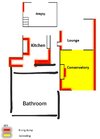
Attached is a very rough diagram showing where the walls show damp readings. The extreme damp in shown in the photos is where the conservatory meets the kitchen, with normal moisture readings in the bathroom adjacent.

So to reiterate - it looks to me like there probably is a damp problem that needs resolving, but is there also an acute leak to fix first? And if so, how do I prove and isolate it?

Many thanks
 

Attachments

  • 810a2048-5a51-44e5-8fa7-76c22686f9a4.jpeg
    810a2048-5a51-44e5-8fa7-76c22686f9a4.jpeg
    74.9 KB · Views: 32
I should add that there are clear signs of damp elsewhere. Rusted corners, plaster bubbling. Especially in the adjacent kitchen, but also in the living room (some 10 metres away). The conservatory floor was chipboard on insulation on concrete, with no air gap. The damp has spread where there are gaps in the insulation. The bathroom on the other side of the radiator wall shows normal damp readings. There is a completely rotten skirting board in the kitchen which is through the door shown.

Attached is a very rough diagram showing where the walls show damp readings. The extreme damp in shown in the photos is where the conservatory meets the kitchen, with normal moisture readings in the bathroom adjacent.

So to reiterate - it looks to me like there probably is a damp problem that needs resolving, but is there also an acute leak to fix first? And if so, how do I prove and isolate it?

Many thanks
Are you sure you don't nave a condensation problem also? Vinyl will trap moisture in the best of houses.
 
The very wet floor does suggest a leak. Although it could be from an unseen pipe dripping from above, you might have been able to find that, so we have to consider that there may be a buried pipe leak.

The vinyl covering will prevent it evaporating, so the wet will have got worse over time.

Your wet chipboard is ruined so you have to take it up. When the concrete is exposed you may start to find a pattern, for example the wet may be worst in one spot, such as under a sink or next to a radiator pipe, showing you where to look.

Does your boiler have a pressure gsuge? If not, there will be a feed and expansion tank in the loft. If the water is coming from the heating system, this will be constantly topping up to replenish the lost water. It will be a tank, usually rectangular plastic, about 2ft long x 1 ft high x 1 fit wide. You may be able to see the supply valve dripping. Tie up the ball float, or turn off the control valve if there is one, and photograph the water level with a ruler in it. Look again in a couple of days to see if the level has dropped.

Water can also come from a bathroom leak, such as under the bath, so take the panel off and look.

Sometimes it is a broken drain or gulley, but this is usually local to a visible downpipe or waste pipe, and yours looks wetter than that. A conservatory may have hidden a kitchen drain or rainwater pipe that used to be outside the house.
 
OP,
Why not lift all the sheet vinyl floor covering, & any boards that are water damaged?
Also remove the below the rad skirting board after first cutting the paint & sealant?
Removing the skirting should reveal and expose any existing membrane (DPM).
Do you have a row of appliances next to the W/M?

Will you post pics showing the outside of the conservatory & the lounge at ground level?
Are any of your floors suspended floors?
Is the house located on a hillside or slope?
 

If you need to find a tradesperson to get your job done, please try our local search below, or if you are doing it yourself you can find suppliers local to you.

Select the supplier or trade you require, enter your location to begin your search.


Are you a trade or supplier? You can create your listing free at DIYnot Local

 
Back
Top