Boilers require Double Pole isolation
Unless all lives are switched off, it is not isolation, there is a list, table 53.2 in the old BS7671:2008 not sure what it is in the latest edition, there are three classes, Isolation, Emergency Switching, and Functional Switching, the switched FCU is permitted for emergency switching, where the unswitched FCU, and sockets be they switched or not, are not permitted for emergency switching, but the plug lock
clearly isolated both lives, the line and neutral, but the FCU only switching the line by putting a lock through the fuse carrier, it needs the switch locking off to isolate. However, the main point is supply type, with TN-C-S it may be permitted only to switch the line, but with a TT supply both line and neutral need switching, so the best way to ensure isolation not just functional switching is to use a plug and socket.
The only reason why my boiler is on a FCU is the supply is not RCD protected, it is a balance, if RCD protected then a small leakage could stop the heating running, but if I was to use a non-static emergency supply,
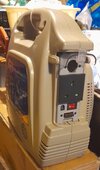
then there is no RCD protection anyway. Only with the static back-up is there an earth rod, and the neutral is connected to earth during a power outage.
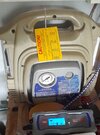
I still feel a plug and socket is a more positive isolation method, and it allows the easy use of an alternative supply, as to if the 300 watt from the unit I have shown would be enough to run a boiler I don't know.
As to gas regulations, can't see these being in conflict with electrical regulations. There are strict rules about switching the protective device, these may have changed due to charging of EV's outside the equal potential zone, but I know many boiler instructions do allow either plug and socket or FCU, I think the leaning towards the FCU is to stop the boiler from being unplugged.