


I have a small ensuite shower room approx. 1.7m square. In the loft above I have a 100mm Manrose MS-100s inline fan connected to a ceiling vent like this
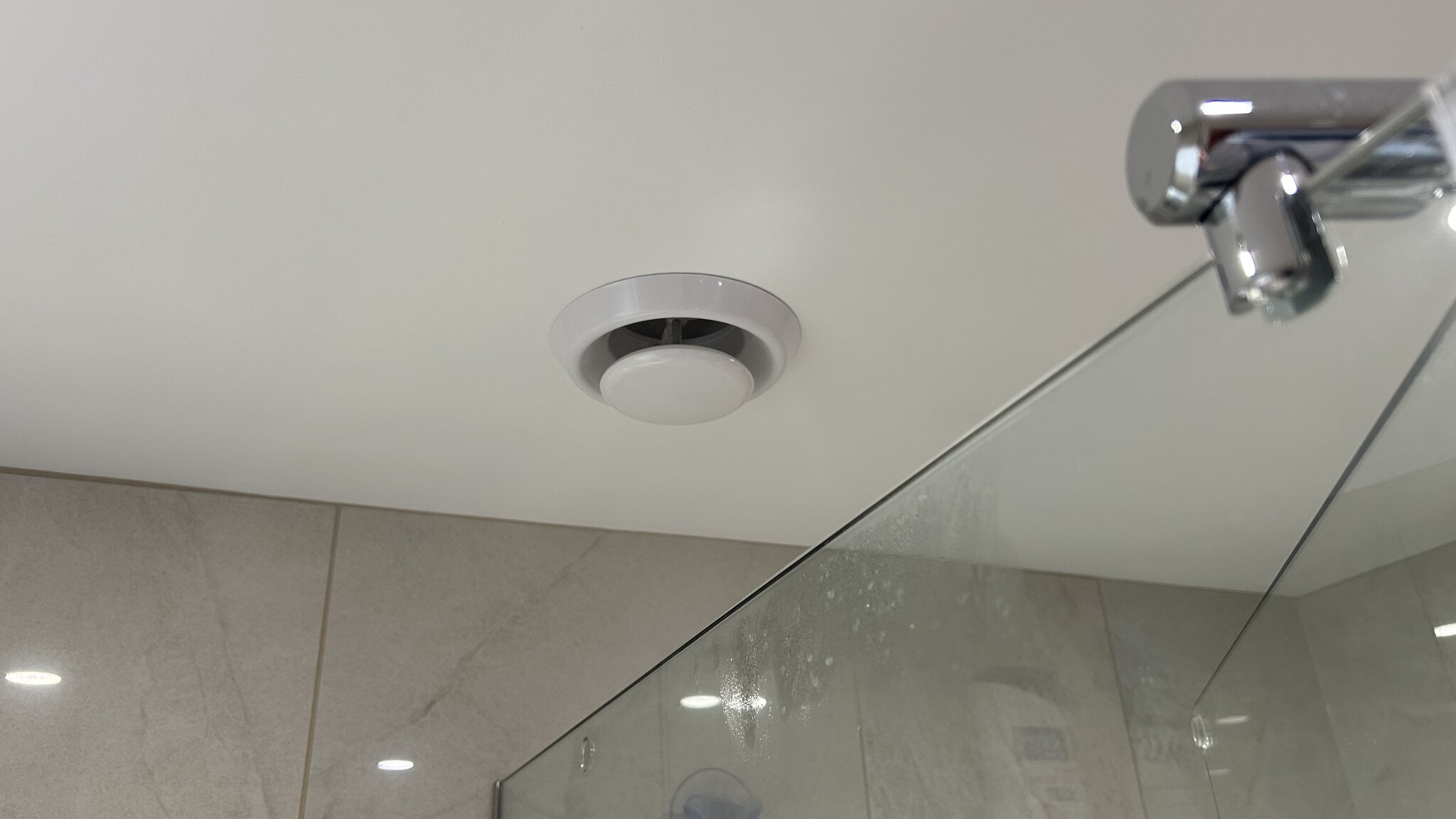
and discharging through the soffit via this
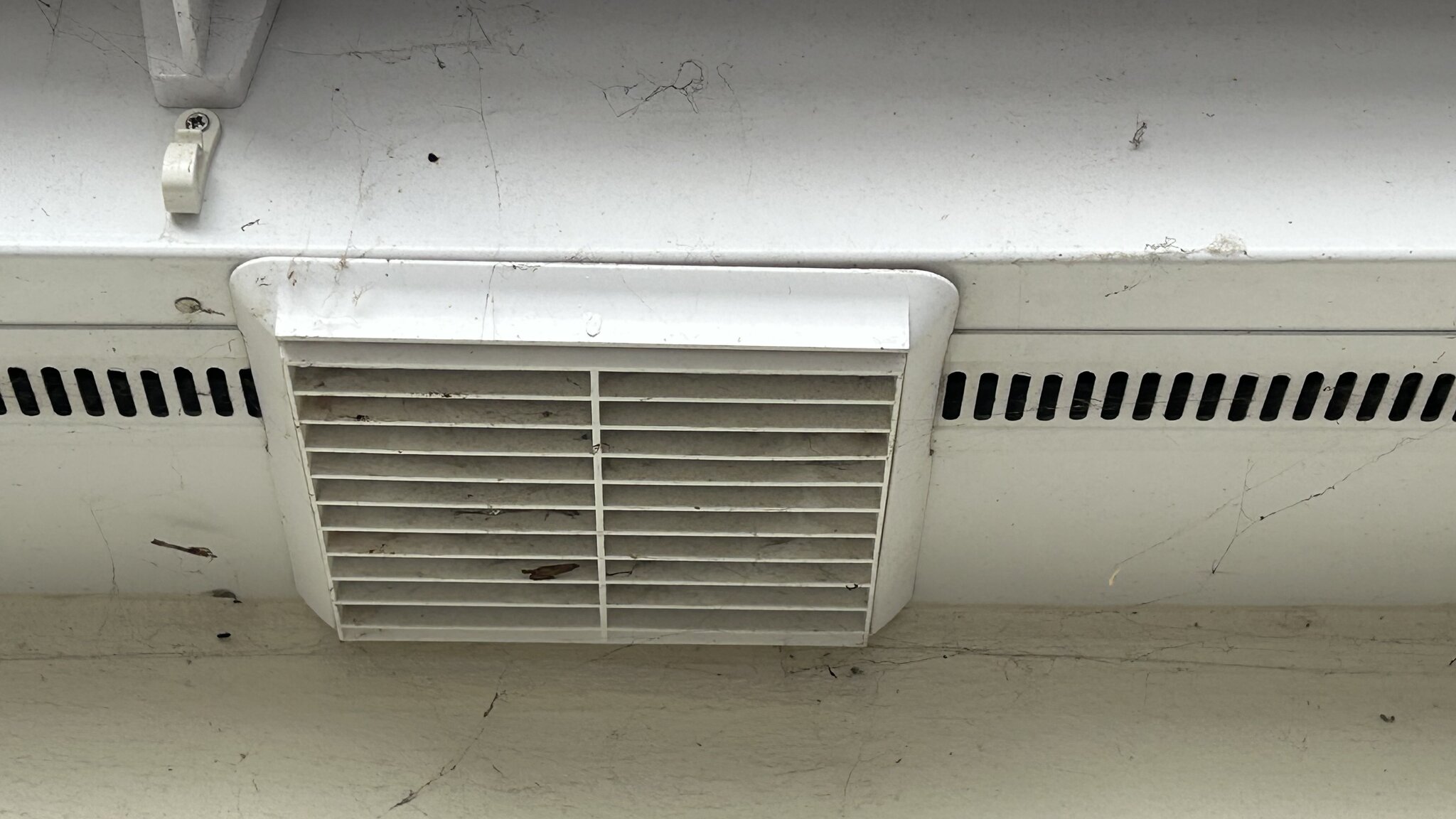
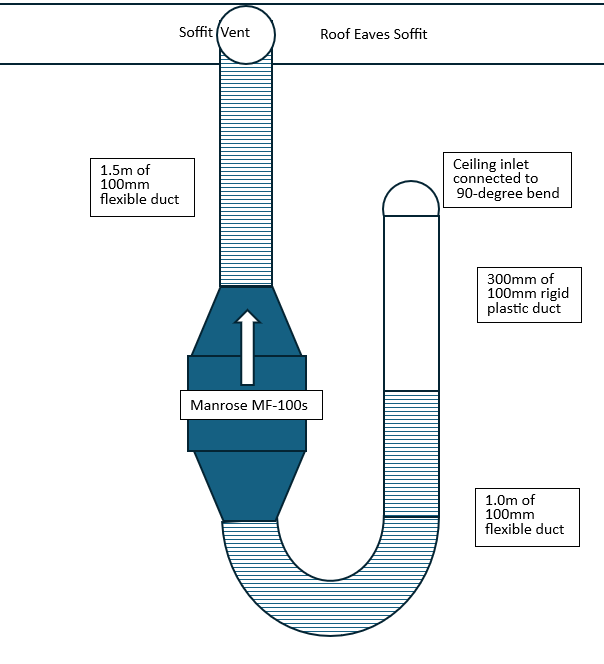
There is a short length of vertical rigid ducting above the inlet spigot and then a 90 degree bend with another 300mm of rigid plastic to which is connected a short length (1.0m) of flexible ducting to join to the fan inlet. The outlet also goes via another short length (1.5m) of flexible ducting to the vent in the soffit. Sketch below
Despite good reviews of the Manrose I am disappointed by the performance. The fan is on its highest speed setting and I have connected a third party timer delay which can run the fan for up to 300 minutes. However, although the fan ceiling valve/inlet is positioned half over the shower and half over the WC it doesn't seem to clear steam and "odours" very quickly.
I've read other posts on this forum and Manrose seems the fan to go to but I am wondering of the flexible ducting is causing too much friction particularly as their is a 180 degree bend in the ducting before enters the fan.
I am wondering if I replaced the inlet side of the fan with rigid plastic ducting and two 90 degree bends where the existing 180 bend is located might reduce the frictional loss. I've got a bit of wiggle room with the fan but a 180 degree bend will have to be incorporated in either the inlet or on the outlet due to access to the soffit.
Am I wasting my time for the benefit It might achieve?
many thanks
and discharging through the soffit via this
There is a short length of vertical rigid ducting above the inlet spigot and then a 90 degree bend with another 300mm of rigid plastic to which is connected a short length (1.0m) of flexible ducting to join to the fan inlet. The outlet also goes via another short length (1.5m) of flexible ducting to the vent in the soffit. Sketch below
Despite good reviews of the Manrose I am disappointed by the performance. The fan is on its highest speed setting and I have connected a third party timer delay which can run the fan for up to 300 minutes. However, although the fan ceiling valve/inlet is positioned half over the shower and half over the WC it doesn't seem to clear steam and "odours" very quickly.
I've read other posts on this forum and Manrose seems the fan to go to but I am wondering of the flexible ducting is causing too much friction particularly as their is a 180 degree bend in the ducting before enters the fan.
I am wondering if I replaced the inlet side of the fan with rigid plastic ducting and two 90 degree bends where the existing 180 bend is located might reduce the frictional loss. I've got a bit of wiggle room with the fan but a 180 degree bend will have to be incorporated in either the inlet or on the outlet due to access to the soffit.
Am I wasting my time for the benefit It might achieve?
many thanks

 You have exactly what i have done, but i connected the fan to a sensor, so when anyone goes into the bathroom or upstairs hallway the fan comes on for 20 mins. Even when the cat goes in the hall it turns it on.

 . That's why I wondered if replacing the 180 with 2 x 90 degree rigid bends might be less resistance??

