Hi,
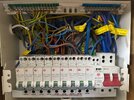
I recently had some electrical work carried out at my property. This included adding new sockets, partially rewiring the lighting circuits, replacing faceplates and lights, and installing earth bonding to the gas and water mains.
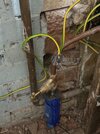
There was one existing socket that did not have an earth connection — it only had live and neutral, so I believe it may have been an old 2-core cable. The electrician connected an earth cable from the water bonding clamp to this socket to provide an earth connection.
I also noticed something else upstairs under the floorboards. There are three 10mm earth cables coiled together. They have bare copper ends and do not appear to be connected to anything. I assume one may be for the water bonding and one for the gas bonding, but I am not sure what the third one is for.
When I followed the third cable, it goes into another room. There is also another earth cable/connection there which appears to go down somewhere.
I have done some research and I am now concerned that this may not be correct. I have read that main protective bonding conductors should not be used to provide an earth connection to a socket, and that connecting a socket earth directly to a water bonding clamp could be dangerous.
Is this correct, or could there be a situation where this is acceptable?
The electrician gave me an EIC certificate and a Part P certificate, and as far as I know, he is a registered electrician.
I would really appreciate some advice on whether the installation described above sounds safe and compliant, and whether I should have another electrician inspect or test it.
Thanks.
I recently had some electrical work carried out at my property. This included adding new sockets, partially rewiring the lighting circuits, replacing faceplates and lights, and installing earth bonding to the gas and water mains.
There was one existing socket that did not have an earth connection — it only had live and neutral, so I believe it may have been an old 2-core cable. The electrician connected an earth cable from the water bonding clamp to this socket to provide an earth connection.
I also noticed something else upstairs under the floorboards. There are three 10mm earth cables coiled together. They have bare copper ends and do not appear to be connected to anything. I assume one may be for the water bonding and one for the gas bonding, but I am not sure what the third one is for.
When I followed the third cable, it goes into another room. There is also another earth cable/connection there which appears to go down somewhere.
I have done some research and I am now concerned that this may not be correct. I have read that main protective bonding conductors should not be used to provide an earth connection to a socket, and that connecting a socket earth directly to a water bonding clamp could be dangerous.
Is this correct, or could there be a situation where this is acceptable?
The electrician gave me an EIC certificate and a Part P certificate, and as far as I know, he is a registered electrician.
I would really appreciate some advice on whether the installation described above sounds safe and compliant, and whether I should have another electrician inspect or test it.
Thanks.