
-
 Looking for a smarter way to manage your heating this winter? We’ve been testing the new Aqara Radiator Thermostat W600 to see how quiet, accurate and easy it is to use around the home. Click here read our review.
You are using an out of date browser. It may not display this or other websites correctly.
You should upgrade or use an alternative browser.
You should upgrade or use an alternative browser.
Economy
- Thread starter Demi87
- Start date
-
- Tags
- 7pm economy 7 timer switch

Yes, that is the way it works. Need to see the fusebox/consumer unit arrangements. Basically you need to connect the off peak live to the 24 hour live. The place to do that is not in that cupboard. The isolation switch is sealed and I bet the "contractor notice" says something useful, but cant read it.
Lets have a look at the consumer units inside. Need to be careful because you may have an off peak immersion heater- and you dont need that running 24/7.
When you've changed the feeds, you need to cancel that off-peak tariff. The 24 hour costs are usually higher if you have an off peak tariff.
Lets have a look at the consumer units inside. Need to be careful because you may have an off peak immersion heater- and you dont need that running 24/7.
When you've changed the feeds, you need to cancel that off-peak tariff. The 24 hour costs are usually higher if you have an off peak tariff.
Are they electric heaters or electric storage heaters

- Joined
- 27 Jan 2008
- Messages
- 27,416
- Reaction score
- 3,310
- Location
- Llanfair Caereinion, Nr Welshpool
- Country

Off peak supply is an old idea, but is has evolved through the years, and also varies from supplier to supplier, pre-off peak I was paying 29.57p per kWh with 62.21 p per day standing charge, moving to off peak (5 hours per day called EV rate) peak is 31.31p per kWh and off peak 8.95p per kWh with 59.14p per day standing charge. As the off peak time get longer, we tend to see a raise in price, there are 7 and 10 hour deals as well as my 5 hour deal.
However there are some histrionic tariffs where the peak rate has not risen as much, so one has to be careful, as often one can't return to those tariffs once you move away.
It also varies area to area, I live in mid Wales.
As to the big 4 power users, the washing machine, tumble drier, dish washer, and immersion heater, they are also not cut and dried, my dish washer can only be delayed by even hours, and others start with ½ hour increments, but as time increases go to hour increments, the washer and drier also tumble the clothes every so often while timing out, so using the blue ball of soap in the drum does not work.
Often there are 2 immersion heaters at different heights, lower one off peak, upper one peak, using just the upper one I found weekly use was around 2.5 kWh so they don't use that much.
If you use a constant draw on power, then duel tariff can still work out cheaper, the problem is if you use more power during peak than off peak, OK for me, my solar power software gives me a good graph of power used,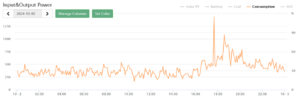 and power taken from the grid
 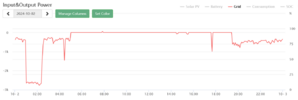 so I know the split tariff works for me. Your first job is to work out which tariff suits you, as by changing tariff to a single rate day and night, you may need to do nothing. If I did not have solar and a battery, split tariff would not suit me. The smart meter app
 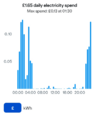 may also show when you use power, that is your start point.
Also need to consider the future, babies really change power use.
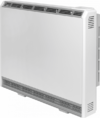 why have you not replaced with new storage heaters?
However there are some histrionic tariffs where the peak rate has not risen as much, so one has to be careful, as often one can't return to those tariffs once you move away.
It also varies area to area, I live in mid Wales.
As to the big 4 power users, the washing machine, tumble drier, dish washer, and immersion heater, they are also not cut and dried, my dish washer can only be delayed by even hours, and others start with ½ hour increments, but as time increases go to hour increments, the washer and drier also tumble the clothes every so often while timing out, so using the blue ball of soap in the drum does not work.
Often there are 2 immersion heaters at different heights, lower one off peak, upper one peak, using just the upper one I found weekly use was around 2.5 kWh so they don't use that much.
If you use a constant draw on power, then duel tariff can still work out cheaper, the problem is if you use more power during peak than off peak, OK for me, my solar power software gives me a good graph of power used,
and power taken from the grid so I know the split tariff works for me. Your first job is to work out which tariff suits you, as by changing tariff to a single rate day and night, you may need to do nothing. If I did not have solar and a battery, split tariff would not suit me. The smart meter app may also show when you use power, that is your start point.Also need to consider the future, babies really change power use.
I assume you have a reason for the change from off peak to instant heaters? Storage heaters are still madeGot rid of old storage heaters and replacing them with new generation of electric heaters.
why have you not replaced with new storage heaters?Thanks for the quick reply. I’ll send more photos tomorrow. I do NOT have an immersion heater, but I appreciate the concern.Yes, that is the way it works. Need to see the fusebox/consumer unit arrangements. Basically you need to connect the off peak live to the 24 hour live. The place to do that is not in that cupboard. The isolation switch is sealed and I bet the "contractor notice" says something useful, but cant read it.
Lets have a look at the consumer units inside. Need to be careful because you may have an off peak immersion heater- and you dont need that running 24/7.
When you've changed the feeds, you need to cancel that off-peak tariff. The 24 hour costs are usually higher if you have an off peak tariff.
Also, I have already cancelled the off peak tariff
Last edited:
Electric Radiators with WiFi controlledAre they electric heaters or electric storage heaters
Storage Heaters in my opinion are old fashion and also, more important, they occupy a lot of space due to their size. New electric radiators are 100% efficient and they can be remotely controlled.Off peak supply is an old idea, but is has evolved through the years, and also varies from supplier to supplier, pre-off peak I was paying 29.57p per kWh with 62.21 p per day standing charge, moving to off peak (5 hours per day called EV rate) peak is 31.31p per kWh and off peak 8.95p per kWh with 59.14p per day standing charge. As the off peak time get longer, we tend to see a raise in price, there are 7 and 10 hour deals as well as my 5 hour deal.
However there are some histrionic tariffs where the peak rate has not risen as much, so one has to be careful, as often one can't return to those tariffs once you move away.
It also varies area to area, I live in mid Wales.
As to the big 4 power users, the washing machine, tumble drier, dish washer, and immersion heater, they are also not cut and dried, my dish washer can only be delayed by even hours, and others start with ½ hour increments, but as time increases go to hour increments, the washer and drier also tumble the clothes every so often while timing out, so using the blue ball of soap in the drum does not work.
Often there are 2 immersion heaters at different heights, lower one off peak, upper one peak, using just the upper one I found weekly use was around 2.5 kWh so they don't use that much.
If you use a constant draw on power, then duel tariff can still work out cheaper, the problem is if you use more power during peak than off peak, OK for me, my solar power software gives me a good graph of power used, View attachment 357731 and power taken from the grid View attachment 357732 so I know the split tariff works for me. Your first job is to work out which tariff suits you, as by changing tariff to a single rate day and night, you may need to do nothing. If I did not have solar and a battery, split tariff would not suit me. The smart meter app View attachment 357740 may also show when you use power, that is your start point.
Also need to consider the future, babies really change power use.
I assume you have a reason for the change from off peak to instant heaters? Storage heaters are still made View attachment 357744 why have you not replaced with new storage heaters?
New electric radiators are 100% efficient and they can be remotely controlled.
All resistive electric heating is 100% effcient
Storage Heaters in my opinion are old fashion and also, more important, they occupy a lot of space due to their size. New electric radiators are 100% efficient and they can be remotely controlled.
Oh no, you've been reading marketing spin! All electric heating is 100% efficient (Well, 99.999 anyway). What you have done is replaced heaters suitable for use on cheap electricity tariffs, with ones that are not. So you will be paying more for the electricity to heat the property than you would have with the storage heaters.
Old storage heaters do look old fashioned, and did leak heat when you didn't want heat. The new HHR ones are way better.
Never really understood the attraction of WiFi, or any remote control. You should keep the place warm all winter, and that way the house actually gets warm, and stays warm when the heating is off.
- Joined
- 27 Jan 2008
- Messages
- 27,416
- Reaction score
- 3,310
- Location
- Llanfair Caereinion, Nr Welshpool
- Country
The big question, is more efficient, or cheaper? In the main our problem with energy use, is to use it when it is cheap, rather than use it in an efficient way, but most efficient at using the energy delivered to our home is the heat pump, however as to most efficient we have to include the cost of transfer. Be it from one source to another, or across the country. Nearly impossible to know the answer, but the cost of the fuel in the main is indicative to the cost to transfer it to our homes.
The next after the heat pump is the infrared heater, in fact it could even be cheaper, as it does not heat the air directly, so air changes are not loosing as much heat, but now we get into building design as well.
With a building that is really well insulated with heat recovery units for ventilation, it can take days to cool down, so we can maintain the heat 24/7 with low cost. If however the building is not so well insulated then we look at recovery time. So best heating can move from heat pump and under floor heating to infrared panel heating as the heat retention get worse, garages with large doors to get vehicles in and out have been heated with infrared for years.
The next is storage, the multi-fuel heating system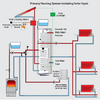 often uses water storage, as it allows many heating systems to heat the same space, this shows one tank, but in real life it is often two very large tanks, on a reinforced floor to take the weight, and can only really be used when built, the same applies to a hot air system, with a central brick store, unless in the original design really a non starter.
However storing energy is the way to get cheap energy, be it in batteries, water or bricks, the problem with the latter is to keep the energy inside the system until required. With a well insulated house the storage radiators are not as good as heat pumps, but far cheaper.
It is the not so well insulated home where the problem lies, and then we move to a completely different idea, recovery time, and back ground heat, not easy to strike a balance, as down to how fast the home cools. But also how much power is available. So this house, with a 60 amp fuse, no way could I reheat whole house fast with electric. So either keep it warm or heat room at a time. Lucky I have oil, so I can heat with a 20 kW boiler, and put my food to cook, and have a shower while waiting, I am better having a hot meal at mid day, as then the solar cooks it, as to the big three washing machine, tumble drier and dish washer, summer during the day, and winter over night with off peak.
Looking at own power use, realistic wise I need 6 kW (26 amp) for living uses, which leaves me with 7.8 kW or 34 amp left for heating, so I have 14 rooms to heat, so 500 watt per room except for shower room which 300 watt likely enough, and 1.5kW for the main living room, not enough, even the 20 kW is not really enough for whole house, so only way is to never let house get too cold.
This is how the modern storage heater works, it puts a back-ground heat into the home, so when you want heat, your not heating from scratch, but topping up that back ground heat.
But it is all down to how well the home is insulated, as to what method used to heat it.
The next after the heat pump is the infrared heater, in fact it could even be cheaper, as it does not heat the air directly, so air changes are not loosing as much heat, but now we get into building design as well.
With a building that is really well insulated with heat recovery units for ventilation, it can take days to cool down, so we can maintain the heat 24/7 with low cost. If however the building is not so well insulated then we look at recovery time. So best heating can move from heat pump and under floor heating to infrared panel heating as the heat retention get worse, garages with large doors to get vehicles in and out have been heated with infrared for years.
The next is storage, the multi-fuel heating system
often uses water storage, as it allows many heating systems to heat the same space, this shows one tank, but in real life it is often two very large tanks, on a reinforced floor to take the weight, and can only really be used when built, the same applies to a hot air system, with a central brick store, unless in the original design really a non starter.However storing energy is the way to get cheap energy, be it in batteries, water or bricks, the problem with the latter is to keep the energy inside the system until required. With a well insulated house the storage radiators are not as good as heat pumps, but far cheaper.
It is the not so well insulated home where the problem lies, and then we move to a completely different idea, recovery time, and back ground heat, not easy to strike a balance, as down to how fast the home cools. But also how much power is available. So this house, with a 60 amp fuse, no way could I reheat whole house fast with electric. So either keep it warm or heat room at a time. Lucky I have oil, so I can heat with a 20 kW boiler, and put my food to cook, and have a shower while waiting, I am better having a hot meal at mid day, as then the solar cooks it, as to the big three washing machine, tumble drier and dish washer, summer during the day, and winter over night with off peak.
Looking at own power use, realistic wise I need 6 kW (26 amp) for living uses, which leaves me with 7.8 kW or 34 amp left for heating, so I have 14 rooms to heat, so 500 watt per room except for shower room which 300 watt likely enough, and 1.5kW for the main living room, not enough, even the 20 kW is not really enough for whole house, so only way is to never let house get too cold.
This is how the modern storage heater works, it puts a back-ground heat into the home, so when you want heat, your not heating from scratch, but topping up that back ground heat.
But it is all down to how well the home is insulated, as to what method used to heat it.
Yes, that is the way it works. Need to see the fusebox/consumer unit arrangements. Basically you need to connect the off peak live to the 24 hour live. The place to do that is not in that cupboard. The isolation switch is sealed and I bet the "contractor notice" says something useful, but cant read it.
Lets have a look at the consumer units inside. Need to be careful because you may have an off peak immersion heater- and you dont need that running 24/7.
When you've changed the feeds, you need to cancel that off-peak tariff. The 24 hour costs are usually higher if you have an off peak tariff.
Here are more photos. If you have any more suggestions it’ll be appreciated.
Attachments

A fairly easy job for an electrician. Basically, the main feed to the Off Peak board (the smaller one on the left) need capping off, and the feed to the 24-hour board needs splitting to go to both boards.
Easily done in the meter cupboard, but not a DIY jobby.
The main switch in the off peak board also needs to be changed to a compliant RCD.
The two boards are "of their time" and no longer comply with up to date regulations. While these are not retrospective, I would get both boards changed to one single board that meets today's requirements. If your budget allows...
Easily done in the meter cupboard, but not a DIY jobby.
The main switch in the off peak board also needs to be changed to a compliant RCD.
The two boards are "of their time" and no longer comply with up to date regulations. While these are not retrospective, I would get both boards changed to one single board that meets today's requirements. If your budget allows...
- Joined
- 27 Jan 2008
- Messages
- 27,416
- Reaction score
- 3,310
- Location
- Llanfair Caereinion, Nr Welshpool
- Country
I clearly don't know why you have 2 cookers, I have 2, on in flat under main house and one in main house, it is unlikely mine would both be used at the same time, again I have two electric showers, and again unlikely both used at the same time. My water heater only works when I have excess solar, smoke alarms can be disregarded, lights are today around ½ the power of years ago, but the question has to be asked how much power will really be used for heating? Clearly at 80A you would have a problem.
My heating is 20 kW (87 amp if I were using electric) only October and the Nest Gen 3 thermostat gives me this usage
 so already running for over 5 hours per day. Not really that bad, as once return water is hot, the boiler turns off, even if thermostat still calling for heat, a lot hinges on your life style, so arrive home 6 pm, put the dinner on, go for a shower and turn up heating would be a problem, but by staggering use, it is doable.
We are careful when we do what, as the battery can only deliver 3 kW and combined solar and battery 5 kW, so we try to not do everything together, so I will make coffee, then turn on washing machine, and allow it to do water heating stage before turning on tumble drier, and have showers in morning or mid afternoon.
However if we forget, then may increase my bill, but it will not cause the main fuse to rupture. And even if we did rupture the main fuse, freezers and central heating would still work from the battery and solar.
I assume with you, rupture fuse, and you have nothing? I have checked what I use
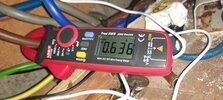 both with a clamp on, and smart meter in home display, (IHD) the phone app (from smart meter) and solar app are to slow to respond, and I know my 16 x RCBO consumer unit although in theroy could overload the in my case 60 amp fuse, it is highly unlikely, but I have oil heating.
The linking of the two consumer units is an easy job for an electrician, in theroy the billing agent could simply turn both on and off peak on 24/7 and bill both at same rate without even visiting your house. My meter does not switch for me, I have to set timers to use power at the right time. So getting power to heaters 24/7 is the easy bit, the hard bit is to work out do you have the power required 24/7?

The job bring up several issues;
The best place to do the link is in the meter box, in just the same way as the existing neutrals with a connectror block.
Despite whatever the contractor notice may say on the isolator, that 4 pole isolator is accessible to your contractor as the bottom cover is removable and not sealed. Good so far.
As I see it altering the feed to both consumer units is a change that requires the electrician to bring all of the circuits on each unit up to current regulations, as has already been mentioned the smaller unit will require RCD and the easiest way is to replace the main switch with a RCD.
Also the 6 'red' circuits on the right (above the red stripe) are also likely to require RCD protection which can be accomplished in the same way as the 'green' circuits, this will involve an amount of modification, (it may not be practical to do so) and it will involve moving 2 'red' circuits from their present location to the smaller CU.
As above this is all easy work for a for most electricians.
The best place to do the link is in the meter box, in just the same way as the existing neutrals with a connectror block.
Despite whatever the contractor notice may say on the isolator, that 4 pole isolator is accessible to your contractor as the bottom cover is removable and not sealed. Good so far.
As I see it altering the feed to both consumer units is a change that requires the electrician to bring all of the circuits on each unit up to current regulations, as has already been mentioned the smaller unit will require RCD and the easiest way is to replace the main switch with a RCD.
Also the 6 'red' circuits on the right (above the red stripe) are also likely to require RCD protection which can be accomplished in the same way as the 'green' circuits, this will involve an amount of modification, (it may not be practical to do so) and it will involve moving 2 'red' circuits from their present location to the smaller CU.
As above this is all easy work for a for most electricians.

DIYnot Local
Staff member
If you need to find a tradesperson to get your job done, please try our local search below, or if you are doing it yourself you can find suppliers local to you.
Select the supplier or trade you require, enter your location to begin your search.
Please select a service and enter a location to continue...
Are you a trade or supplier? You can create your listing free at DIYnot Local